THE ADVENTURE COLLECTIVE® · Independent discovery and booking for outdoor travel

Arrive at Lijiang and head straight to the upper reaches of Tiger Leaping Gorge on a private transfer and guided half‑day hike. Spend 1.5–2 hours on the plank road and viewing platforms where the Jinsha River narrows around a 13‑meter rock.
Arrive at Lijiang and head straight to the upper reaches of Tiger Leaping Gorge on a private transfer and guided half‑day hike. Spend 1.5–2 hours on the plank road and viewing platforms where the Jinsha River narrows around a 13‑meter rock.
You step from the humid airport air into an air‑conditioned car and watch the low hills of Yunnan slide by—rice terraces, a patchwork of villages, and the pale ribbon of the Jinsha River far below. Two hours later the road narrows and the valley opens: the upper section of Tiger Leaping Gorge throws itself at you—rock walls rising, river currents tightening, and a 13‑meter boulder dividing the torrent like a dropped mast.
Verified experiences and guided adventures in the surrounding area.
Operated by happychinatours · Lijiang, Yunnan
You step from the humid airport air into an air‑conditioned car and watch the low hills of Yunnan slide by—rice terraces, a patchwork of villages, and the pale ribbon of the Jinsha River far below. Two hours later the road narrows and the valley opens: the upper section of Tiger Leaping Gorge throws itself at you—rock walls rising, river currents tightening, and a 13‑meter boulder dividing the torrent like a dropped mast.
Geology here is direct: uplifted marble and schist carved by millennia of glacial melt and monsoon-fed rivers. Culturally the gorge sits on ancient trade routes between Tibetan highlands and Naxi communities; local bridges and tea houses speak to a working landscape shaped by flow and barter.
On the upper plank road you’ll spend roughly 1.5–2 hours walking to the valley‑floor viewpoint where the river splits and surges. Expect exposed sections on boardwalks, stone steps, and a series of viewing platforms oriented toward the narrowest throat. The guide handles permits and entrance tickets; the return drive brings you back to Lijiang or Shuhe.
Practical edge: start mid‑morning to avoid fog and extreme midday sun; wear sturdy shoes with grip, bring at least 1.5L water, and a windproof layer—the gorge channels wind and spray. Photography opportunities are concentrated at the platforms but the approach trail has quieter outlooks if you want fewer people in frame.
This half‑day private transfer-plus-hike is ideal for travelers arriving at Lijiang who want a focused, scenic introduction to the Jinsha River’s fiercest stretch without committing to the full multi‑day treks.
moderate.
5–6 hours.
Moderate fitness: able to walk 1.5–2 hours on uneven surfaces and manage short stair sections.
The drive is about 2 hours (approximately 80 km) each way; plan your arrival before 14:00 to allow time for the transfer.
The walk on the upper section is moderately easy—15–20 minutes along a plank road to the main viewpoint and additional time exploring platforms for a total of 1.5–2 hours.
Yes, the guide purchases the entrance ticket as part of the tour for the upper gorge viewing area.
The tour notes stroller and wheelchair accessibility for parts of the route, but some viewpoints require steps—check with the operator if mobility is a concern.
Tiger Leaping Gorge sits on historic trade corridors linking Naxi communities and Tibetan plateaus; the river shaped local routes and settlement patterns for centuries.
Visitor management focuses on boardwalks and designated platforms to limit erosion; stick to trails and avoid littering to protect fragile canyon slopes.
happychinatours operates guided outdoor trips and adventures with an emphasis on safety, stewardship, and memorable experiences.
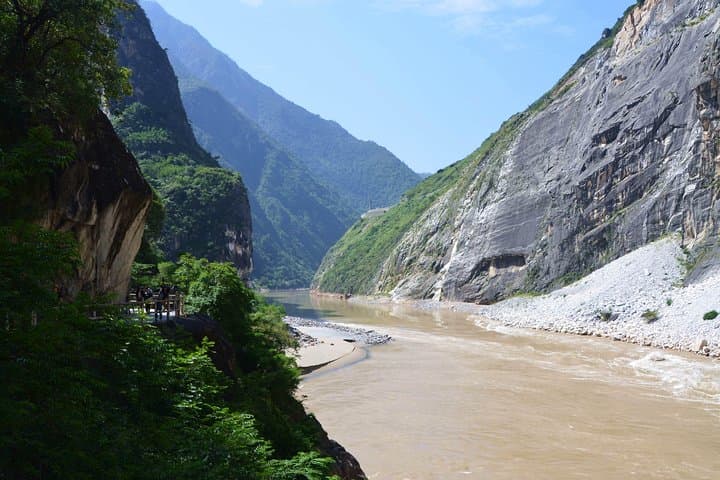

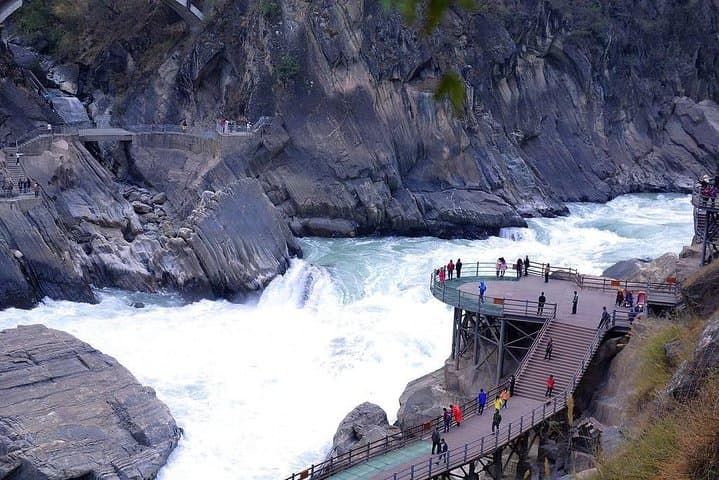
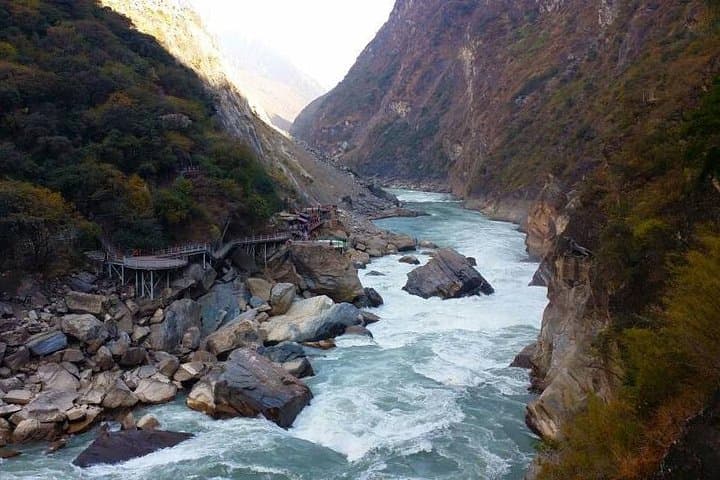
You step from the humid airport air into an air‑conditioned car and watch the low hills of Yunnan slide by—rice terraces, a patchwork of villages, and the pale ribbon of the Jinsha River far below. Two hours later the road narrows and the valley opens: the upper section of Tiger Leaping Gorge throws itself at you—rock walls rising, river currents tightening, and a 13‑meter boulder dividing the torrent like a dropped mast.
You step from the humid airport air into an air‑conditioned car and watch the low hills of Yunnan slide by—rice terraces, a patchwork of villages, and the pale ribbon of the Jinsha River far below. Two hours later the road narrows and the valley opens: the upper section of Tiger Leaping Gorge throws itself at you—rock walls rising, river currents tightening, and a 13‑meter boulder dividing the torrent like a dropped mast.
Geology here is direct: uplifted marble and schist carved by millennia of glacial melt and monsoon-fed rivers. Culturally the gorge sits on ancient trade routes between Tibetan highlands and Naxi communities; local bridges and tea houses speak to a working landscape shaped by flow and barter.
On the upper plank road you’ll spend roughly 1.5–2 hours walking to the valley‑floor viewpoint where the river splits and surges. Expect exposed sections on boardwalks, stone steps, and a series of viewing platforms oriented toward the narrowest throat. The guide handles permits and entrance tickets; the return drive brings you back to Lijiang or Shuhe.
Practical edge: start mid‑morning to avoid fog and extreme midday sun; wear sturdy shoes with grip, bring at least 1.5L water, and a windproof layer—the gorge channels wind and spray. Photography opportunities are concentrated at the platforms but the approach trail has quieter outlooks if you want fewer people in frame.
This half‑day private transfer-plus-hike is ideal for travelers arriving at Lijiang who want a focused, scenic introduction to the Jinsha River’s fiercest stretch without committing to the full multi‑day treks.