THE ADVENTURE COLLECTIVE® · Independent discovery and booking for outdoor travel

Visit Lidice for a sober, informative half-day that places you face-to-face with wartime history and postwar remembrance. This private tour from Prague combines thoughtful narration, accessible walking routes, and a concise practical guide for respectful visitors.
Visit Lidice for a sober, informative half-day that places you face-to-face with wartime history and postwar remembrance. This private tour from Prague combines thoughtful narration, accessible walking routes, and a concise practical guide for respectful visitors.
You arrive by quiet country road and the landscape opens not with fanfare but with stillness: low fields, a line of linden trees, the memorial’s stone rising against a pale Czech sky. The site resists spectacle; it asks for attention. Walking paths guide you past plaques, sculptures of children, and a reconstructed layout that marks where a village once stood.
Verified experiences and guided adventures in the surrounding area.
Operated by Visita Praga · Lidice, Central Bohemian Region
You arrive by quiet country road and the landscape opens not with fanfare but with stillness: low fields, a line of linden trees, the memorial’s stone rising against a pale Czech sky. The site resists spectacle; it asks for attention. Walking paths guide you past plaques, sculptures of children, and a reconstructed layout that marks where a village once stood.
On 10 June 1942 Lidice was destroyed in reprisal by Nazi forces — men executed, women deported, children murdered or taken for “Germanization.” After the war the site became a national place of remembrance and a study in how communities memorialize loss. Geologically this is the gentle rolling plain northwest of Prague, moraine-influenced soils and small agricultural plots; the terrain is flat, easy underfoot, and the air carries the seasonal scents of tilled earth or cold metal depending on the month.
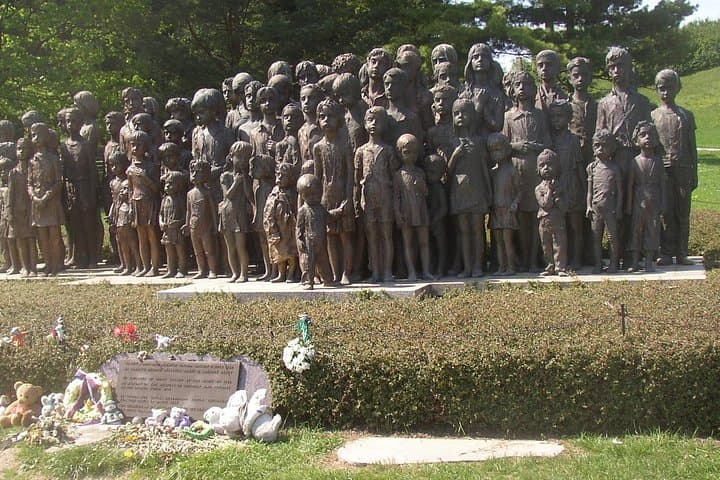
Culturally, Lidice occupies a distinct place in Czech postwar identity and international memory projects; the Children’s Memorial by sculptor Marie Uchytilová is a focal point. Guides typically pair historical narrative with personal testimony and archival photographs for context.
Practical guidance: allow about four hours including pick-up and drop-off from Prague, wear comfortable shoes and a layer for wind, and expect quiet, reflective spaces rather than interpretive centers with interactive displays. Photography is permitted but be respectful at memorials; follow paths and any on-site instructions. If you want deeper context, combine the visit with the small on-site exhibition and ask your guide to point out postwar reconstruction choices and local commemorative practices.
easy.
4 hours.
Suitable for most fitness levels—short, flat walks on maintained paths with optional standing during interpretation.
Yes — paths and many memorial areas are wheelchair accessible and transportation options noted in the tour are wheelchair-friendly; check vehicle choice when booking.
This private half-day tour typically covers guided access to outdoor memorials; confirm with the operator if any indoor exhibitions carry separate fees.
Photography of outdoor memorials and sculptures is generally allowed, but be discreet and avoid photographing grieving visitors or sensitive displays when requested.
The standard itinerary allows about two hours at Lidice within a four-hour roundtrip tour from Prague, including transport and time for interpretation.
Lidice was razed on 10 June 1942 in a Nazi reprisal; the site was rebuilt as a national memorial and international symbol of civilian suffering.
The memorial is maintained as a protected commemorative landscape—stay on paths, avoid touching sculptures, and carry out any litter to preserve the site’s integrity.
Visita Praga operates guided outdoor trips and adventures with an emphasis on safety, stewardship, and memorable experiences.
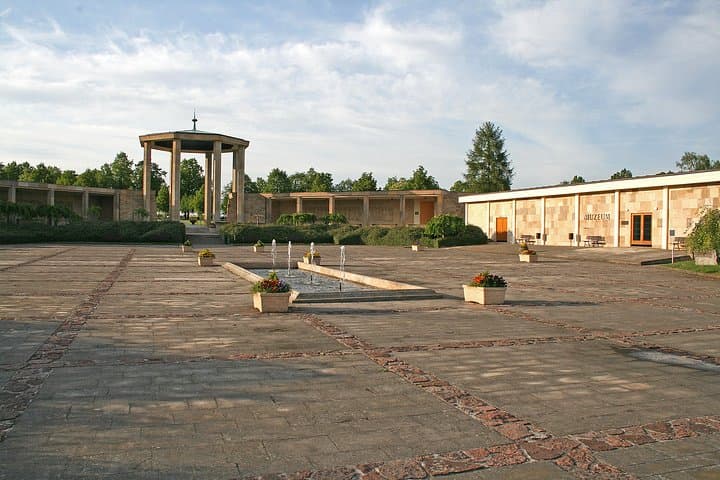


You arrive by quiet country road and the landscape opens not with fanfare but with stillness: low fields, a line of linden trees, the memorial’s stone rising against a pale Czech sky. The site resists spectacle; it asks for attention. Walking paths guide you past plaques, sculptures of children, and a reconstructed layout that marks where a village once stood.
You arrive by quiet country road and the landscape opens not with fanfare but with stillness: low fields, a line of linden trees, the memorial’s stone rising against a pale Czech sky. The site resists spectacle; it asks for attention. Walking paths guide you past plaques, sculptures of children, and a reconstructed layout that marks where a village once stood.
On 10 June 1942 Lidice was destroyed in reprisal by Nazi forces — men executed, women deported, children murdered or taken for “Germanization.” After the war the site became a national place of remembrance and a study in how communities memorialize loss. Geologically this is the gentle rolling plain northwest of Prague, moraine-influenced soils and small agricultural plots; the terrain is flat, easy underfoot, and the air carries the seasonal scents of tilled earth or cold metal depending on the month.
Culturally, Lidice occupies a distinct place in Czech postwar identity and international memory projects; the Children’s Memorial by sculptor Marie Uchytilová is a focal point. Guides typically pair historical narrative with personal testimony and archival photographs for context.
Practical guidance: allow about four hours including pick-up and drop-off from Prague, wear comfortable shoes and a layer for wind, and expect quiet, reflective spaces rather than interpretive centers with interactive displays. Photography is permitted but be respectful at memorials; follow paths and any on-site instructions. If you want deeper context, combine the visit with the small on-site exhibition and ask your guide to point out postwar reconstruction choices and local commemorative practices.