THE ADVENTURE COLLECTIVE® · Independent discovery and booking for outdoor travel

Board a 90‑minute, narrated trolley that links Lexington’s Battle Green with Concord’s historic sites. A costumed guide brings the opening shots of the American Revolution to life while you enjoy a comfortable, accessible ride.
Board a 90‑minute, narrated trolley that links Lexington’s Battle Green with Concord’s historic sites. A costumed guide brings the opening shots of the American Revolution to life while you enjoy a comfortable, accessible ride.
Step onto an air‑conditioned trolley and let the past take the wheel. The guide—often in period dress—sets the scene as the trolley eases away from Lexington’s Battle Green, where early morning muskets and militia formations sliced open a quiet April day in 1775.
Verified experiences and guided adventures in the surrounding area.
Operated by Liberty Ride · Lexington, MA
Step onto an air‑conditioned trolley and let the past take the wheel. The guide—often in period dress—sets the scene as the trolley eases away from Lexington’s Battle Green, where early morning muskets and militia formations sliced open a quiet April day in 1775.
The route threads between two emblematic New England landscapes: Lexington’s compact village green and Concord’s low rolling terrain carved by the last glaciation. Stone walls and farm lanes still mark 18th‑century property lines, while the North Bridge in Concord stands where colonial and imperial histories collided. Cultural threads run close—Emerson, Thoreau and the Transcendentalists used these same river corridors and hilltops for ideas that reshaped American letters.
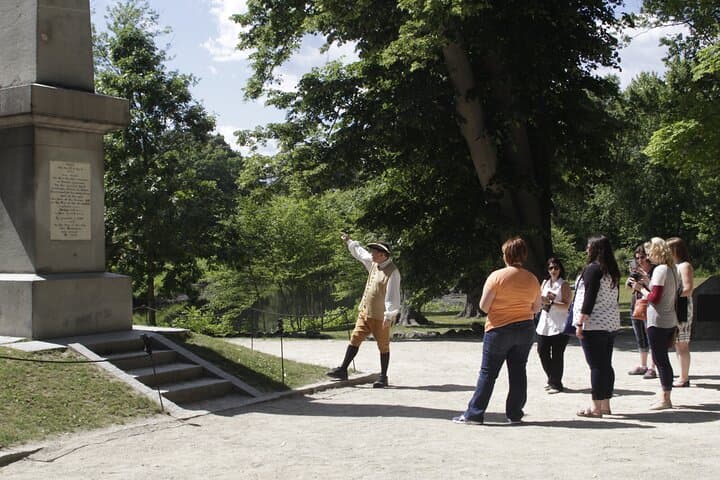
This is not a walking immersion so much as a narrated sequence of places: short stops, clear historical context, and one site with included admission. Expect a mix of roadside storytelling, window views of pasture and river, and a guided walk at the key stop that lasts minutes rather than hours. The trolley’s pace lets a single 90‑minute loop connect battlefields, historic taverns, and interpretive markers without long hikes.
Practical notes: check in at the Lexington Visitors Center, arrive 10–15 minutes early, and plan for a tour that’s wheelchair and stroller accessible. Dress in layers—New England mornings can be cool even in summer—and bring a bottle of water and a camera. The tour is a compact, low‑effort way to see foundational Revolutionary War sites with historically informed narration and minimal logistics to manage.
easy.
1.5 hours.
Suitable for most fitness levels; mostly seated with short, optional walks at stops
The tour runs 90 minutes and includes guided narration, trolley transport, and one included admission at a principal historic site; other stops are interpretive and brief.
Yes. The tour and transportation are wheelchair accessible; contact the Lexington Visitors Center ahead of time if you need special accommodations.
Check in at the Lexington Visitors Center front desk; public transit options exist nearby and town parking is available—allow extra time to find a spot.
Wear comfortable shoes for short walks, bring layered clothing for variable New England weather, and carry water and a charged camera or phone.
Lexington and Concord were the flashpoints of the American Revolution on April 19, 1775; the North Bridge in Concord marks the colonial militia’s confrontation with British troops.
Historic landscapes are preserved through local trusts and the National Park Service—stay on designated paths, avoid climbing on monuments, and follow Leave No Trace principles.
Liberty Ride operates guided outdoor trips and adventures with an emphasis on safety, stewardship, and memorable experiences.
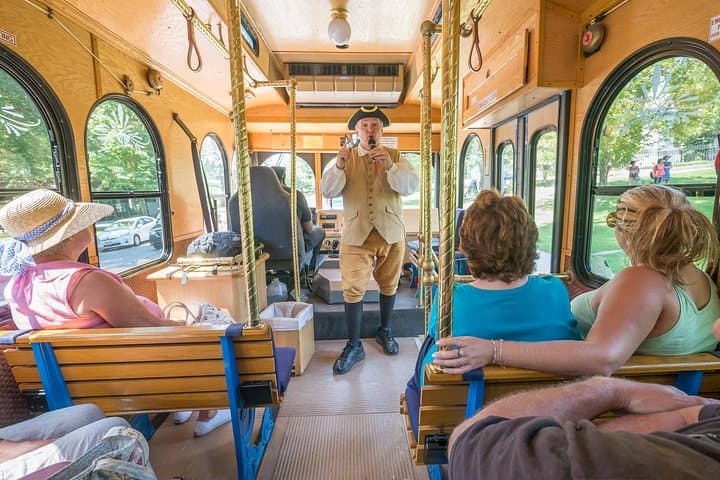

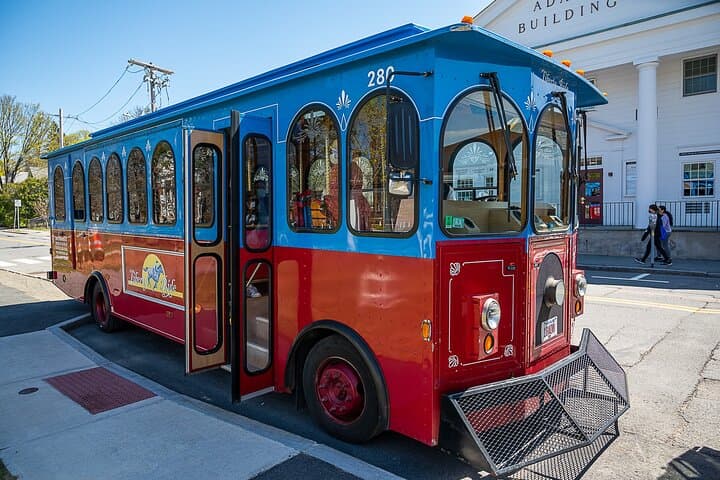
Step onto an air‑conditioned trolley and let the past take the wheel. The guide—often in period dress—sets the scene as the trolley eases away from Lexington’s Battle Green, where early morning muskets and militia formations sliced open a quiet April day in 1775.
Step onto an air‑conditioned trolley and let the past take the wheel. The guide—often in period dress—sets the scene as the trolley eases away from Lexington’s Battle Green, where early morning muskets and militia formations sliced open a quiet April day in 1775.
The route threads between two emblematic New England landscapes: Lexington’s compact village green and Concord’s low rolling terrain carved by the last glaciation. Stone walls and farm lanes still mark 18th‑century property lines, while the North Bridge in Concord stands where colonial and imperial histories collided. Cultural threads run close—Emerson, Thoreau and the Transcendentalists used these same river corridors and hilltops for ideas that reshaped American letters.
This is not a walking immersion so much as a narrated sequence of places: short stops, clear historical context, and one site with included admission. Expect a mix of roadside storytelling, window views of pasture and river, and a guided walk at the key stop that lasts minutes rather than hours. The trolley’s pace lets a single 90‑minute loop connect battlefields, historic taverns, and interpretive markers without long hikes.
Practical notes: check in at the Lexington Visitors Center, arrive 10–15 minutes early, and plan for a tour that’s wheelchair and stroller accessible. Dress in layers—New England mornings can be cool even in summer—and bring a bottle of water and a camera. The tour is a compact, low‑effort way to see foundational Revolutionary War sites with historically informed narration and minimal logistics to manage.