THE ADVENTURE COLLECTIVE® · Independent discovery and booking for outdoor travel

Rise before dawn for a private, staged photography session on the Li River—capture lantern-lit cormorant fishing against sharp karst peaks. A photographer-guide coaches low-light technique across blue and golden hours.
Rise before dawn for a private, staged photography session on the Li River—capture lantern-lit cormorant fishing against sharp karst peaks. A photographer-guide coaches low-light technique across blue and golden hours.
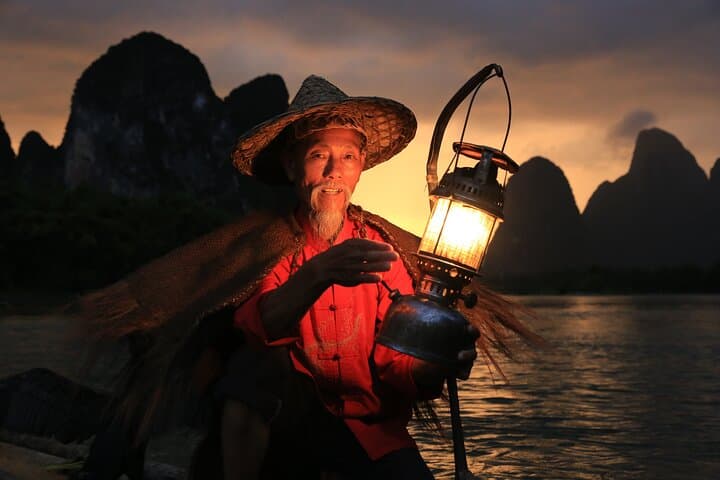
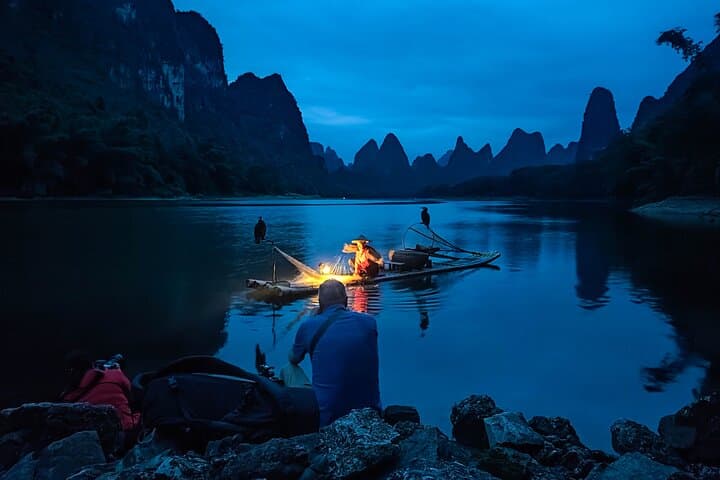
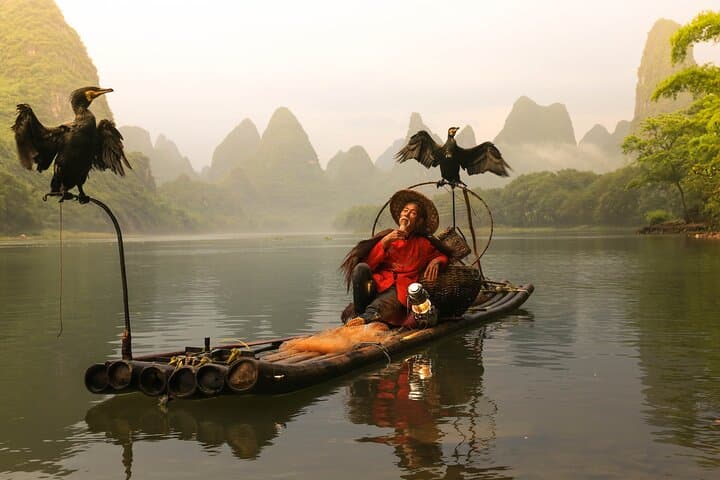
Before dawn the river is a sheet of black glass and the karst peaks are low, graphite silhouettes. A single gas lantern hovers on a bamboo raft; the cormorants sleep like shadowed commas along the gunwale. This is the moment the session is built around—blue hour giving way to the thin gold that outlines limestone towers and wakes soft, painterly reflections.
Verified experiences and guided adventures in the surrounding area.
Operated by Jack's Private Tours · Yangshuo, Guangxi
Before dawn the river is a sheet of black glass and the karst peaks are low, graphite silhouettes. A single gas lantern hovers on a bamboo raft; the cormorants sleep like shadowed commas along the gunwale. This is the moment the session is built around—blue hour giving way to the thin gold that outlines limestone towers and wakes soft, painterly reflections.
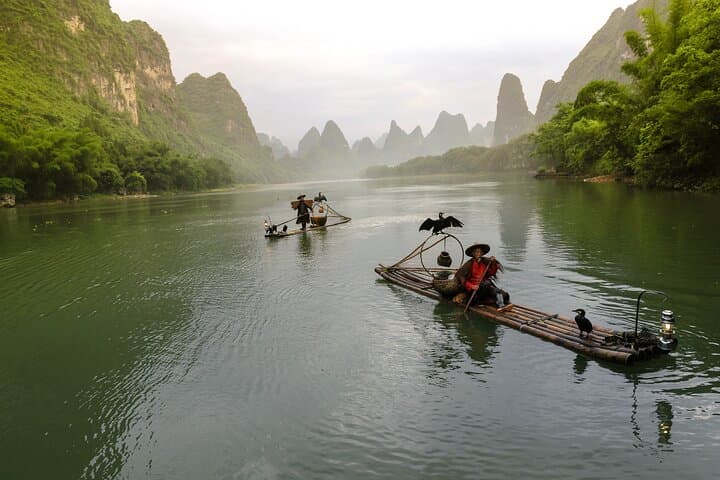
Cormorant fishing on the Li River is an age-old practice once essential to local villages; today it survives largely as cultural heritage and photographic subject. The karst landscape itself—limestone folded and dissolved over millions of years—creates the vertical skylines that make every frame distinctive. Guides and local fishermen bring a mix of practical knowledge and performance: lantern placement, boat angle, and staged net casts calibrated to the light.
What to expect: a private pre-dawn pickup from Guilin or Yangshuo, a short drive to a secluded riverside launch, and a 4‑hour session where an experienced local photographer-guide coaches low-light settings, long exposures, and composition. Shots range from lantern-lit silhouettes in the blue hour to misty golden-hour nets and reflections.
Practical edge: bring a sturdy tripod, fast lenses, warm layers, and enough batteries—cold mornings kill juice. Respect the birds and the performer: avoid sudden movements and harsh flash. Timing is everything; weather, mist, and river conditions determine the mood. For photographers this is less a cruise and more a controlled, high-value shoot: arrive ready to work quickly and leave with images that capture both technique and place.
easy.
4 hours.
Minimal physical exertion; able to board a low raft and stand for short periods
Most photography sessions are staged to guarantee repeatable poses and lantern placement; the cormorant fishing technique is real but performed for cultural demonstration.
Pickup is typically 3:30–4:00 AM to reach the riverside before blue hour; expect to return by mid-morning.
Drones are generally discouraged due to wildlife disturbance and local regulations—check with your guide and local authorities first.
Yes—guides provide on-site coaching for exposure, framing, and long exposures, but basic tripod and camera familiarity helps.
Cormorant fishing has been practiced along the Li River for centuries as a subsistence method; today it survives mainly as cultural heritage shown by local fishermen.
Avoid flash and minimize disturbance to birds; support licensed guides who prioritize bird welfare and local livelihoods.
Jack's Private Tours operates guided outdoor trips and adventures with an emphasis on safety, stewardship, and memorable experiences.
Before dawn the river is a sheet of black glass and the karst peaks are low, graphite silhouettes. A single gas lantern hovers on a bamboo raft; the cormorants sleep like shadowed commas along the gunwale. This is the moment the session is built around—blue hour giving way to the thin gold that outlines limestone towers and wakes soft, painterly reflections.
Before dawn the river is a sheet of black glass and the karst peaks are low, graphite silhouettes. A single gas lantern hovers on a bamboo raft; the cormorants sleep like shadowed commas along the gunwale. This is the moment the session is built around—blue hour giving way to the thin gold that outlines limestone towers and wakes soft, painterly reflections.
Cormorant fishing on the Li River is an age-old practice once essential to local villages; today it survives largely as cultural heritage and photographic subject. The karst landscape itself—limestone folded and dissolved over millions of years—creates the vertical skylines that make every frame distinctive. Guides and local fishermen bring a mix of practical knowledge and performance: lantern placement, boat angle, and staged net casts calibrated to the light.
What to expect: a private pre-dawn pickup from Guilin or Yangshuo, a short drive to a secluded riverside launch, and a 4‑hour session where an experienced local photographer-guide coaches low-light settings, long exposures, and composition. Shots range from lantern-lit silhouettes in the blue hour to misty golden-hour nets and reflections.
Practical edge: bring a sturdy tripod, fast lenses, warm layers, and enough batteries—cold mornings kill juice. Respect the birds and the performer: avoid sudden movements and harsh flash. Timing is everything; weather, mist, and river conditions determine the mood. For photographers this is less a cruise and more a controlled, high-value shoot: arrive ready to work quickly and leave with images that capture both technique and place.