THE ADVENTURE COLLECTIVE® · Independent discovery and booking for outdoor travel

Spend a focused day photographing the Li River’s karst peaks: cable car to Yao Mountain, tea-plantation culture, a private bamboo raft through Caoping, and the iconic Xingping viewpoint. Small group size keeps the pace relaxed and photo-friendly.
Spend a focused day photographing the Li River’s karst peaks: cable car to Yao Mountain, tea-plantation culture, a private bamboo raft through Caoping, and the iconic Xingping viewpoint. Small group size keeps the pace relaxed and photo-friendly.
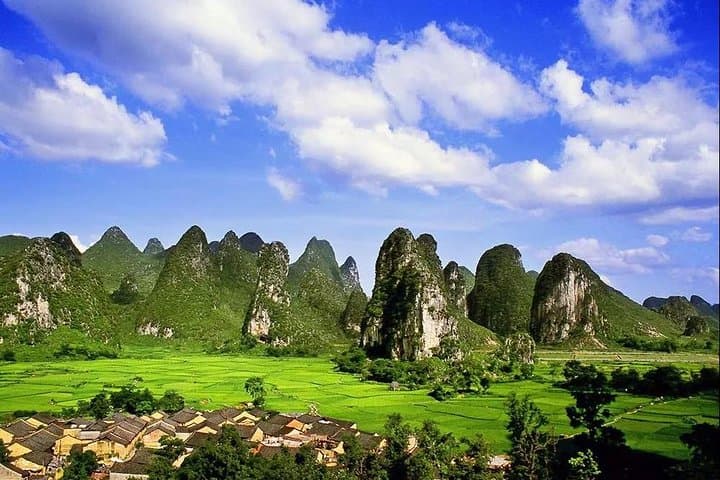
Morning light slices between limestone peaks as the Li River threads through a valley of sheer karst towers.
Verified experiences and guided adventures in the surrounding area.
Operated by China Secretstory Tours · Guilin, Guangxi
Morning light slices between limestone peaks as the Li River threads through a valley of sheer karst towers.
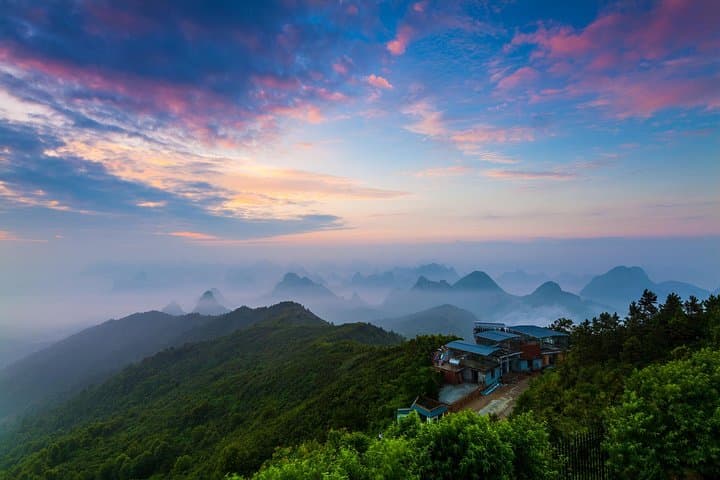
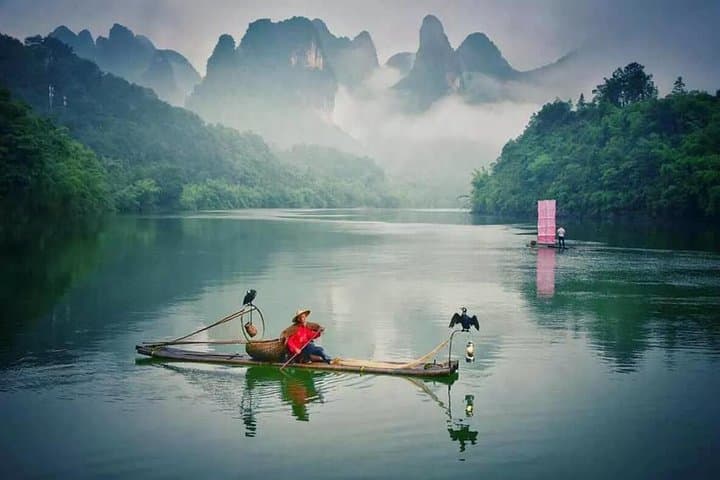
This mini-group day tour (max six people) moves deliberately: a cable car lifts you to Yao Mountain’s high ridge for sweeping vantage points, a walk through the tea terraces that once supplied the Jingjiang wangfu, and a private bamboo-raft hour down the quieter stretch of the Li River from Caoping.
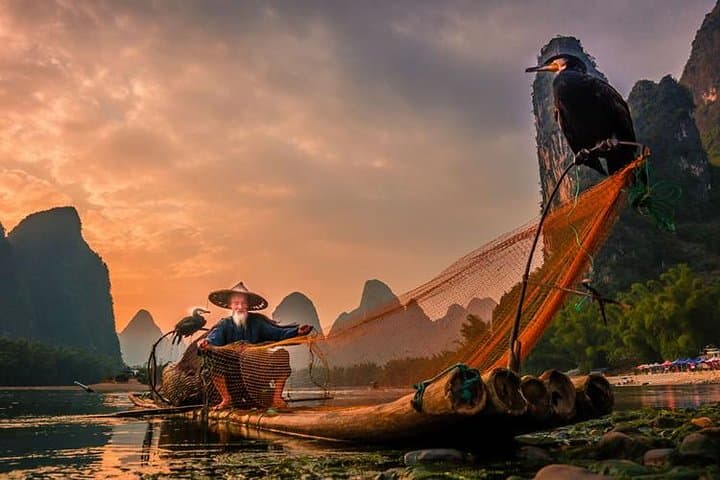
Geology here is blunt and ancient—limestone worn into vertical cliffs over millions of years, producing the steep, sculpted peaks photographers prize. Xingping Ancient Town sits where human history meets that geology: narrow lanes, Ming-era buildings, and the viewpoint immortalized on China’s RMB20 note. The living craft of cormorant fishing still appears along the banks, offering a direct link to traditional river livelihoods.
Practically: expect an 8–10 hour day with hotel transfers, an English-speaking guide, entrance fees, bottled water and driver included. The cable car ride gives immediate elevation (Yao Mountain’s main peak is listed in local sources at about 760 m with a summit altitude near 909.3 m), and the raft is a calm, one-way photographic float of roughly 60 minutes.
For photographers, golden hours—early morning or late afternoon—deliver the most dimensional light; mid-day can flatten contrast. Wear grippy walking shoes for uneven boardwalks and terraces, bring layered clothing for wind at elevation, and carry spare batteries and a lightweight rain shell. Respect local customs: ask before photographing fishermen or cormorants, and carry cash for small purchases in ancient towns.
easy.
8–10 hours.
Suitable for travelers in general good health who can stand and walk on uneven surfaces for short periods; minimal climbing required.
The private one-way raft along the Caoping stretch is roughly one hour, planned for calm, photographic passage and gentle scenery viewing.
Yes—this is rated easy and stroller-accessible according to the operator, but guests with limited mobility should note raft boarding and short uneven walks.
An English-speaking local guide accompanies the tour to explain cultural sites and manage logistics.
Transfers from hotels in the pickup zone, entrance fees listed in the itinerary, bottled water, driver service, and the guide are included; confirm specifics with the operator for exclusions.
Xingping’s waterfront and nearby viewpoints have been inhabited for centuries; the tea plantation in the Yao Mountain area was historically linked to the Jingjiang wangfu (a Ming-dynasty princely household).
The Li River corridor is sensitive to tourism pressure—stick to paths, avoid single-use plastics, and support locally managed services to reduce environmental impact.
China Secretstory Tours operates guided outdoor trips and adventures with an emphasis on safety, stewardship, and memorable experiences.
Morning light slices between limestone peaks as the Li River threads through a valley of sheer karst towers.
Morning light slices between limestone peaks as the Li River threads through a valley of sheer karst towers.
This mini-group day tour (max six people) moves deliberately: a cable car lifts you to Yao Mountain’s high ridge for sweeping vantage points, a walk through the tea terraces that once supplied the Jingjiang wangfu, and a private bamboo-raft hour down the quieter stretch of the Li River from Caoping.
Geology here is blunt and ancient—limestone worn into vertical cliffs over millions of years, producing the steep, sculpted peaks photographers prize. Xingping Ancient Town sits where human history meets that geology: narrow lanes, Ming-era buildings, and the viewpoint immortalized on China’s RMB20 note. The living craft of cormorant fishing still appears along the banks, offering a direct link to traditional river livelihoods.
Practically: expect an 8–10 hour day with hotel transfers, an English-speaking guide, entrance fees, bottled water and driver included. The cable car ride gives immediate elevation (Yao Mountain’s main peak is listed in local sources at about 760 m with a summit altitude near 909.3 m), and the raft is a calm, one-way photographic float of roughly 60 minutes.
For photographers, golden hours—early morning or late afternoon—deliver the most dimensional light; mid-day can flatten contrast. Wear grippy walking shoes for uneven boardwalks and terraces, bring layered clothing for wind at elevation, and carry spare batteries and a lightweight rain shell. Respect local customs: ask before photographing fishermen or cormorants, and carry cash for small purchases in ancient towns.