THE ADVENTURE COLLECTIVE® · Independent discovery and booking for outdoor travel

Walk the Li River from Quanjiazhou to Xingping, climb Xianggong Hill for the iconic river bend view, and experience karst peaks, bamboo groves, and river life on a private full‑day tour. Practical logistics and ferry crossings are handled — you focus on the trail and the light.
Walk the Li River from Quanjiazhou to Xingping, climb Xianggong Hill for the iconic river bend view, and experience karst peaks, bamboo groves, and river life on a private full‑day tour. Practical logistics and ferry crossings are handled — you focus on the trail and the light.
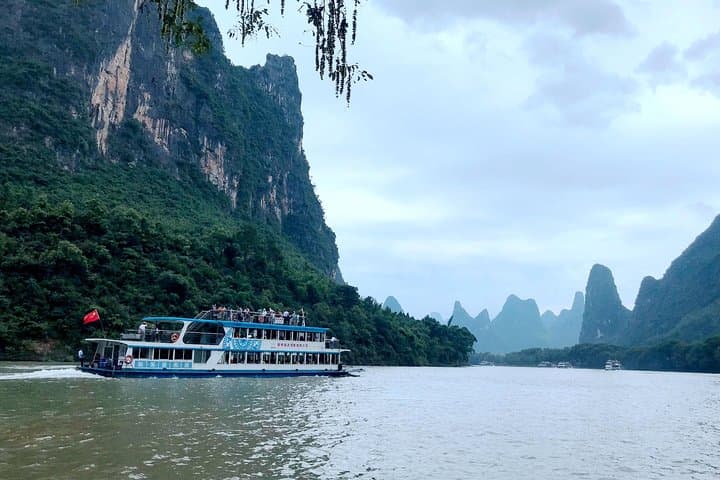
A mist lifts off the Li River as you step from the ferry onto a stony riverbank and the path threads between bamboo and rice paddies. The river dares you to slow down; karst peaks lean in like onlookers as you walk the Quanjiazhou–Lengshui trail toward Xingping, wading shallow edges where the current cools your toes.
Verified experiences and guided adventures in the surrounding area.
Operated by Trippest Travel · Xingping, Guangxi
A mist lifts off the Li River as you step from the ferry onto a stony riverbank and the path threads between bamboo and rice paddies. The river dares you to slow down; karst peaks lean in like onlookers as you walk the Quanjiazhou–Lengshui trail toward Xingping, wading shallow edges where the current cools your toes.
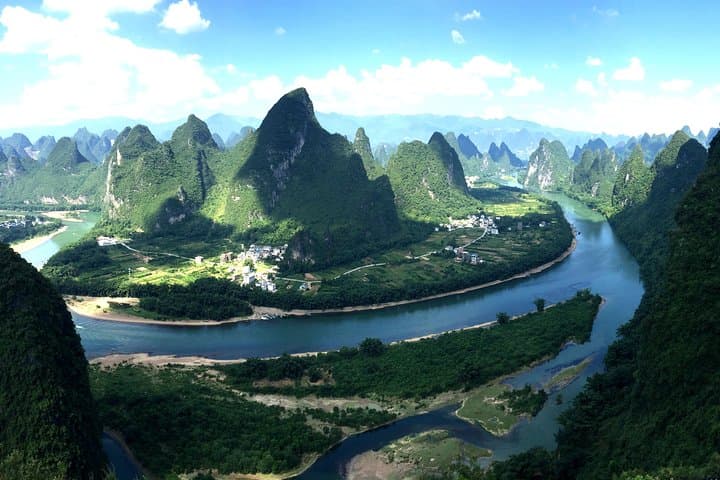
This route follows the course of a landscape carved by limestone uplift and river erosion over millions of years — the classic Guilin karst that made the area famous in ink painting. Xingping’s old street preserves Ming–Qing era architecture and the long history of river trade; Xianggong Hill, a short, steep climb, gives the classic right-angle bend view photographers seek at sunrise and sunset.
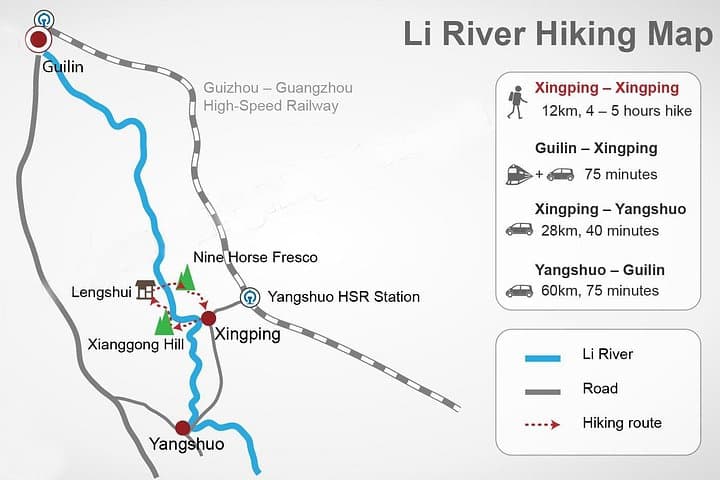
Culturally, the river still supports traditional livelihoods: bamboo rafts, riverside market stalls, and occasional cormorant boats that nod to older ways of fishing. Practically, expect mixed surfaces — paved village lanes, dirt tracks, and rocky riverside steps — about 11 km of hiking broken into sections with ferry and short tuk‑tuk transfers.
Bring layered clothing, non‑slip hiking shoes, and a light daypack with water and sun protection; ferry crossings and hilltop viewpoints make for photographic stops and quick elevation changes. The guide handles permits and ferry logistics, but check ferry status in poor weather. Start early for cooler light, and plan lunch in Xingping Old Street or pack snacks if you prefer to stay moving. This is a full, immersive day where terrain, history, and river converge into a walkable slice of southern China’s karst country.
moderate.
8 hours.
Suitable for hikers comfortable with 10–12 km of walking on mixed terrain and short steep sections; basic stamina required for repeated elevations.
The riverside walk covers about 11 km (roughly 3½ hours of walking) broken into sections including a ferry crossing and short transfers.
The tour is generally suitable for a wide range of fitness levels, but those with mobility issues should note uneven ground and short steep climbs; infant seats are available in vehicles.
If Xianggong Hill is temporarily closed, guides typically substitute Cuiping Wuzhishan or another nearby viewpoint for similar karst vistas.
Lunch is not included; the guide can recommend restaurants in Xingping Old Street or you can bring packed food to eat on the trail.
Xingping was an important river town in historic trade networks on the Li River; the area’s karst scenery has inspired Chinese ink painters for centuries.
Stay on marked trails, avoid trampling rice paddies, and pack out trash; local conservation efforts focus on limiting motor traffic and protecting river water quality.
Trippest Travel operates guided outdoor trips and adventures with an emphasis on safety, stewardship, and memorable experiences.

A mist lifts off the Li River as you step from the ferry onto a stony riverbank and the path threads between bamboo and rice paddies. The river dares you to slow down; karst peaks lean in like onlookers as you walk the Quanjiazhou–Lengshui trail toward Xingping, wading shallow edges where the current cools your toes.
A mist lifts off the Li River as you step from the ferry onto a stony riverbank and the path threads between bamboo and rice paddies. The river dares you to slow down; karst peaks lean in like onlookers as you walk the Quanjiazhou–Lengshui trail toward Xingping, wading shallow edges where the current cools your toes.
This route follows the course of a landscape carved by limestone uplift and river erosion over millions of years — the classic Guilin karst that made the area famous in ink painting. Xingping’s old street preserves Ming–Qing era architecture and the long history of river trade; Xianggong Hill, a short, steep climb, gives the classic right-angle bend view photographers seek at sunrise and sunset.
Culturally, the river still supports traditional livelihoods: bamboo rafts, riverside market stalls, and occasional cormorant boats that nod to older ways of fishing. Practically, expect mixed surfaces — paved village lanes, dirt tracks, and rocky riverside steps — about 11 km of hiking broken into sections with ferry and short tuk‑tuk transfers.
Bring layered clothing, non‑slip hiking shoes, and a light daypack with water and sun protection; ferry crossings and hilltop viewpoints make for photographic stops and quick elevation changes. The guide handles permits and ferry logistics, but check ferry status in poor weather. Start early for cooler light, and plan lunch in Xingping Old Street or pack snacks if you prefer to stay moving. This is a full, immersive day where terrain, history, and river converge into a walkable slice of southern China’s karst country.