THE ADVENTURE COLLECTIVE® · Independent discovery and booking for outdoor travel

Walk the Levada do Estreito — a low-elevation, easy levada trail that threads Madeira’s vineyard terraces and links local agricultural life with coastal views toward Câmara de Lobos. Ideal for walkers who want a relaxed half-day route with cultural and geological interest.
Walk the Levada do Estreito — a low-elevation, easy levada trail that threads Madeira’s vineyard terraces and links local agricultural life with coastal views toward Câmara de Lobos. Ideal for walkers who want a relaxed half-day route with cultural and geological interest.
The path unfurls along the shoulder of Madeira’s southern slopes, vines leaning over low stone walls as the levada hums beside you, carrying mountain water toward the coast. Early light catches rows of verdant terraces and the dark, volcanic soil that feeds the island’s signature vineyards; gulls wheel far below toward Câmara de Lobos.
Verified experiences and guided adventures in the surrounding area.
Operated by Madeira Happy Tours · Câmara de Lobos, Madeira
The path unfurls along the shoulder of Madeira’s southern slopes, vines leaning over low stone walls as the levada hums beside you, carrying mountain water toward the coast. Early light catches rows of verdant terraces and the dark, volcanic soil that feeds the island’s signature vineyards; gulls wheel far below toward Câmara de Lobos.
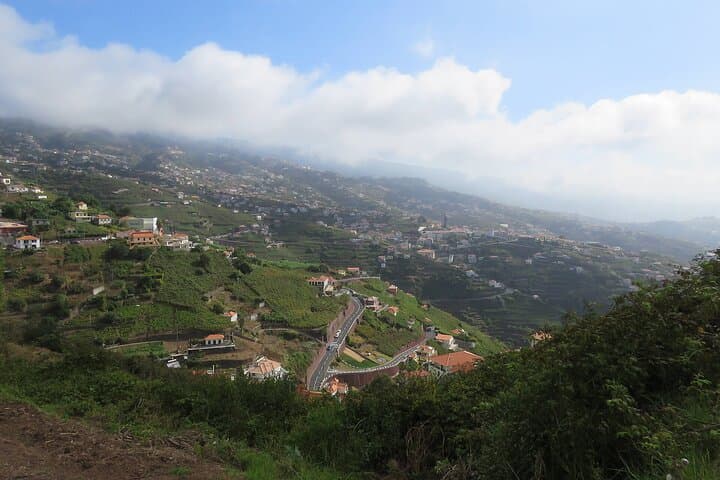
This is the Levada do Estreito — part of the larger Levada do Norte network — a pragmatic irrigation system born from 16th–19th century engineering to move water between peaks and fields. Geologically, the walk runs across old basalt flows eroded into steep amphitheaters; terraces (poios madeirenses) are carved into these slopes and sustain small-scale agriculture and vines that produce Madeira’s table grapes and local wines.
Culturally the route threads rural parishes where agricultura de subsistência persists: residents tend plots with practiced hands, and dry stone walls mark centuries of human shaping. The levada itself gives personality to the landscape, its steady trickle daring you to slow your pace and notice the small things — moss, lizards, the scent of wet earth.
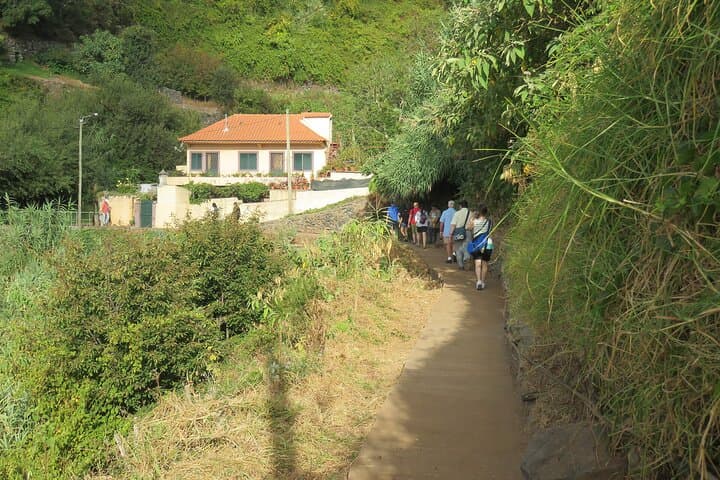
Practical guidance: the trail is largely flat and suitable for most walkers, typically covered in 3–4 hours depending on pace. Expect narrow single-track sections and occasional wet spots; waterproof shoes with good traction and 1–2 liters of water are recommended. Start in the morning to avoid mid-day sun, carry a light rain shell (weather changes quickly even in the south), and respect private terraces — stay on the levada path. The route is walkable year-round thanks to Madeira’s mild climate, and it rewards steady observers with vineyard views and quiet coastal glimpses toward Câmara de Lobos.
easy.
3–4 hours.
Suitable for most walkers; able to walk 8–10 km on mostly flat, sometimes uneven terrain.
Typical walks take about 3–4 hours round-trip depending on your start and finish points; many itineraries cover roughly 8–10 km with minimal elevation change.
Yes—it's classed as easy and largely flat, but children and older walkers should watch narrow sections and bring appropriate footwear and breaks.
Yes; Madeira’s southern climate keeps conditions mild year-round, though short rain showers can make sections slippery.
Service animals are allowed; keep pets on a leash and respect private agricultural plots and livestock.
Levadas were developed from the 16th century onward to move water from the island’s wetter north to drier southern slopes; Levada do Norte is one of the island’s primary channels.
Stay on established paths to protect fragile terraces and endemic plants; avoid leaving litter and respect irrigation channels to prevent damage to traditional agriculture.
Madeira Happy Tours operates guided outdoor trips and adventures with an emphasis on safety, stewardship, and memorable experiences.
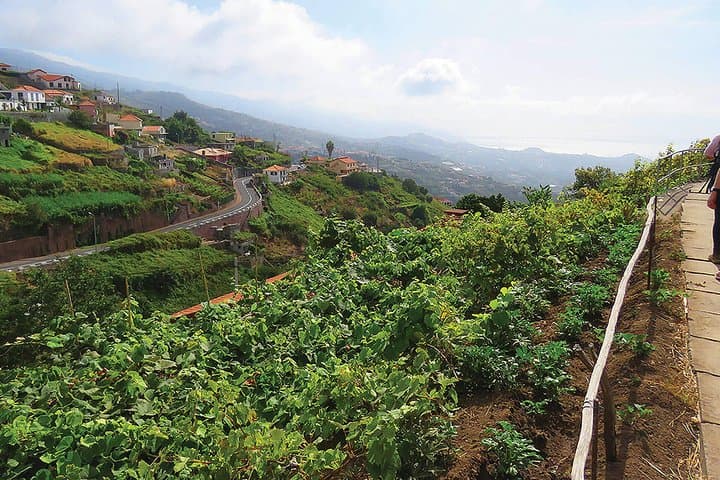
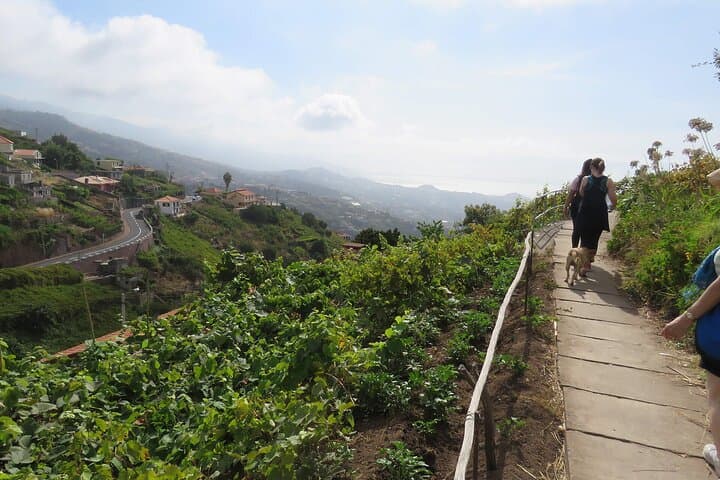
The path unfurls along the shoulder of Madeira’s southern slopes, vines leaning over low stone walls as the levada hums beside you, carrying mountain water toward the coast. Early light catches rows of verdant terraces and the dark, volcanic soil that feeds the island’s signature vineyards; gulls wheel far below toward Câmara de Lobos.
The path unfurls along the shoulder of Madeira’s southern slopes, vines leaning over low stone walls as the levada hums beside you, carrying mountain water toward the coast. Early light catches rows of verdant terraces and the dark, volcanic soil that feeds the island’s signature vineyards; gulls wheel far below toward Câmara de Lobos.
This is the Levada do Estreito — part of the larger Levada do Norte network — a pragmatic irrigation system born from 16th–19th century engineering to move water between peaks and fields. Geologically, the walk runs across old basalt flows eroded into steep amphitheaters; terraces (poios madeirenses) are carved into these slopes and sustain small-scale agriculture and vines that produce Madeira’s table grapes and local wines.
Culturally the route threads rural parishes where agricultura de subsistência persists: residents tend plots with practiced hands, and dry stone walls mark centuries of human shaping. The levada itself gives personality to the landscape, its steady trickle daring you to slow your pace and notice the small things — moss, lizards, the scent of wet earth.
Practical guidance: the trail is largely flat and suitable for most walkers, typically covered in 3–4 hours depending on pace. Expect narrow single-track sections and occasional wet spots; waterproof shoes with good traction and 1–2 liters of water are recommended. Start in the morning to avoid mid-day sun, carry a light rain shell (weather changes quickly even in the south), and respect private terraces — stay on the levada path. The route is walkable year-round thanks to Madeira’s mild climate, and it rewards steady observers with vineyard views and quiet coastal glimpses toward Câmara de Lobos.