THE ADVENTURE COLLECTIVE® · Independent discovery and booking for outdoor travel

A compact two-day loop from Chengdu that pairs the carved scale of the Leshan Giant Buddha with Emeishan’s temple-studded ridgelines. Expect trains, cable cars, steep trails and sunrise views at Golden Summit.
A compact two-day loop from Chengdu that pairs the carved scale of the Leshan Giant Buddha with Emeishan’s temple-studded ridgelines. Expect trains, cable cars, steep trails and sunrise views at Golden Summit.
You step off the high‑speed train and the air shifts—river humidity and cedar-scented mountain breeze meeting at the feet of two of Sichuan’s most elemental sites.
Verified experiences and guided adventures in the surrounding area.
Operated by Travel Sichuan Guide · Leshan, Sichuan
You step off the high‑speed train and the air shifts—river humidity and cedar-scented mountain breeze meeting at the feet of two of Sichuan’s most elemental sites.
First stop: the Leshan Giant Buddha, hewn into the river-facing cliff where three currents meet. The statue watches the confluence of Minjiang, Dadu and Qingyi rivers, its carved features preserved for more than a millennium while the water below dares you to notice how landscape and human craft rearrange one another.
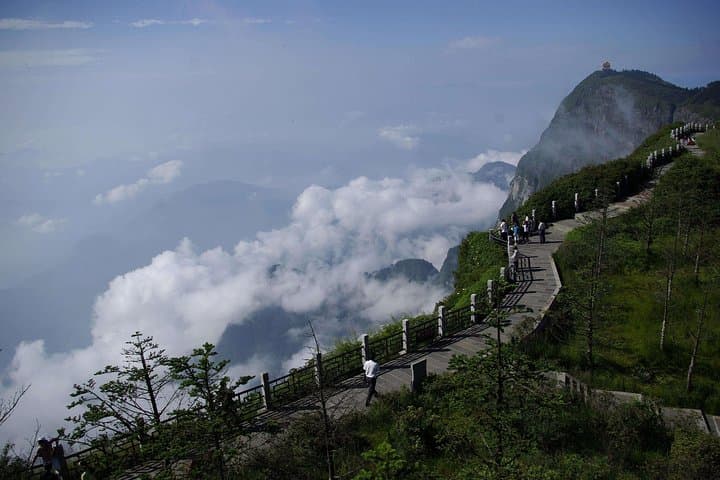
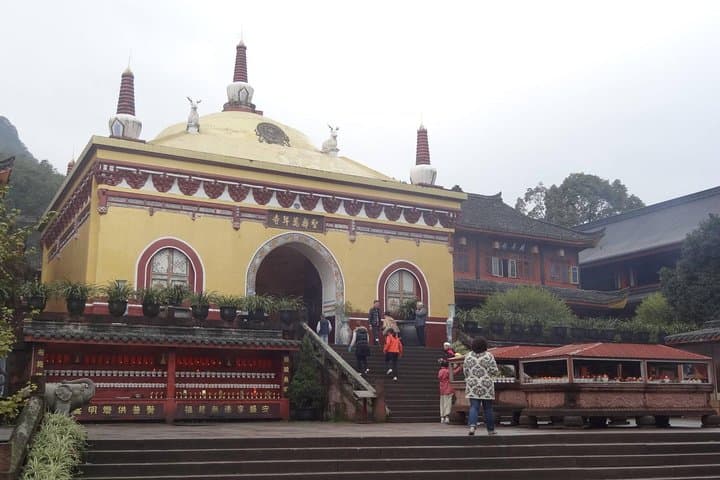
By afternoon you’re in the foothills of Emeishan, one of China’s four sacred Buddhist mountains. Emei’s geology—steep, forested slopes and granite outcrops—creates microclimates that support rare plants and a noisy population of macaques. Ancient monasteries like Baoguo and Golden Temple layer religious history over the rugged terrain; UNESCO listed both sites for their cultural and natural value in 1996.
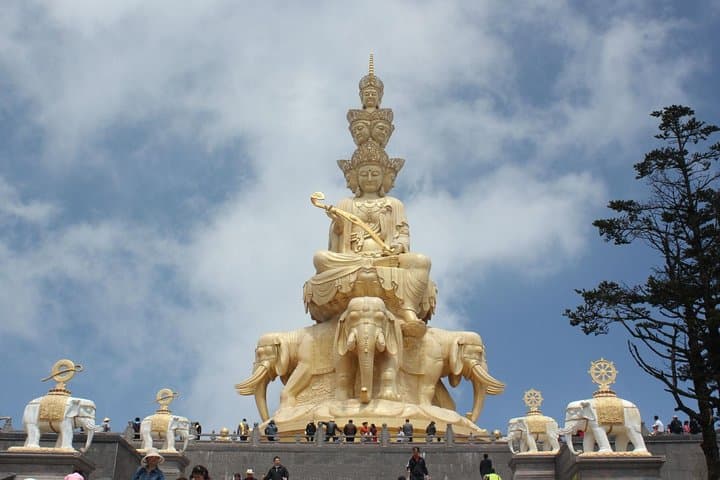
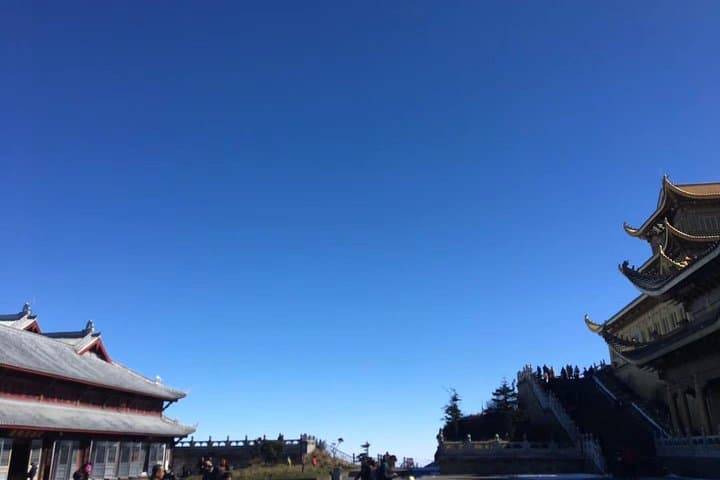
The second day tunes you to altitude and rhythm: a sightseer bus to Leidongping, a cable car to the Golden Summit, temple courtyards rimed in cloud, then a steady descent by trail through Qingyin Pavilion, monkey zones and pine-thinned forest to the Wuxiangang bus stop.
Practical edge: expect lots of stairs and short steep sections—good footwear and a waterproof shell matter more than speed. Plan sunrise at Golden Summit for clearer views, carry cash for local buses, and don’t feed wildlife. The route is compact but varied: cultural sites, river viewpoints, cable car access and a fair measure of real hiking—two days that compress history, geology and forest into an accessible, refreshing escape.
moderate.
2 days (approx. 8–10 hours/day of mixed activity).
Moderate fitness—able to manage stairs, uphill walks and some sustained descent on uneven trails.
Yes—the itinerary includes round-trip high-speed train travel between Chengdu and Leshan/Emeishan as stated in the tour inclusions.
Hiking sections are moderate: some steep stone stairways and packed-earth trails but no technical climbing; a basic level of fitness is recommended.
Monkeys are wild and may act aggressively if fed; feeding them is discouraged—keep a safe distance and secure food and small items.
The tour notes exclusions for major holidays (e.g., National Day, Spring Festival); expect heavy crowds and check availability—book well in advance or avoid peak dates.
Mount Emei and the Leshan Giant Buddha share long Buddhist heritage; the sites were designated a combined UNESCO World Heritage in 1996 for cultural and natural significance.
Heavy visitor numbers strain trails and wildlife; stick to paths, avoid littering and respect signage—entrance fees contribute to conservation and maintenance.
Travel Sichuan Guide operates guided outdoor trips and adventures with an emphasis on safety, stewardship, and memorable experiences.
You step off the high‑speed train and the air shifts—river humidity and cedar-scented mountain breeze meeting at the feet of two of Sichuan’s most elemental sites.
You step off the high‑speed train and the air shifts—river humidity and cedar-scented mountain breeze meeting at the feet of two of Sichuan’s most elemental sites.
First stop: the Leshan Giant Buddha, hewn into the river-facing cliff where three currents meet. The statue watches the confluence of Minjiang, Dadu and Qingyi rivers, its carved features preserved for more than a millennium while the water below dares you to notice how landscape and human craft rearrange one another.
By afternoon you’re in the foothills of Emeishan, one of China’s four sacred Buddhist mountains. Emei’s geology—steep, forested slopes and granite outcrops—creates microclimates that support rare plants and a noisy population of macaques. Ancient monasteries like Baoguo and Golden Temple layer religious history over the rugged terrain; UNESCO listed both sites for their cultural and natural value in 1996.
The second day tunes you to altitude and rhythm: a sightseer bus to Leidongping, a cable car to the Golden Summit, temple courtyards rimed in cloud, then a steady descent by trail through Qingyin Pavilion, monkey zones and pine-thinned forest to the Wuxiangang bus stop.
Practical edge: expect lots of stairs and short steep sections—good footwear and a waterproof shell matter more than speed. Plan sunrise at Golden Summit for clearer views, carry cash for local buses, and don’t feed wildlife. The route is compact but varied: cultural sites, river viewpoints, cable car access and a fair measure of real hiking—two days that compress history, geology and forest into an accessible, refreshing escape.