THE ADVENTURE COLLECTIVE® · Independent discovery and booking for outdoor travel

See the Leshan Giant Buddha without the hassle: pre-booked entry, optional private transfer from Chengdu, and guided tours that bring Tang-dynasty history to life. This guide covers what to expect on-site and how to plan your visit.
See the Leshan Giant Buddha without the hassle: pre-booked entry, optional private transfer from Chengdu, and guided tours that bring Tang-dynasty history to life. This guide covers what to expect on-site and how to plan your visit.
Morning light hits the red sandstone cliffs as the Leshan Giant Buddha opens his carved eyelids to the river below. Visitors descend a network of stone steps and terraces, the air carrying the cool scent of the Min River and incense from nearby temples. The statue’s 71-meter silhouette dominates the curve of the river, a monumental figure hewn from the cliff face during the Tang dynasty.
Verified experiences and guided adventures in the surrounding area.
Operated by Unique Beijing Tours · Leshan, Sichuan
Morning light hits the red sandstone cliffs as the Leshan Giant Buddha opens his carved eyelids to the river below. Visitors descend a network of stone steps and terraces, the air carrying the cool scent of the Min River and incense from nearby temples. The statue’s 71-meter silhouette dominates the curve of the river, a monumental figure hewn from the cliff face during the Tang dynasty.
Carving began in the 8th century under monk Hai Tong and took generations to complete; the river’s course and the cliff’s geology were manipulated then to reduce erosion, a spatial intelligence that still shapes the site. Cultural rhythm here mixes Buddhist ritual at Lingyun Temple, local tea vendors near the approach, and the constant hiss of river traffic—Emei Mountain looms nearby, offering a deeper historical context for pilgrims and photographers alike.
Practicalities: tickets can be pre-booked and delivered as mobile e-tickets, and private transfers from Chengdu take about 2.5–3 hours each way (roughly 150 km). Guided visits typically last 3–4 hours on site; expect many stone staircases and viewpoints by the head, shoulders and feet of the Buddha. Accessibility is limited beyond the main terraces—strollers can be used in flatter zones, but much of the sightline requires steps.
Plan for variable weather, wear grippy footwear for wet stone, and allow time for river viewpoints—consider a short boat ride for the classic frontal perspective. Respect signage and avoid touching the statue; conservation efforts are ongoing to protect this Tang-era landmark.
easy.
2–6 hours.
Suitable for travelers with light to moderate mobility; expect stair sections and short walks.
The scenic area is about 150 km from Chengdu; private transfers typically take 2.5–3 hours each way depending on traffic.
Yes—mobile e-tickets are accepted; present your booking and valid ID at the gate.
Flat areas near the entrance and some viewing platforms are accessible, but major viewpoints and the main stair descents require stairs and are not fully wheelchair-friendly.
Private guided options are often available in English—confirm language preference when booking to ensure an English-speaking guide.
The Leshan Giant Buddha was carved from the cliff during the Tang dynasty (begun in the 8th century) to calm turbulent river currents; work continued across generations.
Continual conservation addresses weathering and pollution; visitors should stay on marked paths, avoid touching the statue, and follow local rules to reduce wear.
Unique Beijing Tours operates guided outdoor trips and adventures with an emphasis on safety, stewardship, and memorable experiences.
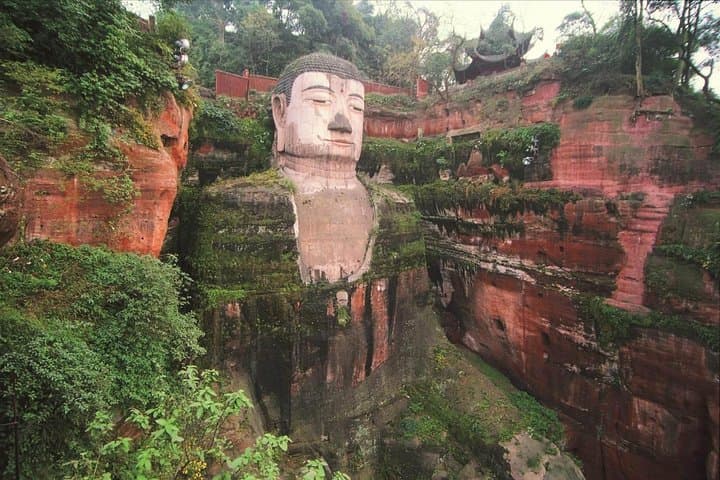



Morning light hits the red sandstone cliffs as the Leshan Giant Buddha opens his carved eyelids to the river below. Visitors descend a network of stone steps and terraces, the air carrying the cool scent of the Min River and incense from nearby temples. The statue’s 71-meter silhouette dominates the curve of the river, a monumental figure hewn from the cliff face during the Tang dynasty.
Morning light hits the red sandstone cliffs as the Leshan Giant Buddha opens his carved eyelids to the river below. Visitors descend a network of stone steps and terraces, the air carrying the cool scent of the Min River and incense from nearby temples. The statue’s 71-meter silhouette dominates the curve of the river, a monumental figure hewn from the cliff face during the Tang dynasty.
Carving began in the 8th century under monk Hai Tong and took generations to complete; the river’s course and the cliff’s geology were manipulated then to reduce erosion, a spatial intelligence that still shapes the site. Cultural rhythm here mixes Buddhist ritual at Lingyun Temple, local tea vendors near the approach, and the constant hiss of river traffic—Emei Mountain looms nearby, offering a deeper historical context for pilgrims and photographers alike.
Practicalities: tickets can be pre-booked and delivered as mobile e-tickets, and private transfers from Chengdu take about 2.5–3 hours each way (roughly 150 km). Guided visits typically last 3–4 hours on site; expect many stone staircases and viewpoints by the head, shoulders and feet of the Buddha. Accessibility is limited beyond the main terraces—strollers can be used in flatter zones, but much of the sightline requires steps.
Plan for variable weather, wear grippy footwear for wet stone, and allow time for river viewpoints—consider a short boat ride for the classic frontal perspective. Respect signage and avoid touching the statue; conservation efforts are ongoing to protect this Tang-era landmark.