THE ADVENTURE COLLECTIVE® · Independent discovery and booking for outdoor travel

See the Leshan Giant Buddha from a riverside boat and climb—or cable-car—into Mount Emei’s forested temples on a private full-day tour from Chengdu. This one-day route pairs world heritage stonework with mountain shrine culture and close monkey encounters.
See the Leshan Giant Buddha from a riverside boat and climb—or cable-car—into Mount Emei’s forested temples on a private full-day tour from Chengdu. This one-day route pairs world heritage stonework with mountain shrine culture and close monkey encounters.
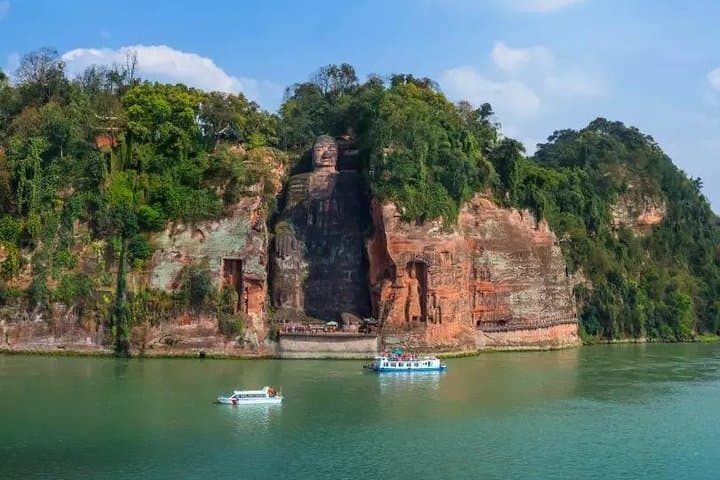
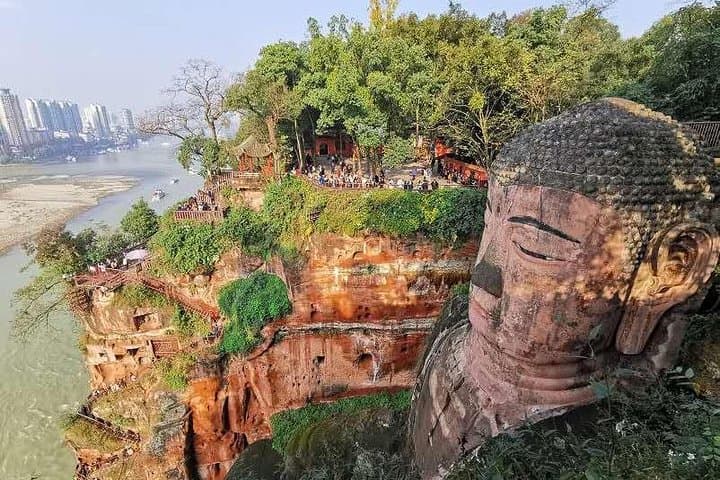
Early light cuts across the Yangtze tributary as the boat eases toward the face of the Leshan Giant Buddha, water nudging the hull like a quiet usher to a stone colossus. From the river you see the scale—71 meters of carved Maitreya pressing its calm into the cliff—ancient hands frozen in the act of watching the valley.
Verified experiences and guided adventures in the surrounding area.
Operated by Samtour of Chengdu OTC Travel · Leshan, Sichuan
Early light cuts across the Yangtze tributary as the boat eases toward the face of the Leshan Giant Buddha, water nudging the hull like a quiet usher to a stone colossus. From the river you see the scale—71 meters of carved Maitreya pressing its calm into the cliff—ancient hands frozen in the act of watching the valley.
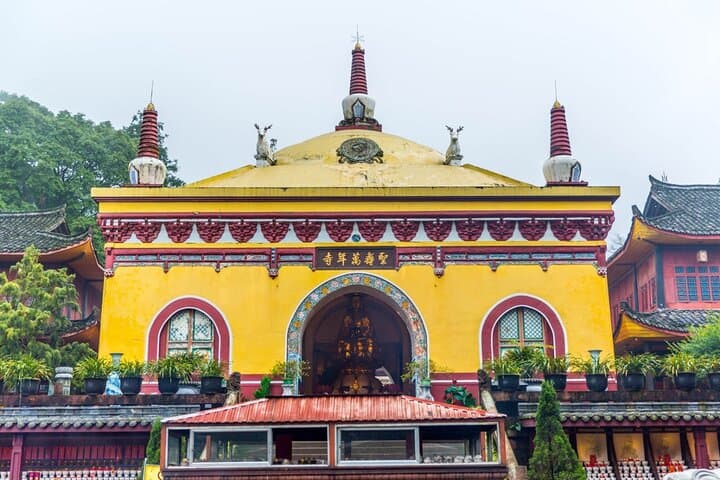
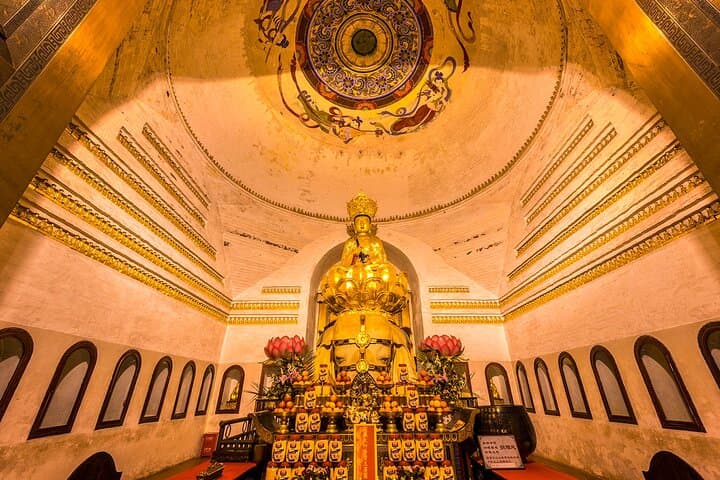
The afternoon shifts inland to Mount Emei, where cedar-draped slopes hold centuries of temple architecture and a living Buddhist culture. Geologically, Emei is a granite massif whose ridgelines feed mist down into terraces; culturally, both sites have been pilgrimage anchors since the Tang dynasty. Monkeys patrol the lower trails with the easy arrogance of animals used to visitors; Wannian Temple’s lacquered halls keep their own low, steady history.
Practically, the day is long but straightforward: private vehicle transport from Chengdu, a short river cruise for the Buddha view, then shuttle and cable car access up Emei to avoid most sustained climbs. Expect paved stone steps, forested walking, and sudden viewpoints where fog pulls back to reveal far valleys. Bring layers—the valley can feel warm then thin to chilly at higher temples—and plan for 9–11 hours from pickup to return.
Hydrate frequently, wear sturdy walking shoes for slippery steps, and keep cameras handy but respectful: these are active religious sites. The private format makes the itinerary efficient; still, allow time to move deliberately through temples rather than rush them.
moderate.
9–11 hours.
Suitable for travelers in average fitness who can manage several hours of walking and some stairs.
The private vehicle typically takes about 2 hours each way to Leshan, with additional transfer time to Mount Emei—expect a full 9–11 hour day.
The tour uses shuttle buses and a cable car to reduce hiking; there are still stairs and short walks between temples but no technical climbing.
Boat tickets at Leshan and round-trip cable car at Wannian Temple are listed as included in the tour inclusions.
Wild macaques are common on lower sections of Emei; they may approach visitors but should not be fed or provoked for safety reasons.
Both sites are UNESCO World Heritage locations tied to centuries of Buddhist pilgrimage—Leshan’s Buddha carved during the Tang dynasty and Mount Emei as one of China’s Four Sacred Buddhist Mountains.
Visitor volumes stress trails and temple sites; follow marked paths, avoid feeding wildlife, and support local conservation efforts by minimizing waste.
Samtour of Chengdu OTC Travel operates guided outdoor trips and adventures with an emphasis on safety, stewardship, and memorable experiences.
Early light cuts across the Yangtze tributary as the boat eases toward the face of the Leshan Giant Buddha, water nudging the hull like a quiet usher to a stone colossus. From the river you see the scale—71 meters of carved Maitreya pressing its calm into the cliff—ancient hands frozen in the act of watching the valley.
Early light cuts across the Yangtze tributary as the boat eases toward the face of the Leshan Giant Buddha, water nudging the hull like a quiet usher to a stone colossus. From the river you see the scale—71 meters of carved Maitreya pressing its calm into the cliff—ancient hands frozen in the act of watching the valley.
The afternoon shifts inland to Mount Emei, where cedar-draped slopes hold centuries of temple architecture and a living Buddhist culture. Geologically, Emei is a granite massif whose ridgelines feed mist down into terraces; culturally, both sites have been pilgrimage anchors since the Tang dynasty. Monkeys patrol the lower trails with the easy arrogance of animals used to visitors; Wannian Temple’s lacquered halls keep their own low, steady history.
Practically, the day is long but straightforward: private vehicle transport from Chengdu, a short river cruise for the Buddha view, then shuttle and cable car access up Emei to avoid most sustained climbs. Expect paved stone steps, forested walking, and sudden viewpoints where fog pulls back to reveal far valleys. Bring layers—the valley can feel warm then thin to chilly at higher temples—and plan for 9–11 hours from pickup to return.
Hydrate frequently, wear sturdy walking shoes for slippery steps, and keep cameras handy but respectful: these are active religious sites. The private format makes the itinerary efficient; still, allow time to move deliberately through temples rather than rush them.