THE ADVENTURE COLLECTIVE® · Independent discovery and booking for outdoor travel

Meet your guide at Chengdu Railway Station and travel by private vehicle to the Leshan Giant Buddha—an 8th-century cliff carving and UNESCO-linked site. This private day tour includes transport, entrance, and guided visits to viewpoints, Lingyun Temple, and the on-site museum.
Meet your guide at Chengdu Railway Station and travel by private vehicle to the Leshan Giant Buddha—an 8th-century cliff carving and UNESCO-linked site. This private day tour includes transport, entrance, and guided visits to viewpoints, Lingyun Temple, and the on-site museum.
You step off the platform at Chengdu Railway Station and are met by a local guide holding your name on a board. The city’s hum falls away as the private car threads southwest along the river plain; after roughly 135 km and about two hours on well-paved roads you arrive beneath the carved face of the Leshan Giant Buddha.
Verified experiences and guided adventures in the surrounding area.
Operated by happychinatours · Leshan, Sichuan
You step off the platform at Chengdu Railway Station and are met by a local guide holding your name on a board. The city’s hum falls away as the private car threads southwest along the river plain; after roughly 135 km and about two hours on well-paved roads you arrive beneath the carved face of the Leshan Giant Buddha.
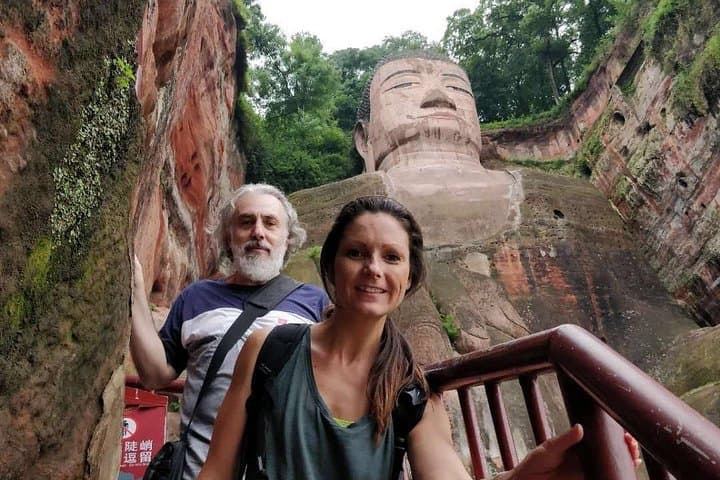
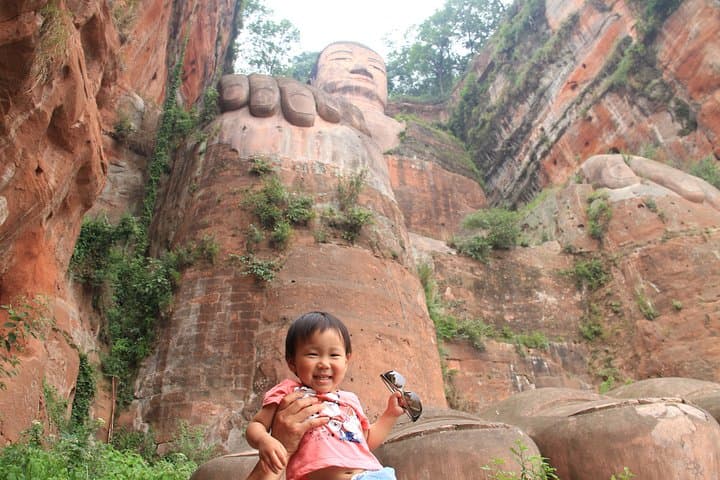
Carved into the cliffs of Lingyun Shan during the Tang dynasty in the 8th century, the Buddha was engineered to calm the confluence of three rivers. The statue’s scale—over 70 meters tall—speaks to an era when religious purpose and large-scale engineering converged. Geologically, the red-brown sandstone cliffs allow detailed carving but require ongoing conservation; you’ll notice measures to manage erosion and visitor flow. Culturally, Lingyun Temple and the onsite museum frame the statue in Buddhist practice and local folklore, offering context beyond the monumental silhouette.
Practically, the visit depends on weather and crowd timing: morning light brings cleaner views and cooler stairs; from the head you get a sweeping panorama of river bends and Leshan’s skyline. Expect stairs and viewpoints that vary from flat landings to carved steps; some areas are wheelchair accessible and the tour provides transport and tickets. Bring a refillable water bottle, slip-resistant shoes for wet steps, and your passport for ticket checks. Plan on about six hours total from Chengdu pickup to hotel drop-off; confirm train arrival time (best to arrive before 13:00) so the guide can meet you promptly. The route balances cultural depth with accessible, low-impact exploration—an efficient way to experience one of China’s largest pre-modern monuments.
easy.
6 hours.
Low fitness required—tour involves short walks and climbing stairs but can accommodate most travelers
Parts of the site and the transport are wheelchair accessible, but some viewpoints require stairs—check with the operator in advance for tailored assistance.
The drive is about 120–135 km and typically takes roughly two hours each way depending on traffic.
Yes, the tour includes entrance tickets and the private guide will handle admissions as part of the package.
The tour offers pickup from Chengdu train stations; confirm your arrival station and time when booking—other pickup points may be arranged on request.
The Leshan Giant Buddha was carved during the Tang dynasty (8th century) to calm turbulent river currents where three rivers meet; it later became part of the Mount Emei UNESCO World Heritage ensemble.
Ongoing conservation addresses sandstone erosion and visitor impact—stick to marked paths and avoid touching carved surfaces to help preserve the monument.
happychinatours operates guided outdoor trips and adventures with an emphasis on safety, stewardship, and memorable experiences.
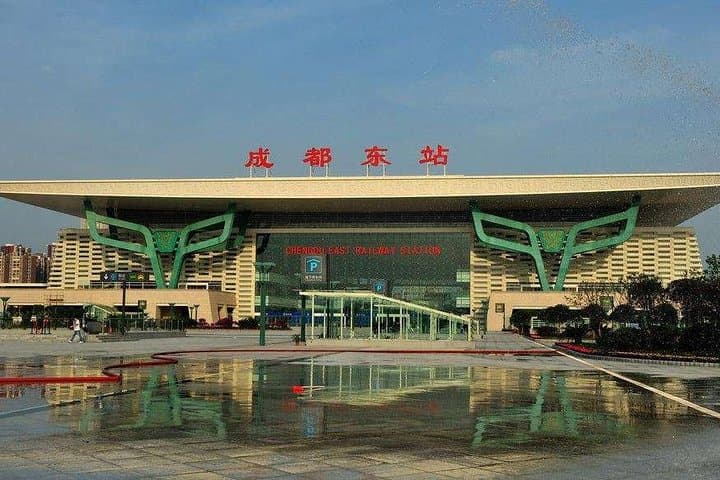

You step off the platform at Chengdu Railway Station and are met by a local guide holding your name on a board. The city’s hum falls away as the private car threads southwest along the river plain; after roughly 135 km and about two hours on well-paved roads you arrive beneath the carved face of the Leshan Giant Buddha.
You step off the platform at Chengdu Railway Station and are met by a local guide holding your name on a board. The city’s hum falls away as the private car threads southwest along the river plain; after roughly 135 km and about two hours on well-paved roads you arrive beneath the carved face of the Leshan Giant Buddha.
Carved into the cliffs of Lingyun Shan during the Tang dynasty in the 8th century, the Buddha was engineered to calm the confluence of three rivers. The statue’s scale—over 70 meters tall—speaks to an era when religious purpose and large-scale engineering converged. Geologically, the red-brown sandstone cliffs allow detailed carving but require ongoing conservation; you’ll notice measures to manage erosion and visitor flow. Culturally, Lingyun Temple and the onsite museum frame the statue in Buddhist practice and local folklore, offering context beyond the monumental silhouette.
Practically, the visit depends on weather and crowd timing: morning light brings cleaner views and cooler stairs; from the head you get a sweeping panorama of river bends and Leshan’s skyline. Expect stairs and viewpoints that vary from flat landings to carved steps; some areas are wheelchair accessible and the tour provides transport and tickets. Bring a refillable water bottle, slip-resistant shoes for wet steps, and your passport for ticket checks. Plan on about six hours total from Chengdu pickup to hotel drop-off; confirm train arrival time (best to arrive before 13:00) so the guide can meet you promptly. The route balances cultural depth with accessible, low-impact exploration—an efficient way to experience one of China’s largest pre-modern monuments.