THE ADVENTURE COLLECTIVE® · Independent discovery and booking for outdoor travel

Stand beneath the gilded dome and trace France’s military past at Les Invalides. This practical guide explains what to see, when to go, and how to use your ticket to visit Napoleon’s tomb and the Musée de l'Armée.
Stand beneath the gilded dome and trace France’s military past at Les Invalides. This practical guide explains what to see, when to go, and how to use your ticket to visit Napoleon’s tomb and the Musée de l'Armée.
A cool wind off the Seine lifts the edge of a visitor's scarf as they cross the Esplanade des Invalides. The gilded dome leans in from across the courtyard, catching afternoon light like a small sun; footsteps echo on stone, armor faintly breathes in glass cases, and the hush of a museum curates attention.
Verified experiences and guided adventures in the surrounding area.
Operated by Binge Tours · Paris, Île-de-France
A cool wind off the Seine lifts the edge of a visitor's scarf as they cross the Esplanade des Invalides. The gilded dome leans in from across the courtyard, catching afternoon light like a small sun; footsteps echo on stone, armor faintly breathes in glass cases, and the hush of a museum curates attention.
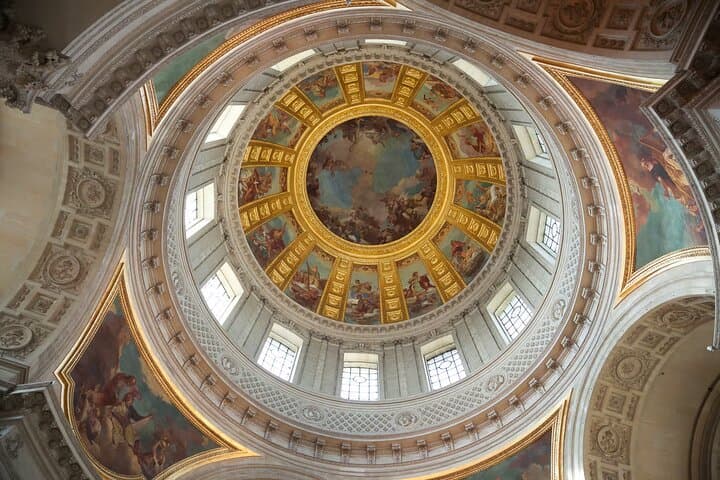
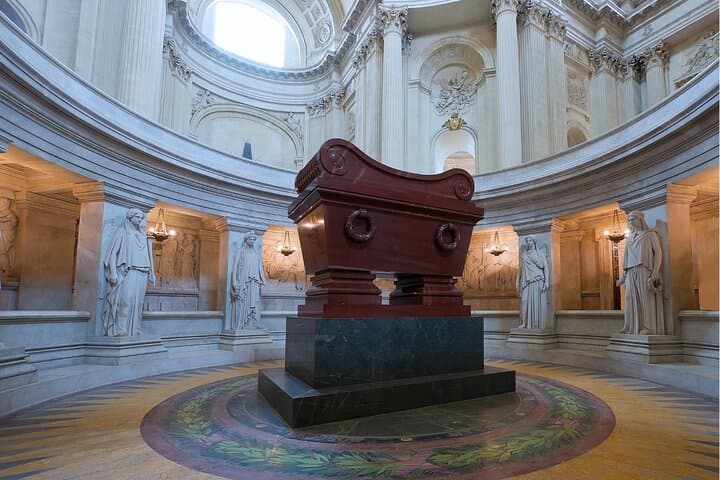
This complex began under Louis XIV as a veterans' hospital in the late 17th century and evolved into a national military archive and museum. The Dôme — its baroque dome crowned with gold leaf — became Napoleon’s final resting place when his remains were repatriated to France in 1840. The collections span the Middle Ages to modern conflicts: artillery in the Cour d'Honneur, the Museum of Relief Maps, medals and uniforms, and interactive displays that map campaigns and tactics.
Culturally, Les Invalides sits where civic memory and military ceremony cross paths; nearby boulevards and the Esplanade are used for parades and remembrance. Architecturally, the site offers a study in classical proportions and 17th–19th century masonry rather than natural geology, but views toward the Eiffel Tower and the Seine ground the visit in Parisian geography.
Practical note: plan 60–120 minutes, arrive with the PDF ticket and QR code sent by email (the booking voucher alone won’t be accepted). The museum office closes 30 minutes before the museum; collect any access passes early. Peak mid-morning and late afternoon see the most visitors — early entry gives quieter galleries. Wear comfortable shoes, allow time for the Dôme and the small satellite museums, and be prepared to stand during displays and security checks.
easy.
1–2 hours.
Suitable for most visitors; requires walking on hard surfaces and standing for exhibits
You can show the PDF with QR code on your phone; ensure you have the actual PDF ticket Viator sends, not the booking confirmation voucher.
Allocate 60–120 minutes to see the Dôme, main galleries and at least one satellite collection; longer if you explore the entire Musée de l'Armée in depth.
Yes — audio or digital guides are commonly provided; check your booking email for an audio tour link or bring headphones for app-based content.
The museum is generally accessible but some areas have stair access; contact the museum in advance for specifics and assistance.
Founded by Louis XIV as a veterans' hospital in the 1670s, Les Invalides later became the national military museum and a symbolic site for state funerals; Napoleon's remains were returned to France in 1840 and interred under the Dôme.
The site is managed as a national historic monument with conservation programs; visitors are asked to follow exhibit rules to minimize wear and respect fragile artifacts.
Binge Tours operates guided outdoor trips and adventures with an emphasis on safety, stewardship, and memorable experiences.

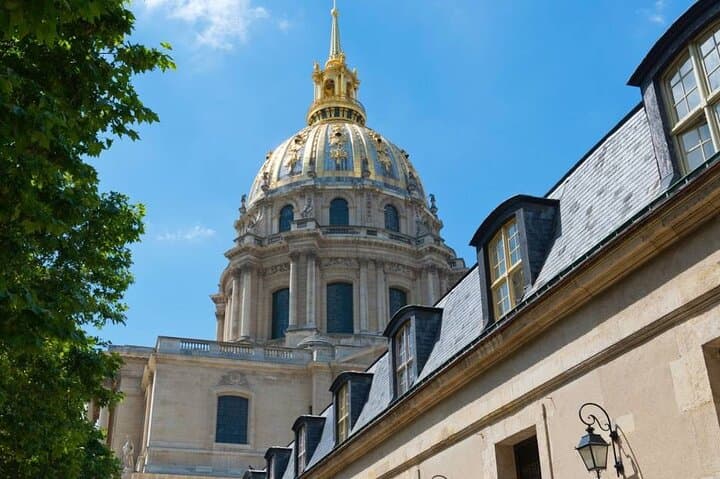
A cool wind off the Seine lifts the edge of a visitor's scarf as they cross the Esplanade des Invalides. The gilded dome leans in from across the courtyard, catching afternoon light like a small sun; footsteps echo on stone, armor faintly breathes in glass cases, and the hush of a museum curates attention.
A cool wind off the Seine lifts the edge of a visitor's scarf as they cross the Esplanade des Invalides. The gilded dome leans in from across the courtyard, catching afternoon light like a small sun; footsteps echo on stone, armor faintly breathes in glass cases, and the hush of a museum curates attention.
This complex began under Louis XIV as a veterans' hospital in the late 17th century and evolved into a national military archive and museum. The Dôme — its baroque dome crowned with gold leaf — became Napoleon’s final resting place when his remains were repatriated to France in 1840. The collections span the Middle Ages to modern conflicts: artillery in the Cour d'Honneur, the Museum of Relief Maps, medals and uniforms, and interactive displays that map campaigns and tactics.
Culturally, Les Invalides sits where civic memory and military ceremony cross paths; nearby boulevards and the Esplanade are used for parades and remembrance. Architecturally, the site offers a study in classical proportions and 17th–19th century masonry rather than natural geology, but views toward the Eiffel Tower and the Seine ground the visit in Parisian geography.
Practical note: plan 60–120 minutes, arrive with the PDF ticket and QR code sent by email (the booking voucher alone won’t be accepted). The museum office closes 30 minutes before the museum; collect any access passes early. Peak mid-morning and late afternoon see the most visitors — early entry gives quieter galleries. Wear comfortable shoes, allow time for the Dôme and the small satellite museums, and be prepared to stand during displays and security checks.