THE ADVENTURE COLLECTIVE® · Independent discovery and booking for outdoor travel

Walk Lerwick’s harbour, climb its historic lanes and learn Shetland’s maritime story on a private three‑hour guided tour. Historic piers, Fort Charlotte and the Lerwick Museum map a compact but rich townscape.
Walk Lerwick’s harbour, climb its historic lanes and learn Shetland’s maritime story on a private three‑hour guided tour. Historic piers, Fort Charlotte and the Lerwick Museum map a compact but rich townscape.
A salt-creased wind meets you on Lerwick’s harbour, gulls arguing overhead and small tugs bobbing against weathered piers. The guide leads past lodberries—low stone stores that once kept fishing gear dry—and gestures to a familiar quay used in the detective drama "Shetland." The town opens upward: narrow lanes climb toward a high point that delivers a quick, sweeping view across Scalloway and the North Sea.
Verified experiences and guided adventures in the surrounding area.
Operated by Explore Shetland with Mandy · Lerwick, Shetland
A salt-creased wind meets you on Lerwick’s harbour, gulls arguing overhead and small tugs bobbing against weathered piers. The guide leads past lodberries—low stone stores that once kept fishing gear dry—and gestures to a familiar quay used in the detective drama "Shetland." The town opens upward: narrow lanes climb toward a high point that delivers a quick, sweeping view across Scalloway and the North Sea.
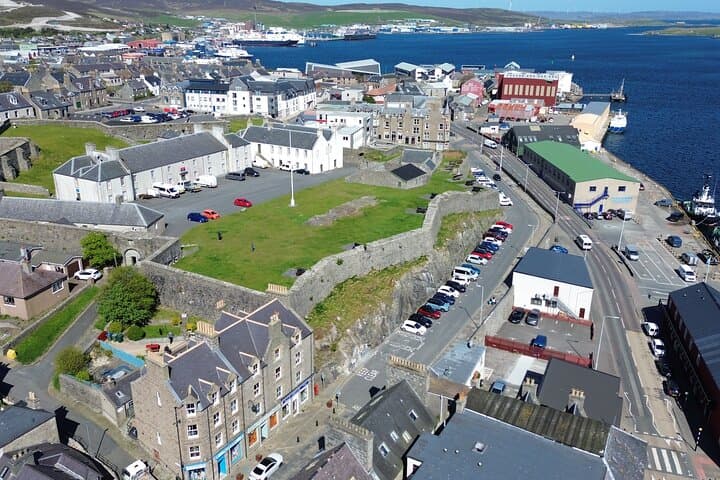
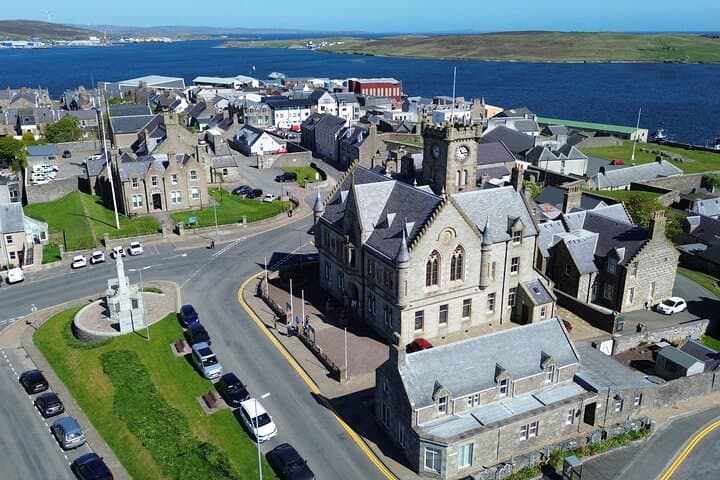
This compact walk stitches together Lerwick’s maritime past and civic life. From 18th‑century piers tied to long‑distance fishing fleets to Fort Charlotte’s defensive earthworks built in response to Anglo‑Dutch naval pressure, the route traces how geology, trade winds and the sea shaped settlement. Stained glass in the Scottish Episcopal Church by Sir Ninian Comper marks late‑Victorian prosperity; the Town Hall, with its listed façade, speaks to 19th‑century civic pride.
Culturally, Lerwick balances Norse and Scottish threads—place names, dialect influences and knitwear traditions surface in conversation. Guides often point out quieter corners: a lane that funnels scent of the sea, a doorway with decades of weathering. The Lerwick Museum at the end gives artifacts and context for what you’ve seen.
Practical guidance: expect uneven cobbles and steep steps—good ankle support matters. Weather shifts fast; pack a waterproof layer and hat even on sunny days. Tours run about three hours, largely on foot with short stops; a moderate fitness level is recommended. Bring cash or card for museum entry and local cafes, and allow extra time if you want to linger in lanes or take photos of the coastline—Lerwick rewards slow attention.
moderate.
3 hours.
Moderate: able to walk on uneven ground and climb short flights of steps without difficulty
The tour is about three hours and covers several kilometres of town centre walking on cobbles and lanes with short climbs to viewpoints.
Yes if they have a reasonable level of mobility; steep steps and uneven surfaces can be challenging so notify the operator of mobility concerns.
The itinerary ends at the Lerwick Museum for free time; confirm whether museum admission is included or payable locally when booking.
Layered clothing, a waterproof jacket, sturdy shoes, and a small bottle of water are recommended—winds can make temperatures feel lower than expected.
Lerwick grew as a fishing and trading hub in the 18th and 19th centuries; Fort Charlotte and Grade I listed buildings reflect its strategic and civic growth.
Coastal habitats nearby are sensitive—stick to paths, avoid disturbing seabird colonies and support the local museum and businesses to benefit conservation efforts.
Explore Shetland with Mandy operates guided outdoor trips and adventures with an emphasis on safety, stewardship, and memorable experiences.
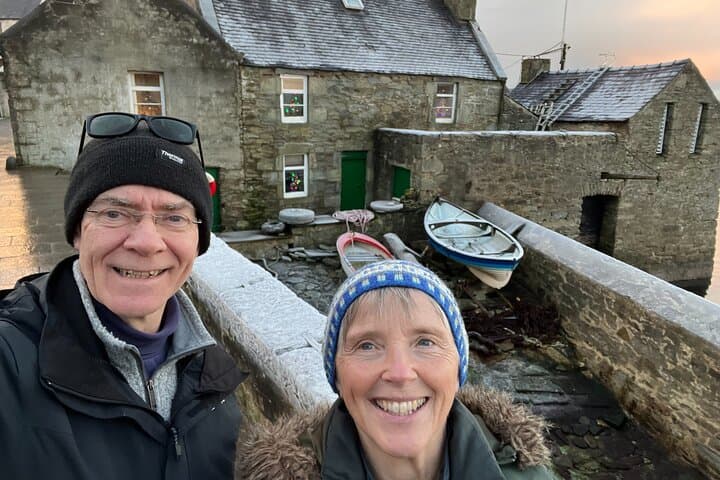
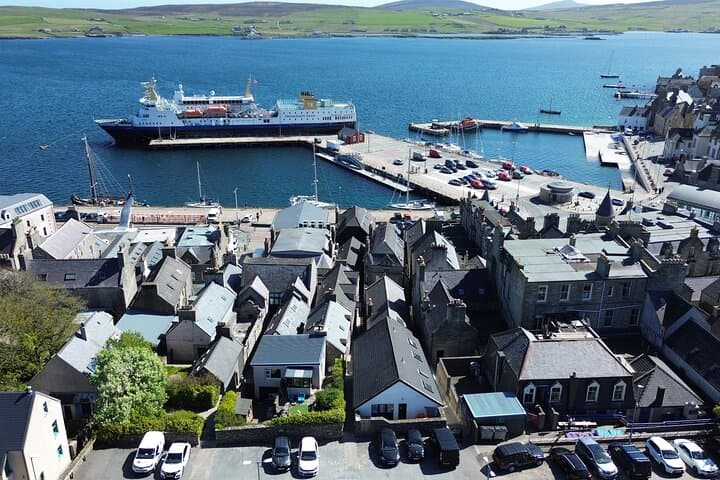
A salt-creased wind meets you on Lerwick’s harbour, gulls arguing overhead and small tugs bobbing against weathered piers. The guide leads past lodberries—low stone stores that once kept fishing gear dry—and gestures to a familiar quay used in the detective drama "Shetland." The town opens upward: narrow lanes climb toward a high point that delivers a quick, sweeping view across Scalloway and the North Sea.
A salt-creased wind meets you on Lerwick’s harbour, gulls arguing overhead and small tugs bobbing against weathered piers. The guide leads past lodberries—low stone stores that once kept fishing gear dry—and gestures to a familiar quay used in the detective drama "Shetland." The town opens upward: narrow lanes climb toward a high point that delivers a quick, sweeping view across Scalloway and the North Sea.
This compact walk stitches together Lerwick’s maritime past and civic life. From 18th‑century piers tied to long‑distance fishing fleets to Fort Charlotte’s defensive earthworks built in response to Anglo‑Dutch naval pressure, the route traces how geology, trade winds and the sea shaped settlement. Stained glass in the Scottish Episcopal Church by Sir Ninian Comper marks late‑Victorian prosperity; the Town Hall, with its listed façade, speaks to 19th‑century civic pride.
Culturally, Lerwick balances Norse and Scottish threads—place names, dialect influences and knitwear traditions surface in conversation. Guides often point out quieter corners: a lane that funnels scent of the sea, a doorway with decades of weathering. The Lerwick Museum at the end gives artifacts and context for what you’ve seen.
Practical guidance: expect uneven cobbles and steep steps—good ankle support matters. Weather shifts fast; pack a waterproof layer and hat even on sunny days. Tours run about three hours, largely on foot with short stops; a moderate fitness level is recommended. Bring cash or card for museum entry and local cafes, and allow extra time if you want to linger in lanes or take photos of the coastline—Lerwick rewards slow attention.