THE ADVENTURE COLLECTIVE® · Independent discovery and booking for outdoor travel

Follow the Lemosho Route for an 8-day guided ascent of Kilimanjaro that balances scenery and acclimatization. This route crosses Shira Plateau, gains altitude via Lava Tower, and gives strong summit success rates with professional guides.
Follow the Lemosho Route for an 8-day guided ascent of Kilimanjaro that balances scenery and acclimatization. This route crosses Shira Plateau, gains altitude via Lava Tower, and gives strong summit success rates with professional guides.
Fog lifts off the montane forest and the trail opens onto a wide green plain: the Shira Plateau. On the Lemosho Route you walk from forest shadow into high-alpine exposure, the mountain’s western flanks revealing Kilimanjaro in widescreen—glaciers crowning a volcanic mass that pushes skyward.
Verified experiences and guided adventures in the surrounding area.
Operated by Wild Root Safaris and Adventures · Arusha, Arusha Region
Fog lifts off the montane forest and the trail opens onto a wide green plain: the Shira Plateau. On the Lemosho Route you walk from forest shadow into high-alpine exposure, the mountain’s western flanks revealing Kilimanjaro in widescreen—glaciers crowning a volcanic mass that pushes skyward.
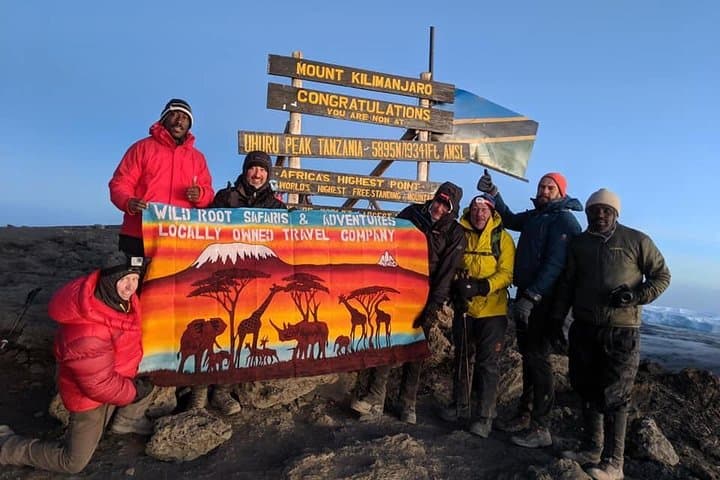
This 8-day itinerary follows one of the most scenic approaches to Uhuru Peak (5,895 m). Geologically Kilimanjaro is a dormant stratovolcano with three cones; Lemosho climbs across ancient lava fields and eroded calderas before joining the classic southern circuit. Culturally the mountain is woven into Chagga life below—sacred slopes, coffee farms and village tracks meet the park’s trailheads. Early European attempts culminated in the first recorded ascent in 1889, but today experienced guides and registered crews manage logistics and safety.
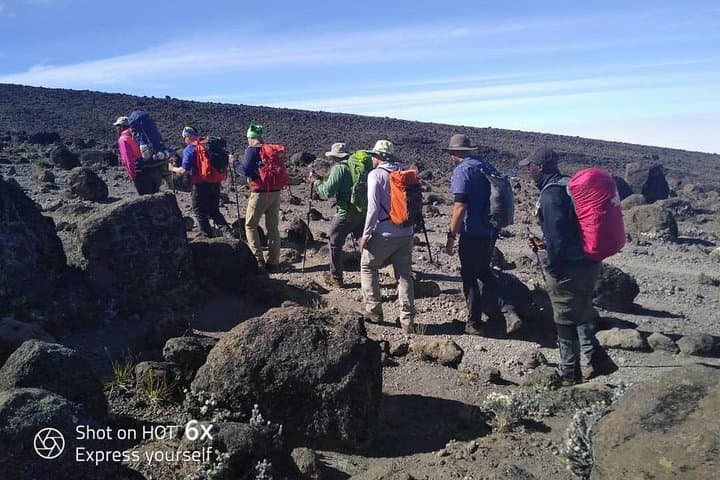
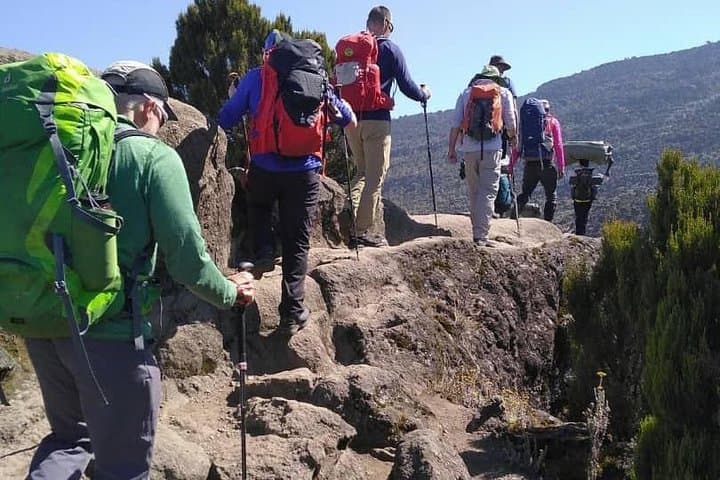
Expect about 55–65 km of trekking total, roughly 3,500–3,700 m of elevation gain from trailhead to summit, and key acclimatization stops like Shira Plateau and Lava Tower (~4,630 m). Terrain ranges from mossy jungle paths to rocky scree and steep high-altitude steps; nights are spent at tented camps with supplied mattresses.
Practical edge: pace yourself—short, steady steps and regular hydration beat fast climbs. Layer for wide temperature swings; nights fall well below freezing near the summit. Your guide will handle permits, camping gear, and meals, but personal gear, a warm sleeping bag, and trekking boots are essential. Summit windows are typically before dawn; expect a 4–6 a.m. push from high camp over loose volcanic scree to reach sunrise on Uhuru Peak.
challenging.
8 days.
Good aerobic fitness with prior multi-day hiking experience; ability to walk 5–8 hours on consecutive days and tolerate altitude.
No technical climbing skills are required—the route is non-technical trekking—but prior multi-day hiking experience and good fitness significantly improve comfort and success.
Altitude sickness can occur above 3,000 m; guides use gradual ascent, acclimatization stops (e.g., Lava Tower), symptom monitoring and descent protocols; carry medication only under doctor advice.
Guided packages typically include park permits, campsite fees, tents, mattresses and meals; confirm specifics with the operator before booking.
The clearest windows are the long dry season (June–October) and the short dry window (January–February); avoid heavy rains (March–May, November) when trails are muddy and visibility poor.
Kilimanjaro has long cultural significance to Chagga communities; European exploration culminated in the first recorded summit in 1889, but local oral histories predate these climbs.
Kilimanjaro National Park regulates trails and camps to protect fragile alpine moorland—use registered guides, pack out waste and respect campsite rules to minimize impacts.
Wild Root Safaris and Adventures operates guided outdoor trips and adventures with an emphasis on safety, stewardship, and memorable experiences.
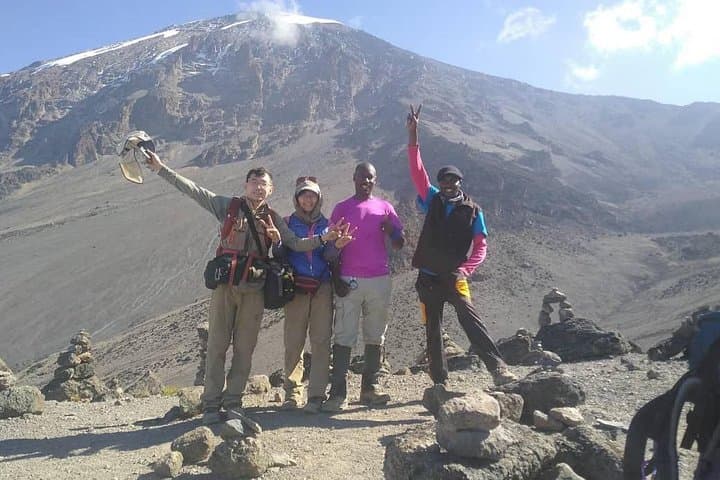
Fog lifts off the montane forest and the trail opens onto a wide green plain: the Shira Plateau. On the Lemosho Route you walk from forest shadow into high-alpine exposure, the mountain’s western flanks revealing Kilimanjaro in widescreen—glaciers crowning a volcanic mass that pushes skyward.
Fog lifts off the montane forest and the trail opens onto a wide green plain: the Shira Plateau. On the Lemosho Route you walk from forest shadow into high-alpine exposure, the mountain’s western flanks revealing Kilimanjaro in widescreen—glaciers crowning a volcanic mass that pushes skyward.
This 8-day itinerary follows one of the most scenic approaches to Uhuru Peak (5,895 m). Geologically Kilimanjaro is a dormant stratovolcano with three cones; Lemosho climbs across ancient lava fields and eroded calderas before joining the classic southern circuit. Culturally the mountain is woven into Chagga life below—sacred slopes, coffee farms and village tracks meet the park’s trailheads. Early European attempts culminated in the first recorded ascent in 1889, but today experienced guides and registered crews manage logistics and safety.
Expect about 55–65 km of trekking total, roughly 3,500–3,700 m of elevation gain from trailhead to summit, and key acclimatization stops like Shira Plateau and Lava Tower (~4,630 m). Terrain ranges from mossy jungle paths to rocky scree and steep high-altitude steps; nights are spent at tented camps with supplied mattresses.
Practical edge: pace yourself—short, steady steps and regular hydration beat fast climbs. Layer for wide temperature swings; nights fall well below freezing near the summit. Your guide will handle permits, camping gear, and meals, but personal gear, a warm sleeping bag, and trekking boots are essential. Summit windows are typically before dawn; expect a 4–6 a.m. push from high camp over loose volcanic scree to reach sunrise on Uhuru Peak.