THE ADVENTURE COLLECTIVE® · Independent discovery and booking for outdoor travel

Follow the Lemosho route from Londorossi Gate to Uhuru Peak over eight days, crossing rainforest, the broad Shira Plateau, and the summit crater. This guided climb balances acclimatization and challenge—expect long days, scree sections, and unforgettable summit sunrises.
Follow the Lemosho route from Londorossi Gate to Uhuru Peak over eight days, crossing rainforest, the broad Shira Plateau, and the summit crater. This guided climb balances acclimatization and challenge—expect long days, scree sections, and unforgettable summit sunrises.
The trail opens under the press of green—rainforest leaves thick with mist and the sounds of tropical birds—then peels upward into wide, wind-scoured plateaus.
Verified experiences and guided adventures in the surrounding area.
Operated by Three Peaks Tanzania Safari ltd · Moshi, Kilimanjaro Region
The trail opens under the press of green—rainforest leaves thick with mist and the sounds of tropical birds—then peels upward into wide, wind-scoured plateaus.
On the Lemosho route you start at Londorossi Gate near Moshi and walk eight days through distinct ecological bands: dense montane forest, heather and giant groundsels on the Shira Plateau, the lunar scree above Barafu, and the thin, glacier-scarred rim of Kibo. Geologically Kilimanjaro is a dormant stratovolcano whose three volcanic cones—Kibo, Mawenzi and Shira—shape the skyline; the summit, Uhuru Peak (5,895 m), sits on Kibo’s crater rim and still bears remnant glaciers.
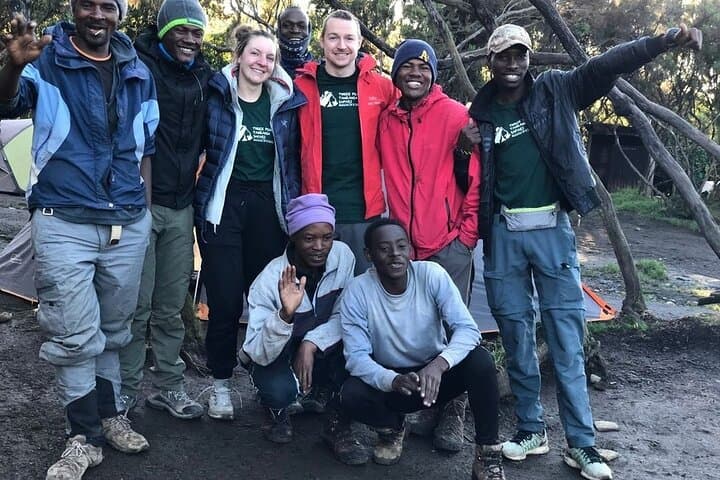
Culturally the mountain rises above the Chagga farmlands and coffee terraces of the Kilimanjaro region; porters and guides drawn from local villages are integral to the ascent and to conservation efforts funded by park fees.
Expect roughly 60–70 km of walking with about 3,700–3,800 m of net elevation gain. Terrain alternates between muddy forest track, grassy plateau, rocky ridgelines and steep scree. Acclimatization days—Shira explorations and the Lava Tower day—are built into the itinerary to reduce altitude risk.
Practical essentials: move slowly on summit night, hydrate constantly, use trekking poles and gaiters on scree, and layer for a temperature swing from warm valley days to sub-zero summit conditions. Book through reputable operators who provide licensed guides, proper food, and porter support; summit success is as much about pacing and acclimatization as fitness.
challenging.
7–8 days.
Good aerobic fitness with experience on multi-day hikes; ability to carry a daypack for 6–8 hours and tolerate cold nights.
Typical itineraries cover about 60–70 km with approximately 3,700–3,800 m of elevation gain from the Londorossi/Lemosho trailhead to Uhuru Peak.
No technical climbing is required for the normal route, but prior multi-day trekking and high-altitude experience improve comfort and success odds.
The clearest weather windows are the dry seasons—late June to October and late December to early March—when summit visibility and footing are generally better.
Altitude illness and exposure are the primary risks; reputable operators mitigate these with gradual itineraries, experienced guides, regulated porter-to-client ratios, and protocols for descent if symptoms develop.
Kilimanjaro is a volcanic massif with peaks formed over hundreds of thousands of years; the mountain and surrounding lands are home to the Chagga people whose agriculture and culture have long interacted with the slopes.
Kilimanjaro National Park fees fund trail maintenance and ranger patrols; minimizing waste, sticking to established campsites and supporting licensed local guides reduces environmental impact.
Three Peaks Tanzania Safari ltd operates guided outdoor trips and adventures with an emphasis on safety, stewardship, and memorable experiences.
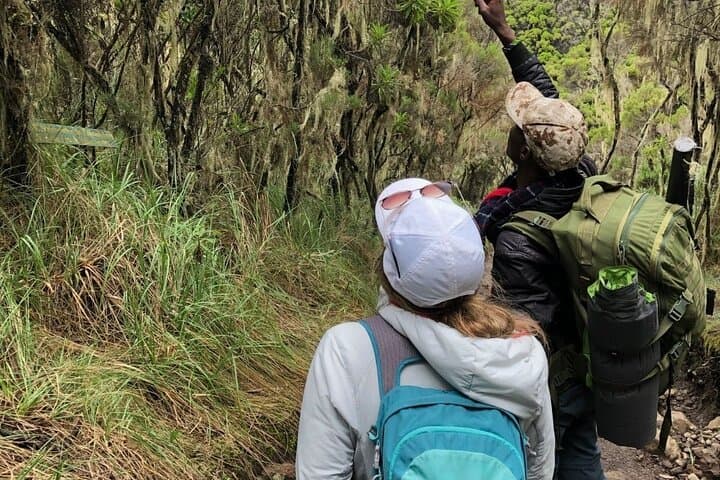
The trail opens under the press of green—rainforest leaves thick with mist and the sounds of tropical birds—then peels upward into wide, wind-scoured plateaus.
The trail opens under the press of green—rainforest leaves thick with mist and the sounds of tropical birds—then peels upward into wide, wind-scoured plateaus.
On the Lemosho route you start at Londorossi Gate near Moshi and walk eight days through distinct ecological bands: dense montane forest, heather and giant groundsels on the Shira Plateau, the lunar scree above Barafu, and the thin, glacier-scarred rim of Kibo. Geologically Kilimanjaro is a dormant stratovolcano whose three volcanic cones—Kibo, Mawenzi and Shira—shape the skyline; the summit, Uhuru Peak (5,895 m), sits on Kibo’s crater rim and still bears remnant glaciers.
Culturally the mountain rises above the Chagga farmlands and coffee terraces of the Kilimanjaro region; porters and guides drawn from local villages are integral to the ascent and to conservation efforts funded by park fees.
Expect roughly 60–70 km of walking with about 3,700–3,800 m of net elevation gain. Terrain alternates between muddy forest track, grassy plateau, rocky ridgelines and steep scree. Acclimatization days—Shira explorations and the Lava Tower day—are built into the itinerary to reduce altitude risk.
Practical essentials: move slowly on summit night, hydrate constantly, use trekking poles and gaiters on scree, and layer for a temperature swing from warm valley days to sub-zero summit conditions. Book through reputable operators who provide licensed guides, proper food, and porter support; summit success is as much about pacing and acclimatization as fitness.