THE ADVENTURE COLLECTIVE® · Independent discovery and booking for outdoor travel

Spend two hours learning a beginner Japanese dance in a real Osaka studio — study lyrics, fan technique and movement, then relax with matcha and sweets. This hands-on lesson mixes cultural history with practical instruction, perfect for curious travelers.
Spend two hours learning a beginner Japanese dance in a real Osaka studio — study lyrics, fan technique and movement, then relax with matcha and sweets. This hands-on lesson mixes cultural history with practical instruction, perfect for curious travelers.
Step into a low-ceilinged studio in Osaka and feel the room settle around the hollow thump of geta and the rustle of silk as a pro dancer unfolds a paper fan. The first notes of shamisen hover, and the class leans in: this is not performance as spectacle but practice as living craft.
Verified experiences and guided adventures in the surrounding area.
Operated by marichou和花梛まり蝶 · Osaka, Osaka Prefecture
Step into a low-ceilinged studio in Osaka and feel the room settle around the hollow thump of geta and the rustle of silk as a pro dancer unfolds a paper fan. The first notes of shamisen hover, and the class leans in: this is not performance as spectacle but practice as living craft.
Japanese dance here traces lines back to kabuki and court forms, refined over centuries into what is commonly taught as nihon buyo. Osaka's river channels and reclaimed plains shaped the city’s practical cadence—tradespeople, travelling performers and theatre crowds created a real-world stage where dances evolved to speak to local life and festivals.
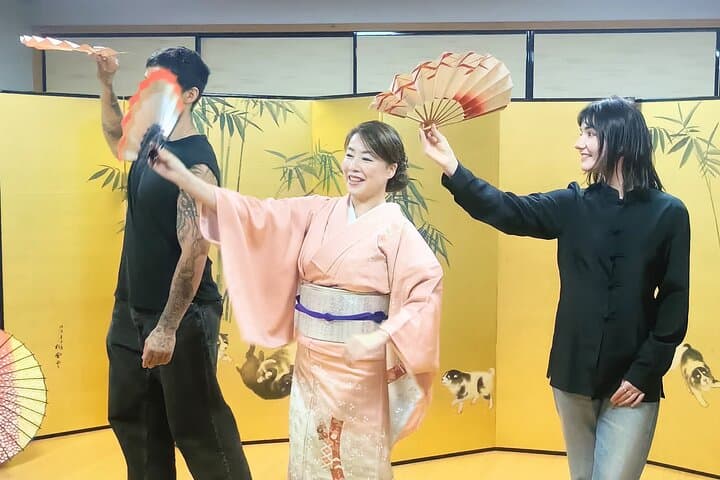
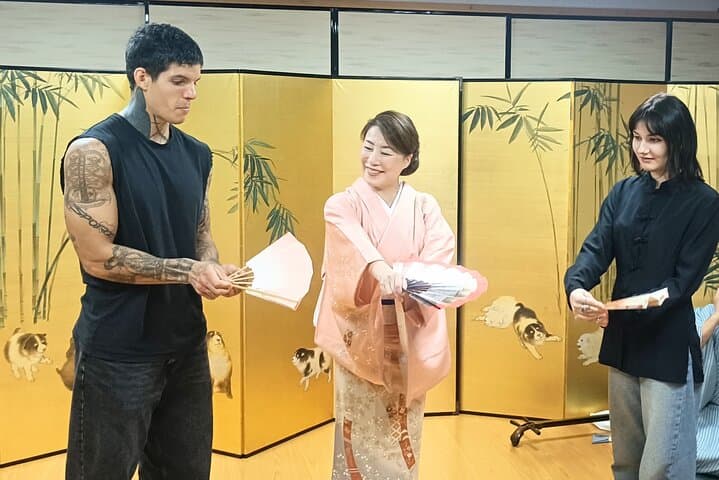
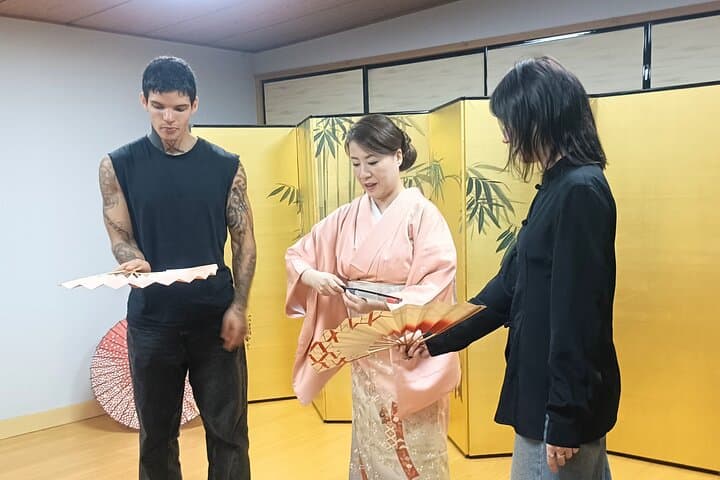
The lesson combines movement, story and prop work: the instructor explains lyric meaning, family-crest symbolism and fan technique, then demonstrates a two-minute beginner piece. You learn posture, weight shifts and how a subtle wrist flick can change a phrase. During the break, matcha and wagashi arrive; the tea's warmth draws conversation about etiquette and the studio's role in passing tradition forward.
Practical notes: the session is two hours, beginner-friendly and held in an active studio in central Osaka accessible by public transport. Wear flexible, non-restrictive clothing and soft-soled shoes or practice barefoot if instructed. Photo and video are permitted—ask before close-up recording. Expect slow, repetitive practice, patient correction and short bursts of full-speed music as you stitch movements into flow.
This class suits travelers who want cultural immersion without spectacle: hands-on, explanatory and rooted in a living local practice.
easy.
2 hours.
Low-impact; basic balance and mobility recommended but suitable for most fitness levels
No—this two-hour lesson is designed for beginners and progresses slowly from basic posture to a short, two-minute piece.
Yes; the studio permits photo and video recording, but ask the instructor before close-up shots of people or sensitive props.
Instruction is typically in Japanese; instructors often use demonstrations and simple English explanations—confirm language support when booking.
Yes—traditional Japanese sweets and matcha tea are provided as part of the session's mid-point break.
The taught forms derive from nihon buyo and kabuki traditions adapted over centuries in urban centers like Osaka, where merchant and theatre culture shaped performance styles.
Support small studios and local instructors to help preserve intangible cultural heritage; follow studio rules to minimize wear on traditional costumes and flooring.
marichou和花梛まり蝶 operates guided outdoor trips and adventures with an emphasis on safety, stewardship, and memorable experiences.
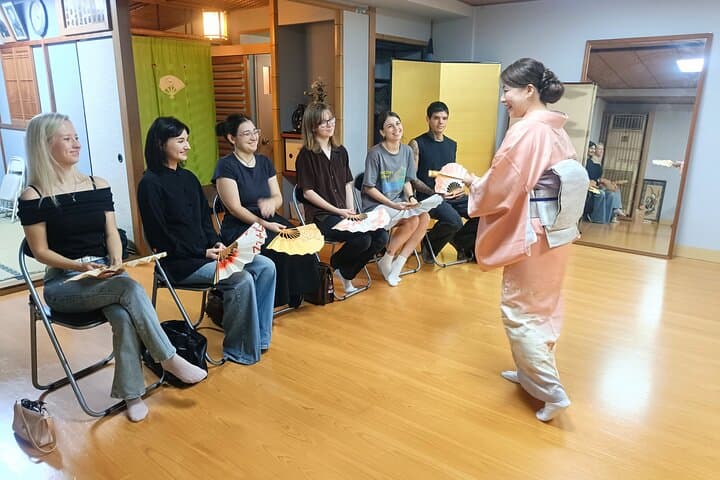
Step into a low-ceilinged studio in Osaka and feel the room settle around the hollow thump of geta and the rustle of silk as a pro dancer unfolds a paper fan. The first notes of shamisen hover, and the class leans in: this is not performance as spectacle but practice as living craft.
Step into a low-ceilinged studio in Osaka and feel the room settle around the hollow thump of geta and the rustle of silk as a pro dancer unfolds a paper fan. The first notes of shamisen hover, and the class leans in: this is not performance as spectacle but practice as living craft.
Japanese dance here traces lines back to kabuki and court forms, refined over centuries into what is commonly taught as nihon buyo. Osaka's river channels and reclaimed plains shaped the city’s practical cadence—tradespeople, travelling performers and theatre crowds created a real-world stage where dances evolved to speak to local life and festivals.
The lesson combines movement, story and prop work: the instructor explains lyric meaning, family-crest symbolism and fan technique, then demonstrates a two-minute beginner piece. You learn posture, weight shifts and how a subtle wrist flick can change a phrase. During the break, matcha and wagashi arrive; the tea's warmth draws conversation about etiquette and the studio's role in passing tradition forward.
Practical notes: the session is two hours, beginner-friendly and held in an active studio in central Osaka accessible by public transport. Wear flexible, non-restrictive clothing and soft-soled shoes or practice barefoot if instructed. Photo and video are permitted—ask before close-up recording. Expect slow, repetitive practice, patient correction and short bursts of full-speed music as you stitch movements into flow.
This class suits travelers who want cultural immersion without spectacle: hands-on, explanatory and rooted in a living local practice.