THE ADVENTURE COLLECTIVE® · Independent discovery and booking for outdoor travel

Master the wrist snap and wind-reading needed to throw an authentic returning boomerang in a focused small-group class just outside Brisbane. Two hours of instruction, cultural context, and a handmade boomerang to take home.
Master the wrist snap and wind-reading needed to throw an authentic returning boomerang in a focused small-group class just outside Brisbane. Two hours of instruction, cultural context, and a handmade boomerang to take home.
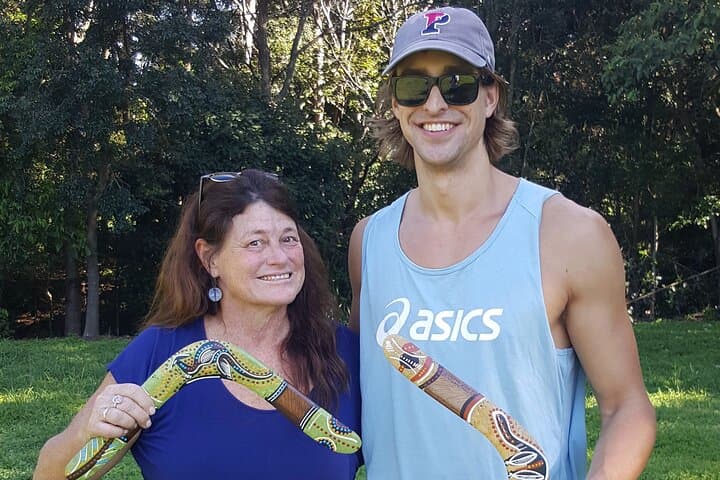
A warm wind moves across the grass as the instructor demonstrates the arc of a returning boomerang; sunlight skims the blade and the object slices back toward the thrower. Participants stand in a small semicircle in an outdoor park just outside Brisbane, each with a practice boomerang in hand, ready to try the first controlled wrist snap.
Verified experiences and guided adventures in the surrounding area.
Operated by Boomerang throwing lessons in Brisbane, Australia · Brisbane, Queensland
A warm wind moves across the grass as the instructor demonstrates the arc of a returning boomerang; sunlight skims the blade and the object slices back toward the thrower. Participants stand in a small semicircle in an outdoor park just outside Brisbane, each with a practice boomerang in hand, ready to try the first controlled wrist snap.
Boomerangs have been used by Aboriginal Australians for millennia — as tools, toys and cultural objects — and the returning boomerang represents a refined balance of shape, weight and spin. In Brisbane the lesson takes place at an open-air site reachable by a short 15-minute drive from central pickup, giving the class enough room to practice safe throws while enjoying river-facing breezes and grassland soil underfoot.
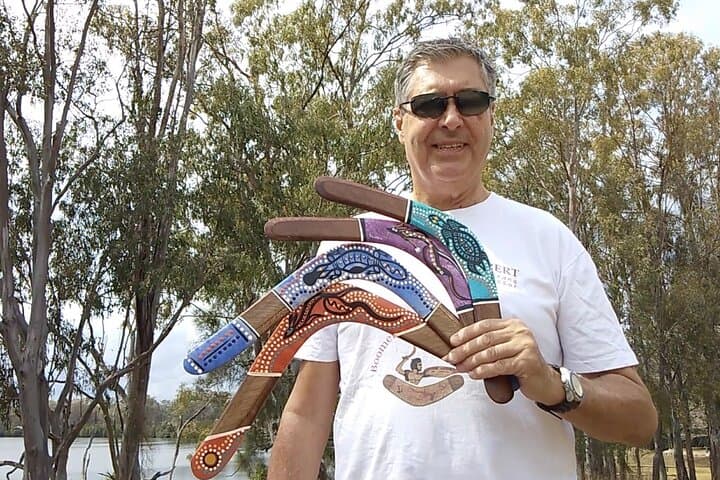
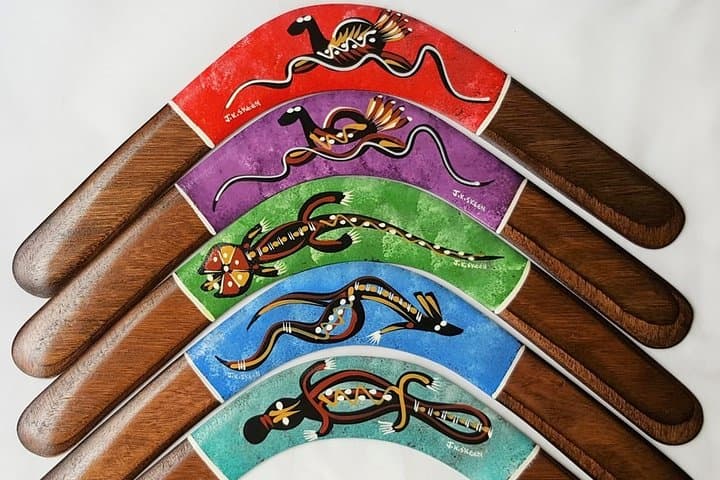
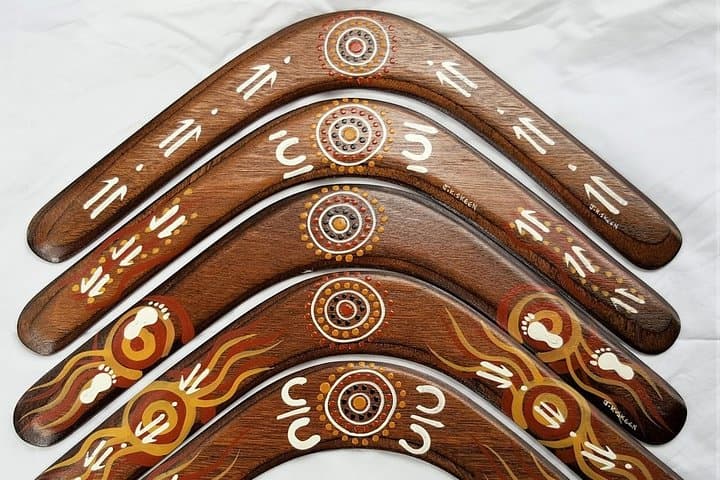
The session blends practical skill with cultural context: instructors cover safe handling, throwing angles, wind reading and the basic history of returning boomerangs within Aboriginal communities. Geologically the area’s low river plains and prevailing easterly breezes create a predictable, friendly testing ground for learners. Culturally, participants choose a handmade, hand-painted boomerang to keep — an object that reflects contemporary craft as well as traditional form.
Practical notes: classes are small (max 4), last about 2 hours, and include bottled water, SPF50 sunscreen and training boomerangs. Wear closed-toe shoes and layers for sun and variable shade; expect light walking on grass and some standing. Bookings include pickup in an air-conditioned SUV from central Brisbane; cancel at least 24 hours ahead for a full refund. For first-time throwers this course offers hands-on, low-impact outdoor instruction with a strong cultural touchstone.
easy.
2 hours.
Suitable for all fitness levels — requires light standing and short walks on grass
No — the class is designed for beginners and covers fundamentals of safety and throwing technique.
Pickup and drop-off in an air-conditioned SUV from central Brisbane locations is included; confirm your pickup point at booking.
Yes — participants choose a free handmade, hand-painted returning boomerang to take home (listed as a $59 value).
For a full refund cancel at least 24 hours before the scheduled start; classes may be canceled for bad weather.
Returning boomerangs evolved from tools used across many Aboriginal groups; the returning form is a specialized object with both functional and cultural roles.
Stick to established grassy areas and avoid trampling vegetation; instructors typically emphasize leave-no-trace practices and proper disposal of packaging.
Boomerang throwing lessons in Brisbane, Australia operates guided outdoor trips and adventures with an emphasis on safety, stewardship, and memorable experiences.
A warm wind moves across the grass as the instructor demonstrates the arc of a returning boomerang; sunlight skims the blade and the object slices back toward the thrower. Participants stand in a small semicircle in an outdoor park just outside Brisbane, each with a practice boomerang in hand, ready to try the first controlled wrist snap.
A warm wind moves across the grass as the instructor demonstrates the arc of a returning boomerang; sunlight skims the blade and the object slices back toward the thrower. Participants stand in a small semicircle in an outdoor park just outside Brisbane, each with a practice boomerang in hand, ready to try the first controlled wrist snap.
Boomerangs have been used by Aboriginal Australians for millennia — as tools, toys and cultural objects — and the returning boomerang represents a refined balance of shape, weight and spin. In Brisbane the lesson takes place at an open-air site reachable by a short 15-minute drive from central pickup, giving the class enough room to practice safe throws while enjoying river-facing breezes and grassland soil underfoot.
The session blends practical skill with cultural context: instructors cover safe handling, throwing angles, wind reading and the basic history of returning boomerangs within Aboriginal communities. Geologically the area’s low river plains and prevailing easterly breezes create a predictable, friendly testing ground for learners. Culturally, participants choose a handmade, hand-painted boomerang to keep — an object that reflects contemporary craft as well as traditional form.
Practical notes: classes are small (max 4), last about 2 hours, and include bottled water, SPF50 sunscreen and training boomerangs. Wear closed-toe shoes and layers for sun and variable shade; expect light walking on grass and some standing. Bookings include pickup in an air-conditioned SUV from central Brisbane; cancel at least 24 hours ahead for a full refund. For first-time throwers this course offers hands-on, low-impact outdoor instruction with a strong cultural touchstone.