THE ADVENTURE COLLECTIVE® · Independent discovery and booking for outdoor travel

Learn to surf on Morocco’s Atlantic coast with a coached three-hour lesson that mixes beach drills and guided waves. Small groups, provided boards and wetsuits, and coaches who choose the best break by condition make this ideal for first-timers and progressing beginners.
Learn to surf on Morocco’s Atlantic coast with a coached three-hour lesson that mixes beach drills and guided waves. Small groups, provided boards and wetsuits, and coaches who choose the best break by condition make this ideal for first-timers and progressing beginners.
Salt air pushes at your face as the van pulls onto sand — a narrow strip where Atlantic sets roll toward a row of small fishing boats and sun-creased surfers. The coach scans the break, then points: today’s lesson will ride the foamy whitewash until you can pop to your feet and steer.
Verified experiences and guided adventures in the surrounding area.
Operated by Adrenalin Surf Maroc · Aourir, Agadir
Salt air pushes at your face as the van pulls onto sand — a narrow strip where Atlantic sets roll toward a row of small fishing boats and sun-creased surfers. The coach scans the break, then points: today’s lesson will ride the foamy whitewash until you can pop to your feet and steer.
Southern Morocco’s Atlantic coast is a collision of geologic basalt headlands, long sandy beaches, and surfable reef and beach breaks. The villages here grew from Berber and fishing roots; surf culture arrived decades later, drawn by consistent swell from the North Atlantic and favorable winds. Local spots range from gentle beach breaks for first-timers to nearby reef points that reward experience and respect for currents.
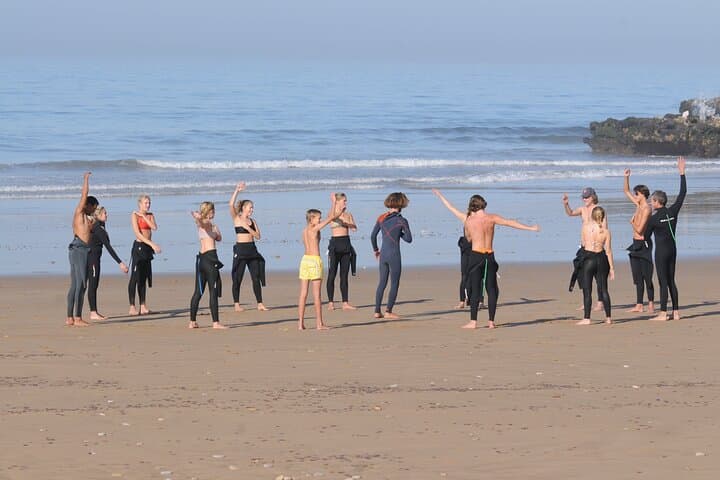
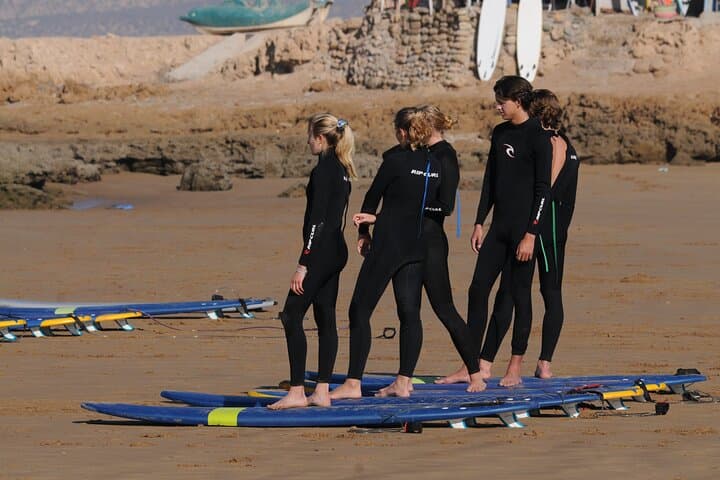
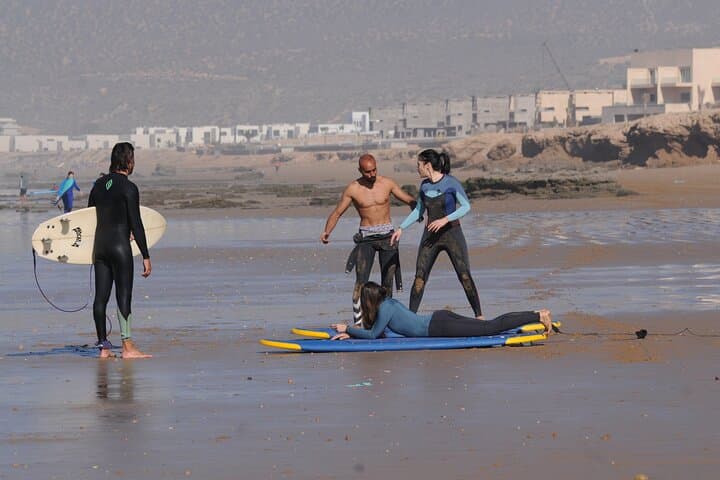
The session begins onshore: paddle technique, take-off mechanics, and safety around rip currents. Coaches break the process into paddling, catching the whitewash, and controlled pop-ups before guiding you into shoulder-high waves. Groups are grouped by level (max seven per coach), and equipment — soft and harder boards plus wetsuits — is provided.
Plan for changing conditions: mornings often offer cleaner, softer surf; afternoons can shift wind and swell. Bring reef-safe sunscreen, a sturdy water bottle, and a short warm-up to protect shoulders and lower back. If you don’t swim confidently, request extra flotation or a coach in the water. Expect a three-hour block including transport, briefing, water time, and return.
By the end you’ll feel the ocean push beneath you and understand why this stretch of coast keeps drawing riders back: the waves are direct, the light is clear, and the sea keeps teaching patience.
moderate.
3 hours.
Moderate — comfortable paddling for short bursts and able to perform basic pop-up movements; good shoulder and core strength helps.
Yes — you should be comfortable in the ocean and able to tread or swim short distances; instructors can provide extra support but not full flotation for non-swimmers.
Transport to the chosen beach, a safety and theory briefing, warm-up, coaching in the water, and use of surfboards and wetsuits.
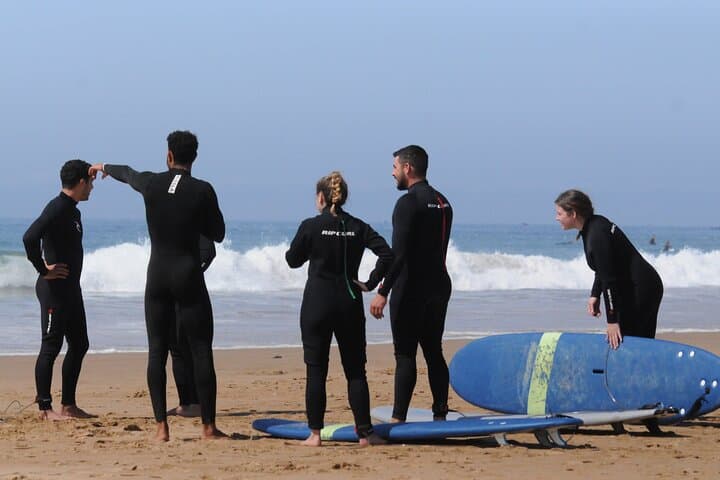
Groups are capped at seven students per coach and will be split by level so coaches can focus on appropriate progressions.
Lessons are cancelable for safety; if canceled with at least 24 hours’ notice you qualify for a refund under the operator’s policy.
Coastal Berber fishing communities have occupied these coves for centuries; modern surf tourism expanded here in the late 20th century as riders discovered consistent Atlantic swell.
The coastline is sensitive to litter and reef damage — choose reef-safe sunscreen, avoid standing on reefs, and support operators who run beach cleanups.
Adrenalin Surf Maroc operates guided outdoor trips and adventures with an emphasis on safety, stewardship, and memorable experiences.
Salt air pushes at your face as the van pulls onto sand — a narrow strip where Atlantic sets roll toward a row of small fishing boats and sun-creased surfers. The coach scans the break, then points: today’s lesson will ride the foamy whitewash until you can pop to your feet and steer.
Salt air pushes at your face as the van pulls onto sand — a narrow strip where Atlantic sets roll toward a row of small fishing boats and sun-creased surfers. The coach scans the break, then points: today’s lesson will ride the foamy whitewash until you can pop to your feet and steer.
Southern Morocco’s Atlantic coast is a collision of geologic basalt headlands, long sandy beaches, and surfable reef and beach breaks. The villages here grew from Berber and fishing roots; surf culture arrived decades later, drawn by consistent swell from the North Atlantic and favorable winds. Local spots range from gentle beach breaks for first-timers to nearby reef points that reward experience and respect for currents.
The session begins onshore: paddle technique, take-off mechanics, and safety around rip currents. Coaches break the process into paddling, catching the whitewash, and controlled pop-ups before guiding you into shoulder-high waves. Groups are grouped by level (max seven per coach), and equipment — soft and harder boards plus wetsuits — is provided.
Plan for changing conditions: mornings often offer cleaner, softer surf; afternoons can shift wind and swell. Bring reef-safe sunscreen, a sturdy water bottle, and a short warm-up to protect shoulders and lower back. If you don’t swim confidently, request extra flotation or a coach in the water. Expect a three-hour block including transport, briefing, water time, and return.
By the end you’ll feel the ocean push beneath you and understand why this stretch of coast keeps drawing riders back: the waves are direct, the light is clear, and the sea keeps teaching patience.