THE ADVENTURE COLLECTIVE® · Independent discovery and booking for outdoor travel

Catch your first wave in Waikiki with a Native Hawaiian instructor who teaches technique, history and ocean safety. This one-hour beginner lesson focuses on practical skills, reef awareness and getting you standing on a soft-top board.
Catch your first wave in Waikiki with a Native Hawaiian instructor who teaches technique, history and ocean safety. This one-hour beginner lesson focuses on practical skills, reef awareness and getting you standing on a soft-top board.
The Pacific pushes warm, glassy water onto Waikiki’s gentle reef breaks and the surf seems to breathe with the city. You meet at the Duke Kahanamoku statue — a bronze figure watching a parade of shortboards and stand-ups — and walk a few steps onto a sloping sand entry where small, rolling waves invite first-timers.
Verified experiences and guided adventures in the surrounding area.
Operated by Hawaiian Boy Surf School · Honolulu, Hawaii
The Pacific pushes warm, glassy water onto Waikiki’s gentle reef breaks and the surf seems to breathe with the city. You meet at the Duke Kahanamoku statue — a bronze figure watching a parade of shortboards and stand-ups — and walk a few steps onto a sloping sand entry where small, rolling waves invite first-timers.
Surfing here is as much cultural as it is physical. Waikiki sits on older reef and coral formations that create consistently friendly waves; Hawaiian watermen like Duke helped codify the sport and its etiquette that instructors still teach. Expect a brief onshore primer covering board position, paddling, pop-up mechanics and ocean awareness before moving into waist- to chest-deep water for guided attempts at standing and riding foam waves.
The lesson emphasizes respect for local lineups, reef safety, and the oral history of surfing in Hawaii. In calm conditions you’ll practice catching whitewater, learning how currents push and how to angle your board to ride gently toward shore. Instructors typically use soft-top boards for stability and to lower impact on coral.
Practical guidance: wear a snug rash guard, apply reef-safe sunscreen, and hydrate well; plan lessons for morning light when winds are light and crowds are thinner. Know your swimming comfort level and disclose weight/health info in advance — instructors adapt pacing for families and private groups. This is a focused, confidence-building introduction: short, repetitive wave sets and immediate instructor feedback make standing up achievable in one hour for most beginners.
easy.
1 hour.
Light to moderate — suitable for people comfortable in the ocean and able to paddle short distances while lying on a board.
You should be comfortable in waist- to chest-deep water and able to float or tread; instructors accommodate nervous beginners but cannot substitute for basic swim ability.
Many schools accept children around 6–7 years old for beginner lessons, but age limits vary — check with the operator for family options.
Scheduling or refunds typically follow a 24-hour cancellation policy; instructors may postpone if conditions are unsafe due to high surf or strong currents.
Soft-top surfboards and rash guards are commonly provided; full wetsuits are rarely needed in Waikiki’s warm water but confirm included gear before booking.
Surfing in Waikiki was refined by Hawaiian aliʻi and watermen; Duke Kahanamoku popularized beach breaks and surfing culture worldwide while keeping local etiquette central.
Use reef-safe sunscreen, avoid stepping on coral, and follow instructor guidance to minimize impact on fragile reef habitats.
Hawaiian Boy Surf School operates guided outdoor trips and adventures with an emphasis on safety, stewardship, and memorable experiences.
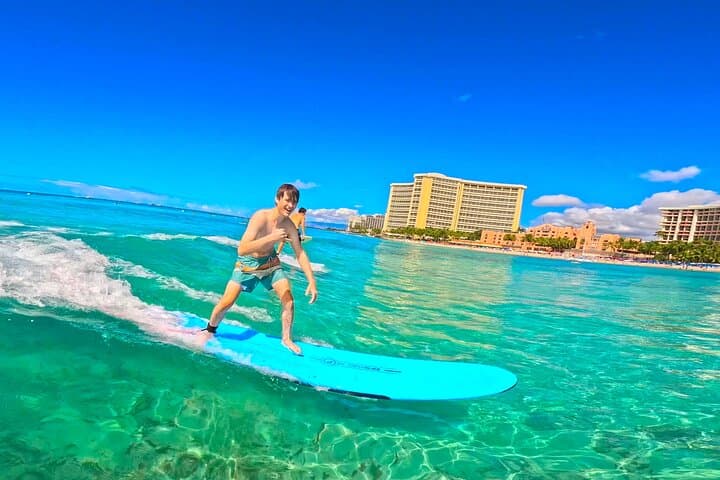
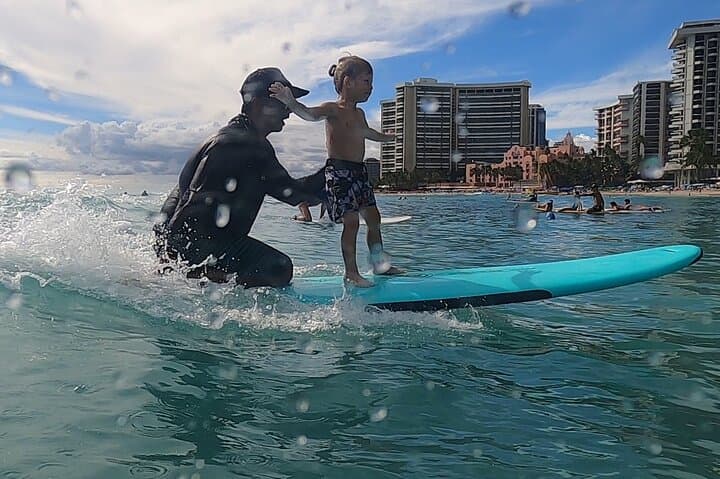
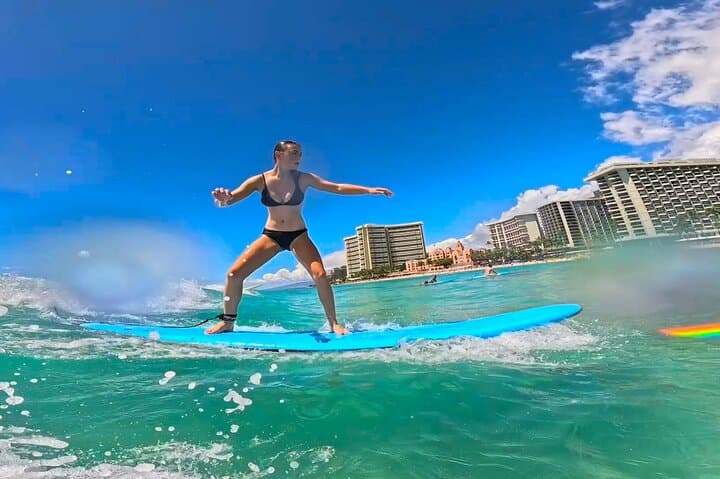
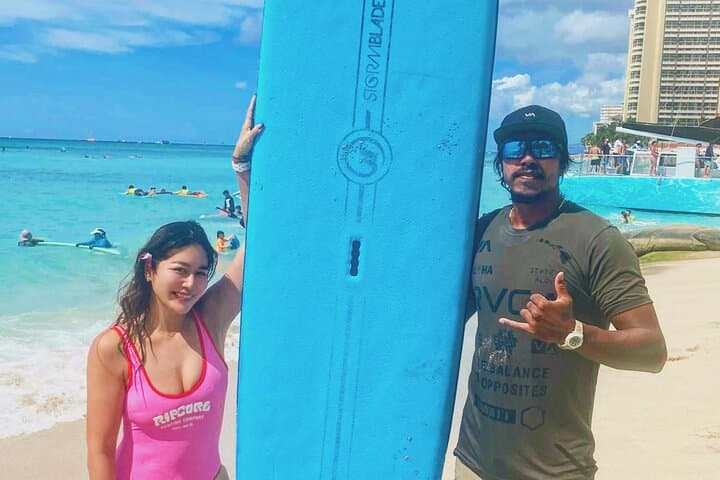
The Pacific pushes warm, glassy water onto Waikiki’s gentle reef breaks and the surf seems to breathe with the city. You meet at the Duke Kahanamoku statue — a bronze figure watching a parade of shortboards and stand-ups — and walk a few steps onto a sloping sand entry where small, rolling waves invite first-timers.
The Pacific pushes warm, glassy water onto Waikiki’s gentle reef breaks and the surf seems to breathe with the city. You meet at the Duke Kahanamoku statue — a bronze figure watching a parade of shortboards and stand-ups — and walk a few steps onto a sloping sand entry where small, rolling waves invite first-timers.
Surfing here is as much cultural as it is physical. Waikiki sits on older reef and coral formations that create consistently friendly waves; Hawaiian watermen like Duke helped codify the sport and its etiquette that instructors still teach. Expect a brief onshore primer covering board position, paddling, pop-up mechanics and ocean awareness before moving into waist- to chest-deep water for guided attempts at standing and riding foam waves.
The lesson emphasizes respect for local lineups, reef safety, and the oral history of surfing in Hawaii. In calm conditions you’ll practice catching whitewater, learning how currents push and how to angle your board to ride gently toward shore. Instructors typically use soft-top boards for stability and to lower impact on coral.
Practical guidance: wear a snug rash guard, apply reef-safe sunscreen, and hydrate well; plan lessons for morning light when winds are light and crowds are thinner. Know your swimming comfort level and disclose weight/health info in advance — instructors adapt pacing for families and private groups. This is a focused, confidence-building introduction: short, repetitive wave sets and immediate instructor feedback make standing up achievable in one hour for most beginners.