THE ADVENTURE COLLECTIVE® · Independent discovery and booking for outdoor travel

Catch your first wave where surfing became a global pastime. This two-hour Waikiki group lesson pairs sand drills with guided ocean practice, perfect for beginners ready to learn basic paddling, pop-ups, and wave selection.
Catch your first wave where surfing became a global pastime. This two-hour Waikiki group lesson pairs sand drills with guided ocean practice, perfect for beginners ready to learn basic paddling, pop-ups, and wave selection.
Morning on Waikiki arrives soft and loud: the ocean lays long, glassy lines toward shore while tourists and locals thread the sand. Diamond Head crouches to the southeast; the reef outside Waikiki shapes steady, slow waves that have taught generations to stand and ride.
Verified experiences and guided adventures in the surrounding area.
Operated by Hans Hedemann Surf Inc · Honolulu, Hawaii
Morning on Waikiki arrives soft and loud: the ocean lays long, glassy lines toward shore while tourists and locals thread the sand. Diamond Head crouches to the southeast; the reef outside Waikiki shapes steady, slow waves that have taught generations to stand and ride.
This is where modern surfing met organized tourism. Surfing — he‘e nalu in Hawaiian — was practiced here by ali‘i (chiefs) centuries ago; the volcanic ridge of Diamond Head and the coral reefs offshore created the consistent rollers that made Waikiki a global classroom. Today, lessons begin on the sand with safety and pop-up technique, then move into waist-to-chest deep water guarded by instructors.
Expect a practical two-hour session: 20–30 minutes of on-beach instruction at the Queen Kapiolani Hotel lobby surf shop, then guided paddling and wave selection under a 1:3–1:4 student-to-instructor ratio. The reef produces long, forgiving waves ideal for first stands, but currents and crowding vary — early mornings bring lighter wind and smaller crowds. Bring reef-safe sunscreen, a swim-capable comfort level, and patience for repeated attempts; instructors provide boards, rash guards, and reef shoes.
Logistics are straightforward — check in 20–30 minutes early, and note the activity isn’t recommended for pregnant travelers and requires basic swimming ability. Respect local etiquette: yield to longboarders, avoid stepping on coral, and give space to native wildlife. For many, Waikiki’s gentle peel is the place to catch a first wave and leave the beach with skills and a clearer sense of how the ocean will ask you to move.
easy.
2 hours.
Moderate; you should have basic swimming fitness and the ability to paddle and pop up repeatedly.
No — this lesson is designed for first-timers and beginners; instructors start with on-sand drills before entering the water.
Participants must be at least 14 years old for this group lesson; check operator policies for variations.
The tour may be canceled for safety or insufficient travelers; cancelations follow the operator’s policy and typically allow refunds if canceled 24+ hours in advance.
Yes — surfboards, rash guards, reef shoes, and safe storage lockers are included in the lesson price.
Waikiki was a royal recreation area and played a central role in the revival and global spread of surfing in the 20th century.
Use reef-safe sunscreen, avoid standing on coral, and keep distance from marine life — local programs monitor reef health and seal populations.
Hans Hedemann Surf Inc operates guided outdoor trips and adventures with an emphasis on safety, stewardship, and memorable experiences.
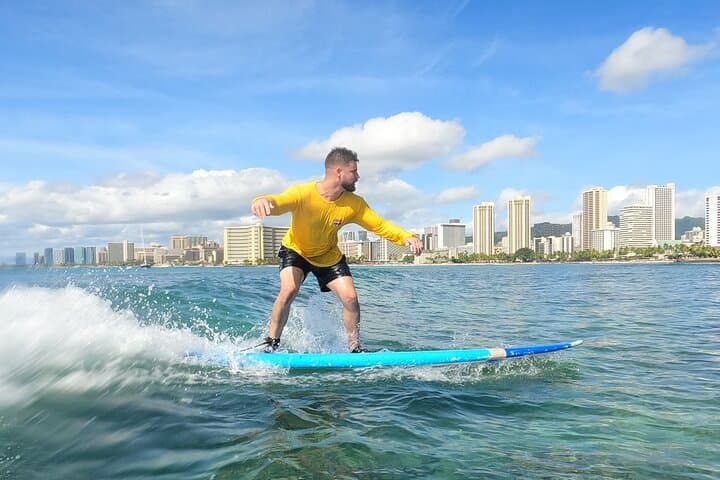
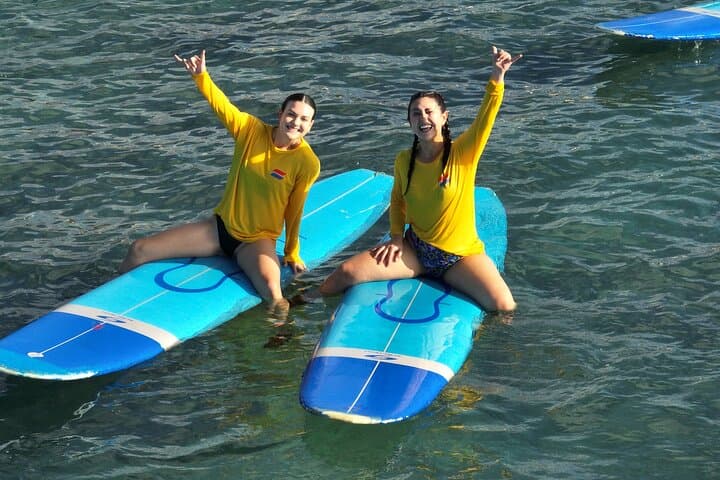
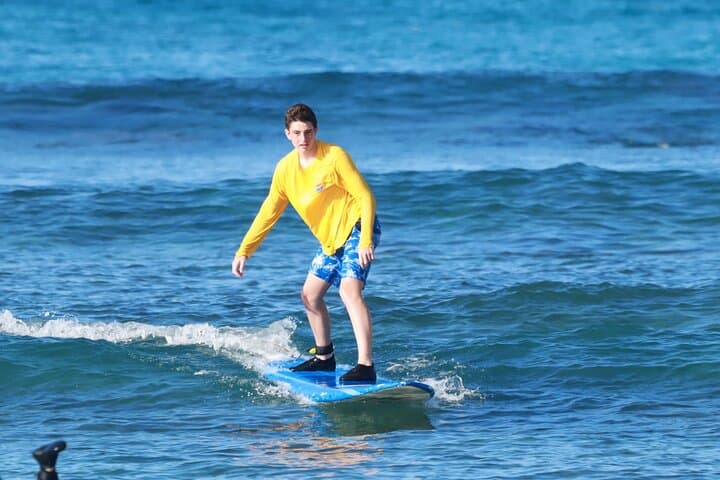
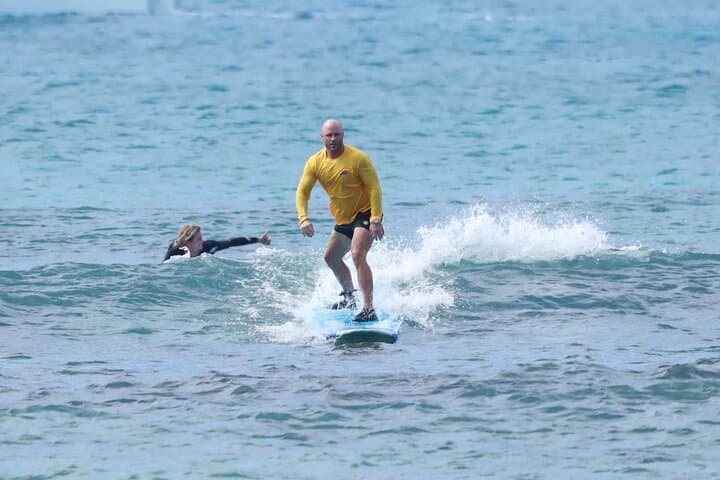
Morning on Waikiki arrives soft and loud: the ocean lays long, glassy lines toward shore while tourists and locals thread the sand. Diamond Head crouches to the southeast; the reef outside Waikiki shapes steady, slow waves that have taught generations to stand and ride.
Morning on Waikiki arrives soft and loud: the ocean lays long, glassy lines toward shore while tourists and locals thread the sand. Diamond Head crouches to the southeast; the reef outside Waikiki shapes steady, slow waves that have taught generations to stand and ride.
This is where modern surfing met organized tourism. Surfing — he‘e nalu in Hawaiian — was practiced here by ali‘i (chiefs) centuries ago; the volcanic ridge of Diamond Head and the coral reefs offshore created the consistent rollers that made Waikiki a global classroom. Today, lessons begin on the sand with safety and pop-up technique, then move into waist-to-chest deep water guarded by instructors.
Expect a practical two-hour session: 20–30 minutes of on-beach instruction at the Queen Kapiolani Hotel lobby surf shop, then guided paddling and wave selection under a 1:3–1:4 student-to-instructor ratio. The reef produces long, forgiving waves ideal for first stands, but currents and crowding vary — early mornings bring lighter wind and smaller crowds. Bring reef-safe sunscreen, a swim-capable comfort level, and patience for repeated attempts; instructors provide boards, rash guards, and reef shoes.
Logistics are straightforward — check in 20–30 minutes early, and note the activity isn’t recommended for pregnant travelers and requires basic swimming ability. Respect local etiquette: yield to longboarders, avoid stepping on coral, and give space to native wildlife. For many, Waikiki’s gentle peel is the place to catch a first wave and leave the beach with skills and a clearer sense of how the ocean will ask you to move.