THE ADVENTURE COLLECTIVE® · Independent discovery and booking for outdoor travel

Private surf lessons in Taghazout place learners into some of Morocco’s most consistent point breaks with local instructors, wetsuits, and boards provided. Expect sand‑drill warmups, coached waves, and adaptable locations chosen for skill level and swell.
Private surf lessons in Taghazout place learners into some of Morocco’s most consistent point breaks with local instructors, wetsuits, and boards provided. Expect sand‑drill warmups, coached waves, and adaptable locations chosen for skill level and swell.
Salt air and concrete meet under a bright Atlantic sun as surfers shoulder boards along Taghazout’s shoreline. The village opens onto a long arc of sand and reef breaks where early-morning sets roll in with clean, powerful lines; surf lessons here put learners into that motion, one wave at a time.
Verified experiences and guided adventures in the surrounding area.
Operated by Surfswell Taghazout · Taghazout, Souss-Massa
Salt air and concrete meet under a bright Atlantic sun as surfers shoulder boards along Taghazout’s shoreline. The village opens onto a long arc of sand and reef breaks where early-morning sets roll in with clean, powerful lines; surf lessons here put learners into that motion, one wave at a time.
Taghazout began as a small Berber fishing village and over decades has become Morocco’s surf hub, drawing international riders to famous breaks like Anchor Point and nearby Imsouane. The coastline is a product of Atlantic swells meeting fractured limestone and sandstone shelves—resulting in point breaks that peel predictably when swell and wind align. Local culture still centers on hospitality: tea, casual cafés, and fishermen hauling nets between lessons.
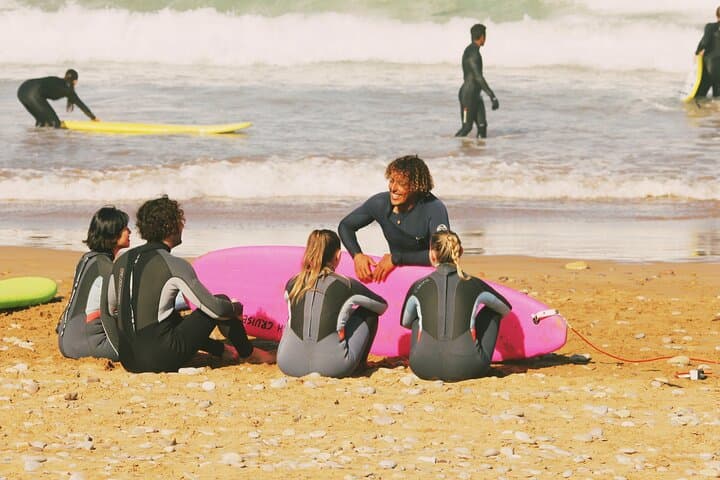
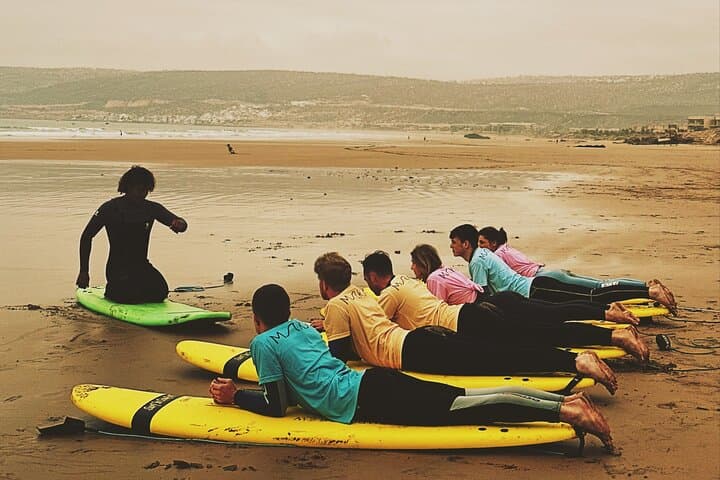
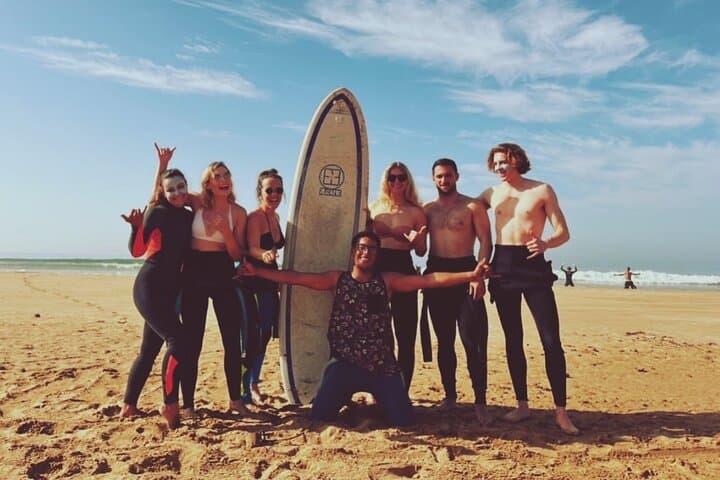
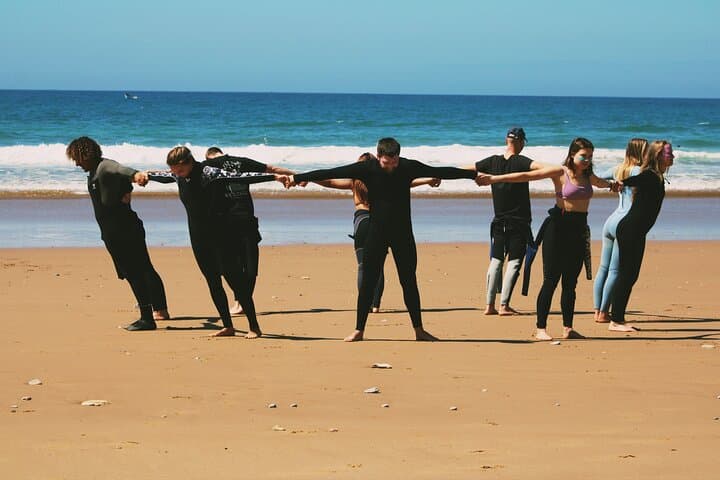
On a private 3‑hour lesson expect a guided warm-up on the sand, paddle and pop‑up drills, coached waves in waist‑to‑head high surf, and use of wetsuit and board. Instructors adjust locations—Taghazout, Killer Point, or Imsouane—based on skill level and conditions. Sessions favor lower tides for cleaner points; afternoons can bring onshore wind and chop.
Practical tips: arrive hydrated, warm up before entering, and follow your instructor’s signals in surf etiquette and safety. Wetsuits are provided but a well‑fitting rash guard reduces chafing. Beginners should focus on timing and positioning rather than speed—progress comes from repetition and reading the line. When not surfing, walk the headland for views of the swell horizon and watch for pods of dolphins that sometimes break the water beyond the surfers.
moderate.
3 hours.
Moderate fitness: able to swim 50–100 m and perform repeated pop‑ups; good cardiovascular stamina helps with paddling.
Yes—basic swimming ability and comfort in open water are required; instructors will not conduct lessons for non‑swimmers.
Yes; most operators supply a range of boards and wetsuits sized to participants, but bringing personal gear is fine for experienced surfers.
Many schools accept teens and older children with parental consent; check age minimums and safety rules with the operator.
Signal your instructor, move to shallower water or back to shore, hydrate, and rest—safety is prioritized and lessons can be adapted or paused.
Originally a fishing and Berber community, Taghazout’s surf scene grew in the late 20th century as international surfers discovered reliable Atlantic point breaks.
Respect reef habitats by not standing on live rock and use reef‑safe sunscreen; local groups periodically organize beach cleanups to reduce plastic on the shore.
Surfswell Taghazout operates guided outdoor trips and adventures with an emphasis on safety, stewardship, and memorable experiences.
Salt air and concrete meet under a bright Atlantic sun as surfers shoulder boards along Taghazout’s shoreline. The village opens onto a long arc of sand and reef breaks where early-morning sets roll in with clean, powerful lines; surf lessons here put learners into that motion, one wave at a time.
Salt air and concrete meet under a bright Atlantic sun as surfers shoulder boards along Taghazout’s shoreline. The village opens onto a long arc of sand and reef breaks where early-morning sets roll in with clean, powerful lines; surf lessons here put learners into that motion, one wave at a time.
Taghazout began as a small Berber fishing village and over decades has become Morocco’s surf hub, drawing international riders to famous breaks like Anchor Point and nearby Imsouane. The coastline is a product of Atlantic swells meeting fractured limestone and sandstone shelves—resulting in point breaks that peel predictably when swell and wind align. Local culture still centers on hospitality: tea, casual cafés, and fishermen hauling nets between lessons.
On a private 3‑hour lesson expect a guided warm-up on the sand, paddle and pop‑up drills, coached waves in waist‑to‑head high surf, and use of wetsuit and board. Instructors adjust locations—Taghazout, Killer Point, or Imsouane—based on skill level and conditions. Sessions favor lower tides for cleaner points; afternoons can bring onshore wind and chop.
Practical tips: arrive hydrated, warm up before entering, and follow your instructor’s signals in surf etiquette and safety. Wetsuits are provided but a well‑fitting rash guard reduces chafing. Beginners should focus on timing and positioning rather than speed—progress comes from repetition and reading the line. When not surfing, walk the headland for views of the swell horizon and watch for pods of dolphins that sometimes break the water beyond the surfers.