THE ADVENTURE COLLECTIVE® · Independent discovery and booking for outdoor travel

Learn to surf off Casablanca’s Corniche with a pro instructor on a private beach club. This hour-long beginner session teaches paddling, standing and balance in forgiving Atlantic waves—ideal for first-timers who want a safe, coached introduction.
Learn to surf off Casablanca’s Corniche with a pro instructor on a private beach club. This hour-long beginner session teaches paddling, standing and balance in forgiving Atlantic waves—ideal for first-timers who want a safe, coached introduction.
The Atlantic rolls up the Casablanca coast in long, glassy sets that catch the light just off the private beach club where most beginner lessons start. Participants gather on the sand as a local instructor leads a brisk warm-up, then moves them through paddling, the pop-up and weight shifts before heading into waist- to chest-high waves for re-entry practice.
Verified experiences and guided adventures in the surrounding area.
Operated by Moroccanstar · Casablanca, Casablanca-Settat
The Atlantic rolls up the Casablanca coast in long, glassy sets that catch the light just off the private beach club where most beginner lessons start. Participants gather on the sand as a local instructor leads a brisk warm-up, then moves them through paddling, the pop-up and weight shifts before heading into waist- to chest-high waves for re-entry practice.
Casablanca’s shoreline is part of Morocco’s Atlantic margin, where mid-20th-century seaside development created the Corniche and a string of clubs and cafes. Geologically, the coast is broad and sandy with offshore sandbars that shape forgiving beginner breaks; culturally, the Corniche blends beachside leisure with Casablanca’s café and nightlife scene—restaurants and clubs sit a short walk from the lesson zone.
A typical one-hour session focuses on safety and fundamentals: board control on the sand, paddling technique, standing and balance, then coached attempts in the water. Groups are kept manageable and instructors provide boards and basic wetsuit or rash guard gear. Surfing here is approachable for visitors who are comfortable in the ocean, though instructors may adapt progressions for non-swimmers using flotation aids and close supervision.
Practical notes: mornings offer smaller crowds and cleaner lines; bring sun protection, a secure strap for personal items, and a reusable water bottle. Expect club access rules—private beach entry is controlled, and extras like pool access or food are paid separately. Weather or low enrollment may prompt a cancellation; confirm policies and arrive 20–30 minutes early to check in and change. With basic preparation, this is a direct way to meet Atlantic waves and learn a skill you can build on elsewhere.
moderate.
1 hour.
Suitable for travelers with basic fitness and comfort in open water; expect short paddling bursts and repeated stands.
Basic water comfort is strongly recommended; instructors can use flotation and stay close with beginners, but confident movement in water improves learning.
Lessons typically include a warm-up, dry-land technique coaching, a coached ocean practice with board and basic protective gear provided, and instructor feedback.
Yes, but pool access, food and drinks are usually paid separately by the participant—ask at check-in for current prices.
The provider may cancel for unsafe sea conditions; bookings are otherwise final—confirm whether the operator offers rescheduling or credits on cancellation.
The Corniche developed in the 20th century as Casablanca expanded as Morocco’s commercial center, creating leisure pockets where clubs and cafés met the Atlantic.
Respect private beach rules and pack out waste; coastal sands and nearshore habitats are sensitive to trampling and litter, so minimize single-use plastics.
Moroccanstar operates guided outdoor trips and adventures with an emphasis on safety, stewardship, and memorable experiences.
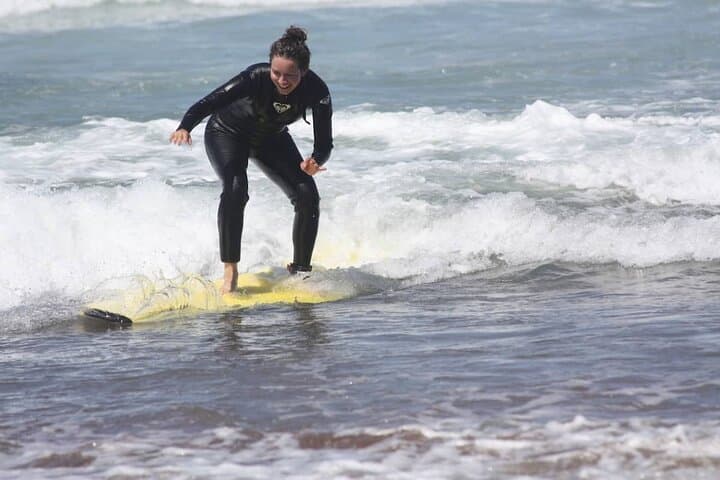
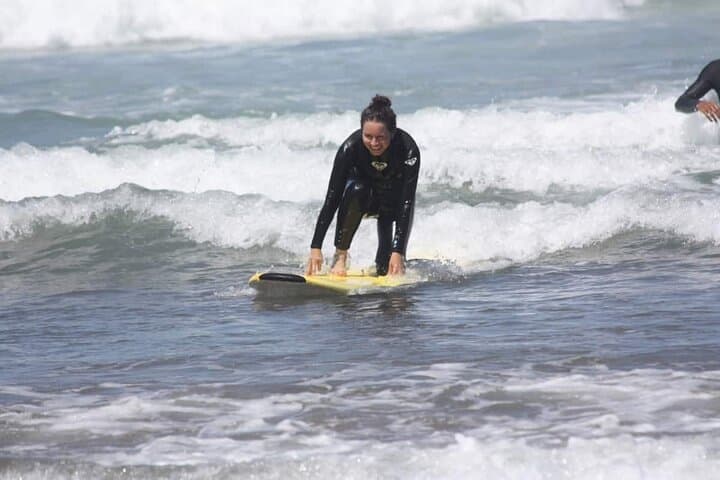
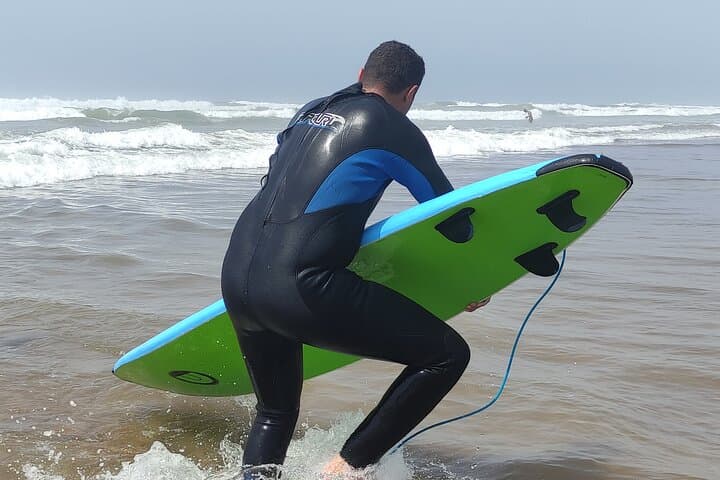
The Atlantic rolls up the Casablanca coast in long, glassy sets that catch the light just off the private beach club where most beginner lessons start. Participants gather on the sand as a local instructor leads a brisk warm-up, then moves them through paddling, the pop-up and weight shifts before heading into waist- to chest-high waves for re-entry practice.
The Atlantic rolls up the Casablanca coast in long, glassy sets that catch the light just off the private beach club where most beginner lessons start. Participants gather on the sand as a local instructor leads a brisk warm-up, then moves them through paddling, the pop-up and weight shifts before heading into waist- to chest-high waves for re-entry practice.
Casablanca’s shoreline is part of Morocco’s Atlantic margin, where mid-20th-century seaside development created the Corniche and a string of clubs and cafes. Geologically, the coast is broad and sandy with offshore sandbars that shape forgiving beginner breaks; culturally, the Corniche blends beachside leisure with Casablanca’s café and nightlife scene—restaurants and clubs sit a short walk from the lesson zone.
A typical one-hour session focuses on safety and fundamentals: board control on the sand, paddling technique, standing and balance, then coached attempts in the water. Groups are kept manageable and instructors provide boards and basic wetsuit or rash guard gear. Surfing here is approachable for visitors who are comfortable in the ocean, though instructors may adapt progressions for non-swimmers using flotation aids and close supervision.
Practical notes: mornings offer smaller crowds and cleaner lines; bring sun protection, a secure strap for personal items, and a reusable water bottle. Expect club access rules—private beach entry is controlled, and extras like pool access or food are paid separately. Weather or low enrollment may prompt a cancellation; confirm policies and arrive 20–30 minutes early to check in and change. With basic preparation, this is a direct way to meet Atlantic waves and learn a skill you can build on elsewhere.