THE ADVENTURE COLLECTIVE® · Independent discovery and booking for outdoor travel

Two-hour private surf lessons on Manuel Antonio Beach teach beginners the fundamentals—sand drills, in-water pushes and guided catches—set against rainforest-tipped headlands and frequent wildlife sightings. Ideal for travelers seeking safe, coached progression in warm Pacific waters.
Two-hour private surf lessons on Manuel Antonio Beach teach beginners the fundamentals—sand drills, in-water pushes and guided catches—set against rainforest-tipped headlands and frequent wildlife sightings. Ideal for travelers seeking safe, coached progression in warm Pacific waters.
The morning sun warms the black sand as a compact line of rollers approaches the shore—each wave testing balance, urging a reply. On Manuel Antonio Beach, instructors guide first-timers from a sand drill to standing on foam, then to catching unbroken shoulder-high waves as the jungle watches from the headlands.
Verified experiences and guided adventures in the surrounding area.
Operated by Tony's Surf School · Manuel Antonio, Puntarenas
The morning sun warms the black sand as a compact line of rollers approaches the shore—each wave testing balance, urging a reply. On Manuel Antonio Beach, instructors guide first-timers from a sand drill to standing on foam, then to catching unbroken shoulder-high waves as the jungle watches from the headlands.
This stretch of Pacific coast sits beside Manuel Antonio National Park, created in the early 1970s to protect coastal rainforest and rocky headlands carved by volcanic uplift and surf. The beach break here forms over sandy bottoms with occasional reef shelves, producing gentle, rideable waves that helped grow a local surf culture centered on skill-building and respect for the sea—often summed up in the casual ‘‘pura vida’’ rhythm.
Wildlife can appear mid-lesson: curious capuchin monkeys and iguanas patrol the shore, and seabirds wheel overhead. That proximity is part joy, part responsibility—guides emphasize no feeding and careful behavior to keep both students and animals safe.
Practical guidance: lessons run two hours and begin with 10–15 minutes of on-sand coaching—stance, pop-up, and safety—then transition to in-water practice where instructors paddle alongside and assist catches until you can paddle and ride independently. Lessons supply boards, rashguards, leashes, bottled water and a snack. Expect moderate physical demand: repeated paddling and pop-ups require core strength and basic swimming skills.
Best times are calm mornings when offshore wind is light and crowds are thin. Wear reef-safe sunscreen, a snug rashguard, and be ready to heed instructors about currents and tide changes. Book early in high season and cancel at least 24 hours ahead if plans change.
moderate.
2 hours.
Moderate fitness: able to paddle, perform repeated pop-ups and swim short distances; not suitable for those with serious cardiovascular issues.
Yes—participants should be comfortable in the ocean and able to float or tread water; instructors assist closely but won’t substitute for basic swimming ability.
The two-hour private lesson includes a surfboard or foam board, leash, rashguard, bottled water, snacks and one-on-one coaching from an instructor.
Yes—lessons accept a wide age range, but guardians should confirm age-specific arrangements when booking; small children may require additional supervision.
The provider cancels for bad weather; full refunds are available if you cancel at least 24 hours before the scheduled time per the standard policy.
Manuel Antonio grew from a coastal fishing community; the adjacent national park was established in the early 1970s to protect rainforest and coastal habitats.
High visitation pressures require stick-to-path behavior and no-feeding rules; use reef-safe sunscreen and pack out trash to protect shoreline and marine life.
Tony's Surf School operates guided outdoor trips and adventures with an emphasis on safety, stewardship, and memorable experiences.
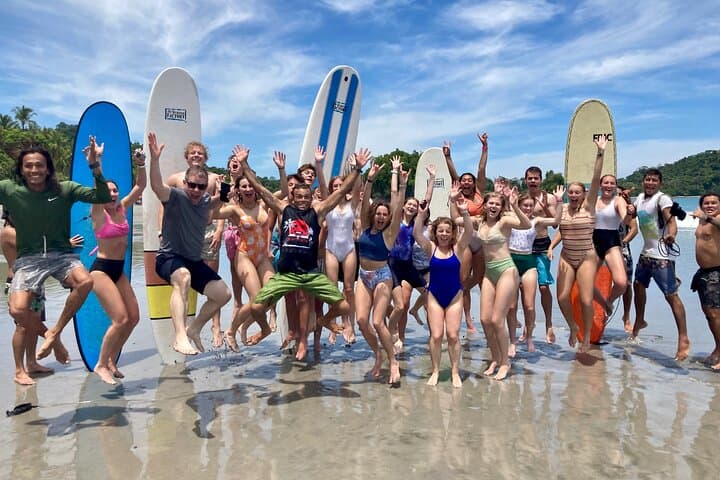
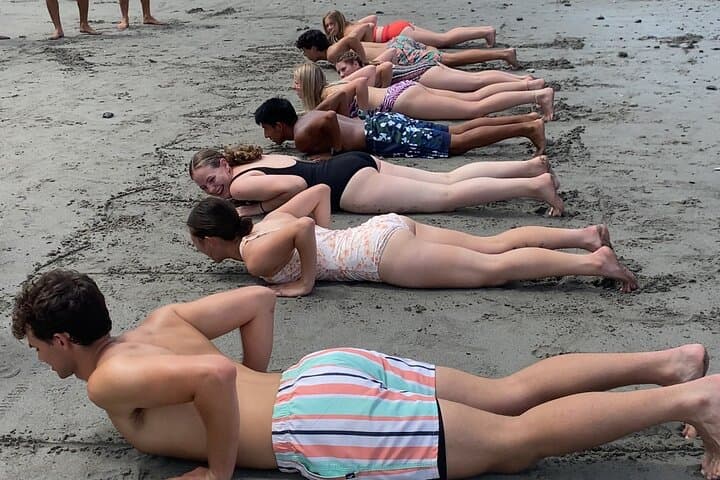
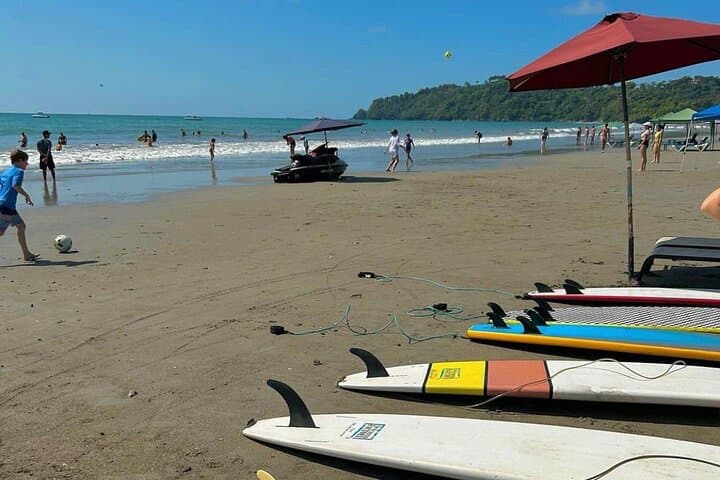
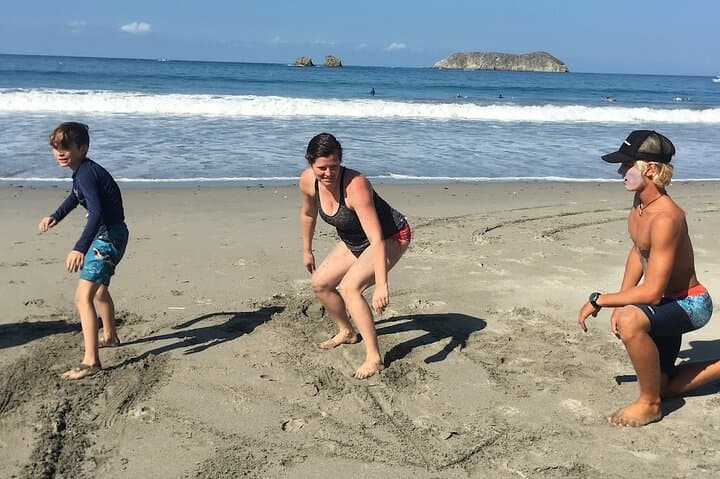
The morning sun warms the black sand as a compact line of rollers approaches the shore—each wave testing balance, urging a reply. On Manuel Antonio Beach, instructors guide first-timers from a sand drill to standing on foam, then to catching unbroken shoulder-high waves as the jungle watches from the headlands.
The morning sun warms the black sand as a compact line of rollers approaches the shore—each wave testing balance, urging a reply. On Manuel Antonio Beach, instructors guide first-timers from a sand drill to standing on foam, then to catching unbroken shoulder-high waves as the jungle watches from the headlands.
This stretch of Pacific coast sits beside Manuel Antonio National Park, created in the early 1970s to protect coastal rainforest and rocky headlands carved by volcanic uplift and surf. The beach break here forms over sandy bottoms with occasional reef shelves, producing gentle, rideable waves that helped grow a local surf culture centered on skill-building and respect for the sea—often summed up in the casual ‘‘pura vida’’ rhythm.
Wildlife can appear mid-lesson: curious capuchin monkeys and iguanas patrol the shore, and seabirds wheel overhead. That proximity is part joy, part responsibility—guides emphasize no feeding and careful behavior to keep both students and animals safe.
Practical guidance: lessons run two hours and begin with 10–15 minutes of on-sand coaching—stance, pop-up, and safety—then transition to in-water practice where instructors paddle alongside and assist catches until you can paddle and ride independently. Lessons supply boards, rashguards, leashes, bottled water and a snack. Expect moderate physical demand: repeated paddling and pop-ups require core strength and basic swimming skills.
Best times are calm mornings when offshore wind is light and crowds are thin. Wear reef-safe sunscreen, a snug rashguard, and be ready to heed instructors about currents and tide changes. Book early in high season and cancel at least 24 hours ahead if plans change.