THE ADVENTURE COLLECTIVE® · Independent discovery and booking for outdoor travel

Catch your first wave on Famara’s broad, wind‑sculpted shore. This two‑hour beginner lesson covers safety, tides, and in‑water practice with wetsuits and boards provided.
Catch your first wave on Famara’s broad, wind‑sculpted shore. This two‑hour beginner lesson covers safety, tides, and in‑water practice with wetsuits and boards provided.
You step out of the school onto wind‑shaped sand; the Atlantic meets the base of a high, ochre cliff and the surf calls you in a steady, approachable rhythm. Famara’s long, left‑breaking waves are wide and forgiving—perfect for a first ride—and instructors move between students like tide guides, correcting posture, timing, and board control.
Verified experiences and guided adventures in the surrounding area.
Operated by Calima Surf · Caleta de Famara, Las Palmas
You step out of the school onto wind‑shaped sand; the Atlantic meets the base of a high, ochre cliff and the surf calls you in a steady, approachable rhythm. Famara’s long, left‑breaking waves are wide and forgiving—perfect for a first ride—and instructors move between students like tide guides, correcting posture, timing, and board control.
Geology here is blunt and recent: black lava flows to the north, layered ash on the cliffs, and a beach shaped by volcanic cliffs and persistent winds. Caleta de Famara is a fishing village with simple cafés and a surf culture that dates to the late 20th century, when locals and travelers turned the beach into a training ground for Atlantic swells.
Practical details: lessons run two hours with morning shifts (meet at 9:15) and late morning shifts (meet at 11:45). Schools supply wetsuits, boards, insurance and a short transfer from the school to the beach. Classes cover warm‑ups, basic theory (tides, positioning, safety) and in‑water practice with instructor supervision. Expect group sizes that mix levels; the pace is structured to get beginners standing and catching unbroken waves.
Plan for changing wind; check tides that day; bring a water bottle, SPF, and a lightweight change of clothes. Know how to swim and disclose health conditions—pregnant travelers and those with serious cardiovascular issues should not join. Public transport reaches Caleta de Famara; many visitors stay in the village or nearby Teguise. With clear instruction and the right conditions, Famara is one of Europe’s most reliable spots to learn surf technique and ocean sense.
moderate.
2 hours.
Suitable for people in light to moderate fitness — able to paddle, pop up on a board, and swim confidently
Yes—you should be comfortable swimming in open water; instructors will supervise but the Atlantic requires confident swimming ability.
Yes—the class includes board and wetsuit use, plus liability insurance and a short transfer from the school to the beach.
The school cancels in unsafe conditions and offers a full refund if canceled at least 24 hours before the session; they may also reschedule.
Yes—classes are structured for first‑time surfers through intermediate riders, with coached in‑water practice and theory on tides and safety.
Famara sits beneath eroded volcanic cliffs; the area developed as a surf destination in recent decades while retaining its fishing‑village character.
The beach and cliffs are sensitive—avoid trampling dune vegetation, pack out trash, and choose schools that follow marine‑safety and waste‑reduction practices.
Calima Surf operates guided outdoor trips and adventures with an emphasis on safety, stewardship, and memorable experiences.


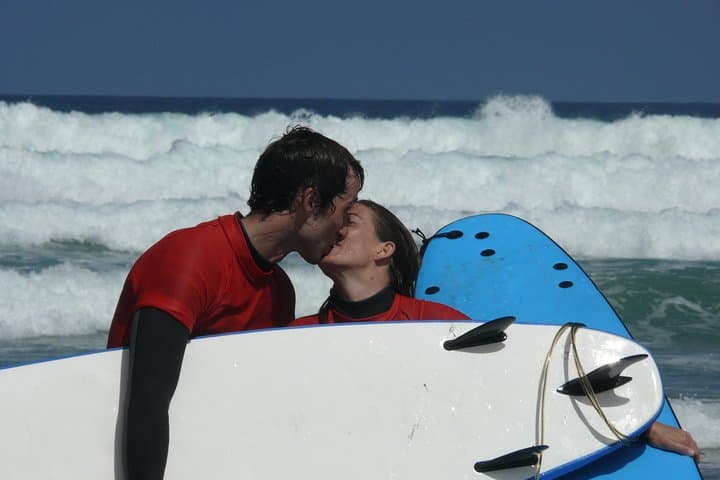

You step out of the school onto wind‑shaped sand; the Atlantic meets the base of a high, ochre cliff and the surf calls you in a steady, approachable rhythm. Famara’s long, left‑breaking waves are wide and forgiving—perfect for a first ride—and instructors move between students like tide guides, correcting posture, timing, and board control.
You step out of the school onto wind‑shaped sand; the Atlantic meets the base of a high, ochre cliff and the surf calls you in a steady, approachable rhythm. Famara’s long, left‑breaking waves are wide and forgiving—perfect for a first ride—and instructors move between students like tide guides, correcting posture, timing, and board control.
Geology here is blunt and recent: black lava flows to the north, layered ash on the cliffs, and a beach shaped by volcanic cliffs and persistent winds. Caleta de Famara is a fishing village with simple cafés and a surf culture that dates to the late 20th century, when locals and travelers turned the beach into a training ground for Atlantic swells.
Practical details: lessons run two hours with morning shifts (meet at 9:15) and late morning shifts (meet at 11:45). Schools supply wetsuits, boards, insurance and a short transfer from the school to the beach. Classes cover warm‑ups, basic theory (tides, positioning, safety) and in‑water practice with instructor supervision. Expect group sizes that mix levels; the pace is structured to get beginners standing and catching unbroken waves.
Plan for changing wind; check tides that day; bring a water bottle, SPF, and a lightweight change of clothes. Know how to swim and disclose health conditions—pregnant travelers and those with serious cardiovascular issues should not join. Public transport reaches Caleta de Famara; many visitors stay in the village or nearby Teguise. With clear instruction and the right conditions, Famara is one of Europe’s most reliable spots to learn surf technique and ocean sense.