THE ADVENTURE COLLECTIVE® · Independent discovery and booking for outdoor travel

Take the oar and learn voga alla veneta—the single-oar rowing tradition that moved Venice for centuries. This 90‑minute session combines a museum introduction with hands-on coaching through peaceful canals.
Take the oar and learn voga alla veneta—the single-oar rowing tradition that moved Venice for centuries. This 90‑minute session combines a museum introduction with hands-on coaching through peaceful canals.
You push off from a small quay and the city closes in: brick facades lean over mirror-still water, the soft scrape of wooden hulls answering your first stroke. Instructors born and raised in Venice guide you from a workshop/museum space—where repaired forcole and varnished oars sit like tools of an old craft—onto narrow, quieter canals away from the Grand Canal’s bustle.
Verified experiences and guided adventures in the surrounding area.
Operated by Venice On Board · Venice, Veneto
You push off from a small quay and the city closes in: brick facades lean over mirror-still water, the soft scrape of wooden hulls answering your first stroke. Instructors born and raised in Venice guide you from a workshop/museum space—where repaired forcole and varnished oars sit like tools of an old craft—onto narrow, quieter canals away from the Grand Canal’s bustle.
Venice’s canals are the product of a lagoon city built on driven piles and sediment; boats and boatbuilding are woven into its history. The association running this session restores traditional craft and teaches voga alla veneta, the single-oar technique that shaped transport and regatta culture here for centuries. Expect a brief classroom introduction to boat anatomy and safety, then 60–75 minutes on the water practicing balance, stroke control and steering through residential rials and under small bridges.
Culturally, rowing remains a living skill—local regattas and squero (boatyards) keep craft traditions vivid. Geographically, tidal shifts and narrow channels change the feel of each route; instructors choose lines to suit conditions and skill level.
Practically: the activity is 90 minutes total, small groups (up to six), and suitable for most fitness levels. Wear non-slip shoes that can get wet, bring a light waterproof layer and sun protection, and leave bulky bags behind—the boats are compact. Morning or late afternoon outings reduce boat traffic and heat. Pay attention to the instructor’s call for the forcola; it’s the key to safe, effective Venetian rowing.
easy.
1.5 hours.
Suitable for most adults and older children with basic balance; minimal aerobic fitness required.
No prior experience is required; instructors teach basic balance, stroking and steering in a short on-land briefing before heading out.
Yes—sessions are family-friendly but infants must sit on an adult’s lap and participants should be able to follow safety instructions.
Meetings are typically near a boatyard or small quay easily reached by vaporetto or on foot from central districts; booking confirmation will give exact directions.
Day visitors from outside Venice may occasionally pay a city access fee (around €5) on certain dates—check local guidance before travel.
Venetian rowing developed alongside the lagoon city itself; boatyards and the forcola oarlock evolved to meet narrow, tidal waterways and a culture centered on waterborne transport.
The Venetian lagoon is a fragile ecosystem—opt for operators that repair rather than replace craft, avoid littering, and use biodegradable sunscreen to reduce chemical runoff.
Venice On Board operates guided outdoor trips and adventures with an emphasis on safety, stewardship, and memorable experiences.
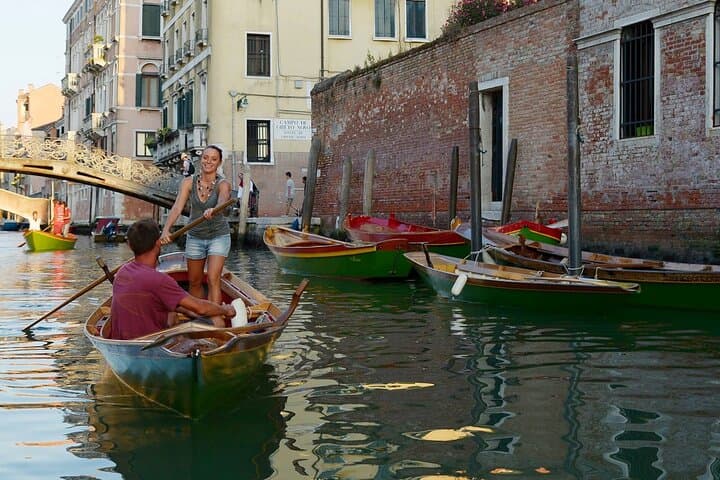
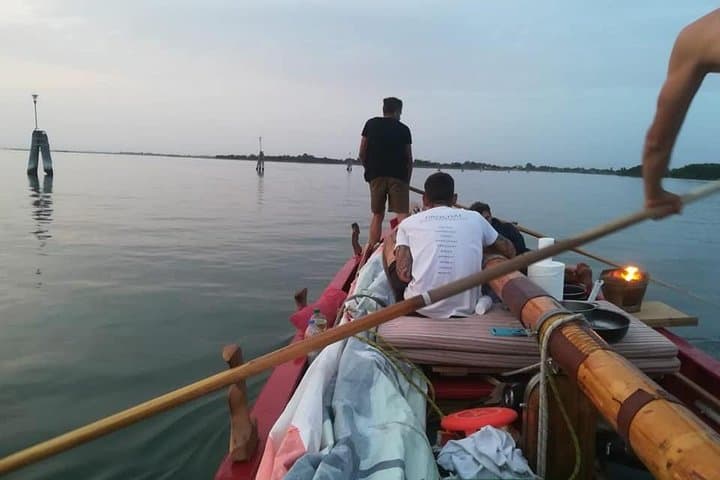
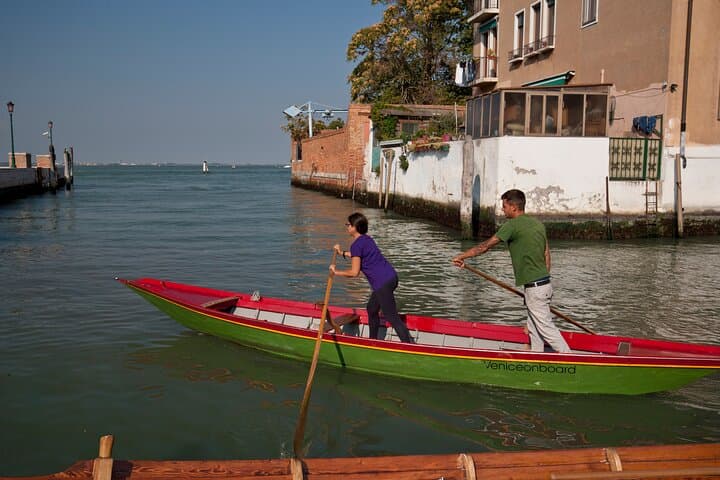
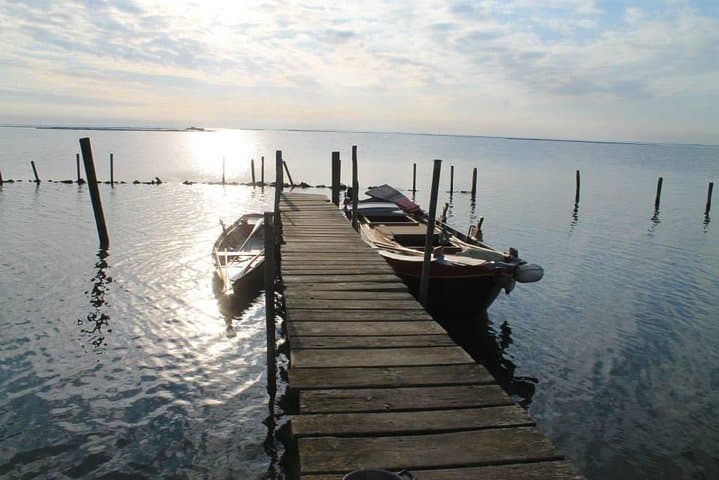
You push off from a small quay and the city closes in: brick facades lean over mirror-still water, the soft scrape of wooden hulls answering your first stroke. Instructors born and raised in Venice guide you from a workshop/museum space—where repaired forcole and varnished oars sit like tools of an old craft—onto narrow, quieter canals away from the Grand Canal’s bustle.
You push off from a small quay and the city closes in: brick facades lean over mirror-still water, the soft scrape of wooden hulls answering your first stroke. Instructors born and raised in Venice guide you from a workshop/museum space—where repaired forcole and varnished oars sit like tools of an old craft—onto narrow, quieter canals away from the Grand Canal’s bustle.
Venice’s canals are the product of a lagoon city built on driven piles and sediment; boats and boatbuilding are woven into its history. The association running this session restores traditional craft and teaches voga alla veneta, the single-oar technique that shaped transport and regatta culture here for centuries. Expect a brief classroom introduction to boat anatomy and safety, then 60–75 minutes on the water practicing balance, stroke control and steering through residential rials and under small bridges.
Culturally, rowing remains a living skill—local regattas and squero (boatyards) keep craft traditions vivid. Geographically, tidal shifts and narrow channels change the feel of each route; instructors choose lines to suit conditions and skill level.
Practically: the activity is 90 minutes total, small groups (up to six), and suitable for most fitness levels. Wear non-slip shoes that can get wet, bring a light waterproof layer and sun protection, and leave bulky bags behind—the boats are compact. Morning or late afternoon outings reduce boat traffic and heat. Pay attention to the instructor’s call for the forcola; it’s the key to safe, effective Venetian rowing.