THE ADVENTURE COLLECTIVE® · Independent discovery and booking for outdoor travel

A practical, private two-hour motorbike lesson that turns beginners into confident urban riders. Learn balance, braking, and how to read Hanoi’s unique traffic flow in a controlled environment.
A practical, private two-hour motorbike lesson that turns beginners into confident urban riders. Learn balance, braking, and how to read Hanoi’s unique traffic flow in a controlled environment.
Morning light catches the practice yard and the low hum of scooters becomes a promise rather than a threat. In a quiet lot just off Hanoi’s tighter streets, a patient instructor calibrates the clutch and points to a line on the pavement — the first boundary between fear and forward motion.
Verified experiences and guided adventures in the surrounding area.
Operated by Chicks n Bikes Hanoi · Hanoi, Hanoi
Morning light catches the practice yard and the low hum of scooters becomes a promise rather than a threat. In a quiet lot just off Hanoi’s tighter streets, a patient instructor calibrates the clutch and points to a line on the pavement — the first boundary between fear and forward motion.
Hanoi’s motorbike culture evolved after the French colonial period and the Vietnam War, when two-wheeled transport became the city’s default. The Red River plain and the city’s compact, historic core shape short rides and quick direction changes; understanding that geometry is part of learning to ride here. Instructors teach not only balance and braking but the local rhythms: how intersections breathe, how horn patterns signal intent, and why lane-sharing is a negotiated choreography.
Expect a controlled progression: slow-speed drills in a sheltered space, then escorted short stretches onto calmer streets to practice scanning, mirroring local traffic flow, and uphill/downhill throttle control. Lessons run about two hours and instructors provide helmets and protective gear. The course is tailored for complete beginners who want the practical skills to explore Hanoi on their own or prepare for longer trips like the Ha Giang Loop.
Practical tips: schedule morning sessions for lighter traffic, wear sturdy closed-toe shoes, and bring a photocopy of your passport. The training emphasizes safety and local etiquette so you learn to read traffic rather than fight it — the essential skill for authentic, independent travel in Vietnam.
moderate.
2 hours.
Suitable for most fitness levels; you should be able to stand and walk unassisted and have basic balance.
No local license is required to take the lesson; however, if you plan to ride legally on Vietnamese roads after the lesson, you’ll need the appropriate license or an international permit recognized by local authorities.
Yes—the lesson is designed for people with no prior experience and progresses from basic balance and braking to low-traffic street riding.
Yes—helmets and basic protective accessories are provided, but bring your own sturdy shoes and comfortable clothing.
Sessions may be canceled for heavy rain or unsafe conditions; the operator typically offers a full refund if canceled at least 24 hours in advance.
Motorbike dominance in Hanoi grew in the late 20th century as the city rebuilt its economy; two wheels became the most efficient way through dense neighborhoods and narrow alleys.
Encourage low-idling practices and support schools that use modern, low-emission engines; minimize plastic use during rides and respect local traffic rules to reduce hazards.
Chicks n Bikes Hanoi operates guided outdoor trips and adventures with an emphasis on safety, stewardship, and memorable experiences.
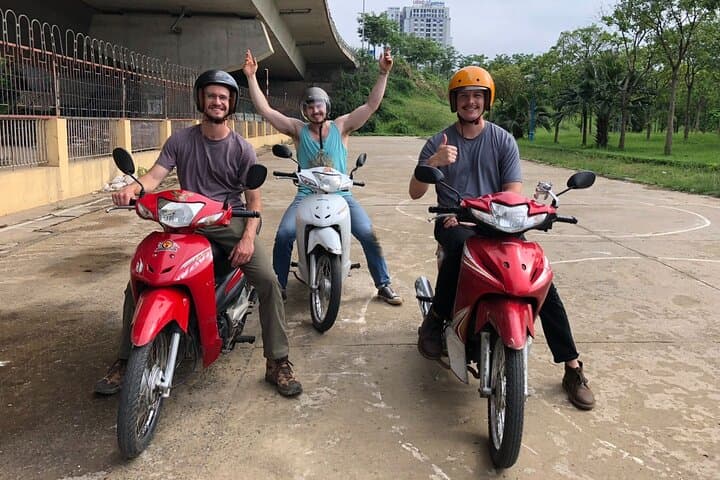
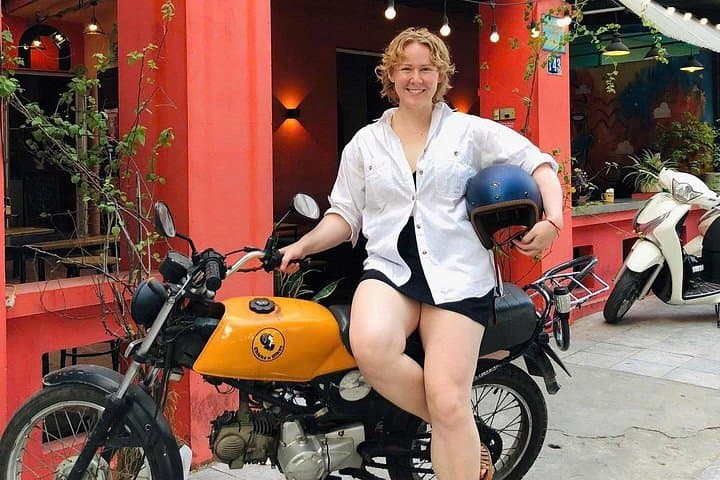
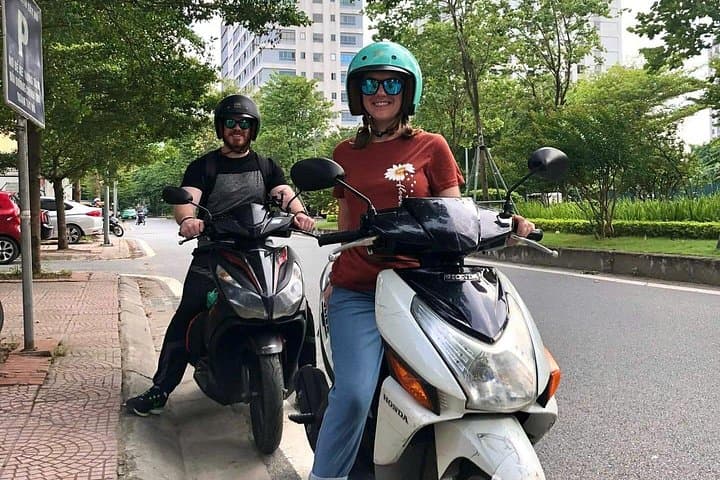
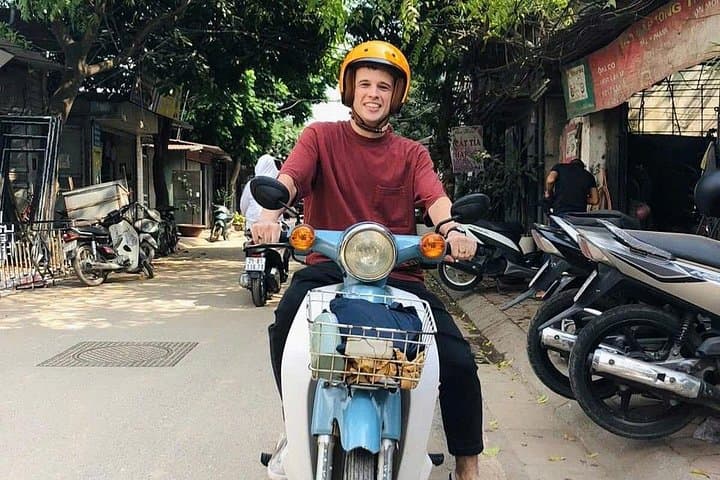
Morning light catches the practice yard and the low hum of scooters becomes a promise rather than a threat. In a quiet lot just off Hanoi’s tighter streets, a patient instructor calibrates the clutch and points to a line on the pavement — the first boundary between fear and forward motion.
Morning light catches the practice yard and the low hum of scooters becomes a promise rather than a threat. In a quiet lot just off Hanoi’s tighter streets, a patient instructor calibrates the clutch and points to a line on the pavement — the first boundary between fear and forward motion.
Hanoi’s motorbike culture evolved after the French colonial period and the Vietnam War, when two-wheeled transport became the city’s default. The Red River plain and the city’s compact, historic core shape short rides and quick direction changes; understanding that geometry is part of learning to ride here. Instructors teach not only balance and braking but the local rhythms: how intersections breathe, how horn patterns signal intent, and why lane-sharing is a negotiated choreography.
Expect a controlled progression: slow-speed drills in a sheltered space, then escorted short stretches onto calmer streets to practice scanning, mirroring local traffic flow, and uphill/downhill throttle control. Lessons run about two hours and instructors provide helmets and protective gear. The course is tailored for complete beginners who want the practical skills to explore Hanoi on their own or prepare for longer trips like the Ha Giang Loop.
Practical tips: schedule morning sessions for lighter traffic, wear sturdy closed-toe shoes, and bring a photocopy of your passport. The training emphasizes safety and local etiquette so you learn to read traffic rather than fight it — the essential skill for authentic, independent travel in Vietnam.