THE ADVENTURE COLLECTIVE® · Independent discovery and booking for outdoor travel

Two-hour, IKO-certified kitesurf lessons on Sal introduce beginners to kite control, safety systems and bodydragging off Kite Beach. Expect steady trade winds, hands-on coaching, and a friendly, safety-first school in Santa Maria.
Two-hour, IKO-certified kitesurf lessons on Sal introduce beginners to kite control, safety systems and bodydragging off Kite Beach. Expect steady trade winds, hands-on coaching, and a friendly, safety-first school in Santa Maria.
The wind arrives like a promise: constant, salty, and insistent. On Sal’s flat, pale-sand shores an instructor clips a harness and the small training kite snaps to life, tugging at the sky as the Atlantic dares you forward. In two hours students move from dry drills on the beach to big-kite safety systems and guided bodydrags in waist‑to‑chest deep water — the raw basics of kitesurfing taught by IKO-qualified instructors.
Verified experiences and guided adventures in the surrounding area.
Operated by Surf Hub Cabo Verde · Santa Maria, Sal
The wind arrives like a promise: constant, salty, and insistent. On Sal’s flat, pale-sand shores an instructor clips a harness and the small training kite snaps to life, tugging at the sky as the Atlantic dares you forward. In two hours students move from dry drills on the beach to big-kite safety systems and guided bodydrags in waist‑to‑chest deep water — the raw basics of kitesurfing taught by IKO-qualified instructors.
Sal is a young volcanic island ringed by lagoons, salt pans and reefs. Santa Maria grew from a colonial-era salt economy into a fishing and surf town; today its shuttered warehouses and sun-bleached salt pans are as much local memory as practical landmarks. The trade winds that sculpt the beaches are the same winds that defined Cape Verde’s maritime history, and the local culture blends Creole rhythms with a strong outdoors ethos.
Practical guidance: lessons begin at the school for gear fitting — wetsuit, helmet and harness are provided — then move to Kite Beach. Participants must be able to swim and have moderate fitness; instructors tailor progression to ability. Mornings are quieter and cooler; afternoons bring stronger wind and fewer beginners. Protect skin and eyes, hydrate often, and expect sandy gear and salt-stiffened zippers after a session.
Safety and sustainability matter: avoid stepping on seagrass, give nesting turtles space, and follow instructor directions for relaunch and self-rescue drills. For newcomers, a structured two-hour private lesson is the fastest, safest introduction to a sport Cape Verde has become famous for.
moderate.
2 hours.
Moderate — should be comfortable swimming in open water and able to move through waist‑deep surf
No — this two‑hour private lesson is designed for beginners and covers kite flying on the beach, safety systems and an introduction to water skills.
Yes — the school supplies kites, bars, harnesses, helmets and wetsuits as listed in the inclusions.
Participants must be able to swim and have at least moderate fitness; it's not recommended for people with significant back, heart, or pregnancy-related issues.
Full refunds are available if you cancel at least 24 hours before the scheduled start time; lessons may be canceled for bad weather.
Sal’s economy was long centered on salt production; the island’s flat plains and pans gave Santa Maria its early purpose before tourism reshaped the coast.
Respect seagrass beds and marked nesting areas; many schools support low-impact instruction and ask riders to avoid overrunning shallow reefs.
Surf Hub Cabo Verde operates guided outdoor trips and adventures with an emphasis on safety, stewardship, and memorable experiences.

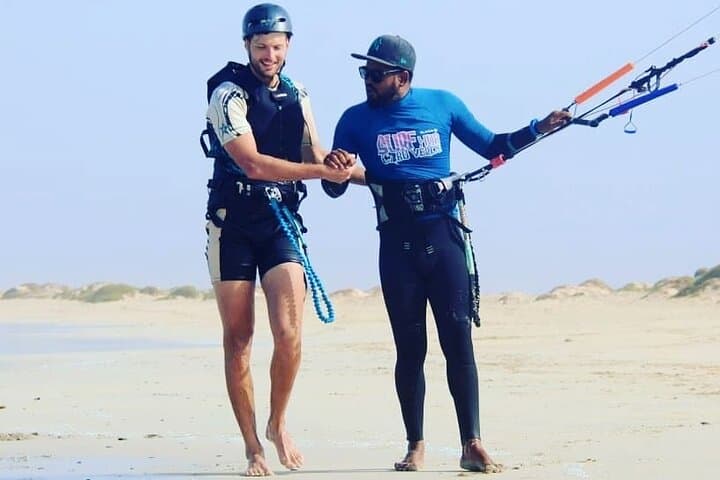
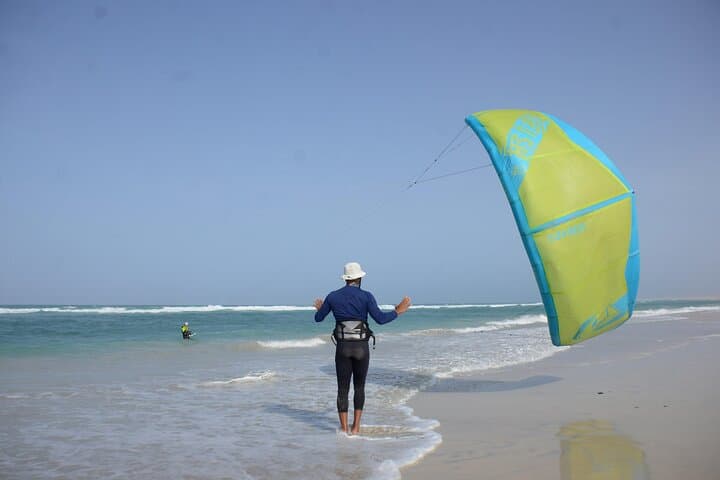
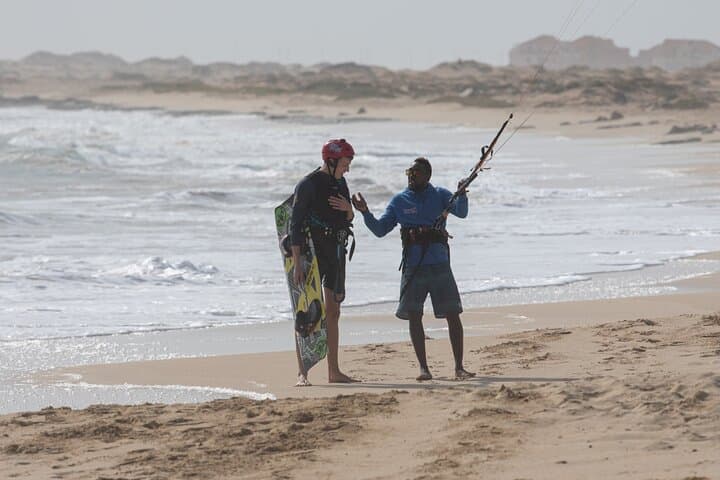
The wind arrives like a promise: constant, salty, and insistent. On Sal’s flat, pale-sand shores an instructor clips a harness and the small training kite snaps to life, tugging at the sky as the Atlantic dares you forward. In two hours students move from dry drills on the beach to big-kite safety systems and guided bodydrags in waist‑to‑chest deep water — the raw basics of kitesurfing taught by IKO-qualified instructors.
The wind arrives like a promise: constant, salty, and insistent. On Sal’s flat, pale-sand shores an instructor clips a harness and the small training kite snaps to life, tugging at the sky as the Atlantic dares you forward. In two hours students move from dry drills on the beach to big-kite safety systems and guided bodydrags in waist‑to‑chest deep water — the raw basics of kitesurfing taught by IKO-qualified instructors.
Sal is a young volcanic island ringed by lagoons, salt pans and reefs. Santa Maria grew from a colonial-era salt economy into a fishing and surf town; today its shuttered warehouses and sun-bleached salt pans are as much local memory as practical landmarks. The trade winds that sculpt the beaches are the same winds that defined Cape Verde’s maritime history, and the local culture blends Creole rhythms with a strong outdoors ethos.
Practical guidance: lessons begin at the school for gear fitting — wetsuit, helmet and harness are provided — then move to Kite Beach. Participants must be able to swim and have moderate fitness; instructors tailor progression to ability. Mornings are quieter and cooler; afternoons bring stronger wind and fewer beginners. Protect skin and eyes, hydrate often, and expect sandy gear and salt-stiffened zippers after a session.
Safety and sustainability matter: avoid stepping on seagrass, give nesting turtles space, and follow instructor directions for relaunch and self-rescue drills. For newcomers, a structured two-hour private lesson is the fastest, safest introduction to a sport Cape Verde has become famous for.