THE ADVENTURE COLLECTIVE® · Independent discovery and booking for outdoor travel

Move quickly from instruction to the street: a compact 45-minute Sevillanas class gives you the rhythm, footwork and choreography to join Málaga’s ferias. Learn the basics, warm up your feet and step straight into local celebrations.
Move quickly from instruction to the street: a compact 45-minute Sevillanas class gives you the rhythm, footwork and choreography to join Málaga’s ferias. Learn the basics, warm up your feet and step straight into local celebrations.
The studio door opens onto a sliver of Málaga sunlight and the steady clap of hands. In 45 minutes the pulse of Sevillanas — quick footwork, sharp arm accents and call-and-response rhythm — will move from instruction to muscle memory. You stand on warmed wooden floors, the Mediterranean light casting long lines across the room, and the instructor counts out beats as if tuning the city itself.
Verified experiences and guided adventures in the surrounding area.
Operated by Centro de baile de Caterina Grudtsina · Malaga, Andalusia
The studio door opens onto a sliver of Málaga sunlight and the steady clap of hands. In 45 minutes the pulse of Sevillanas — quick footwork, sharp arm accents and call-and-response rhythm — will move from instruction to muscle memory. You stand on warmed wooden floors, the Mediterranean light casting long lines across the room, and the instructor counts out beats as if tuning the city itself.
Sevillanas comes from Andalusia’s social fairs and village celebrations; it shares roots with flamenco but follows a fixed four-part choreography that has evolved through Romani, Moorish and Castilian influences. Málaga’s urban fabric — Roman foundations, Nasrid-era influences and 19th-century promenades — provides a cultural backdrop: this is dance forged in public plazas and summer ferias.
Expect hands-on teaching: warm-up exercises for feet and brazos, rhythm drills, then a short choreography you can repeat at local ferias. Classes suit solo travelers, couples or small groups; they’re socially oriented and accessible to all fitness levels. Practical notes: wear breathable, supportive shoes with a firm sole for footwork, bring water, and arrive 10 minutes early to loosen up and learn basic palmas (hand clapping).
If you’re in Málaga in August, timing your class during Feria de Málaga lets you test steps in the streets afterward. Respect local spaces — many studios are in residential blocks — and support licensed instructors who keep the tradition alive. After the class, head for a nearby tapas bar to hear the same rhythms played in the streets and keep practicing.
easy.
45 minutes.
Basic mobility and stamina; participants should be able to stand and pivot for short bursts.
No — classes are designed for beginners and use adapted steps so anyone can learn the basic choreography in 45 minutes.
You can attend solo; instructors pair people up or teach steps with an instructor so solo participants are welcome.
Yes — the pace can be adjusted, but notify the instructor of any mobility limitations so they can modify movements.
You’ll learn a compact choreography and rhythm basics to participate socially, though continuous practice helps build confidence.
Sevillanas evolved in Andalusian fairs and rural celebrations and shares influences with flamenco and regional folk dances.
Support licensed local instructors and small studios to sustain the cultural practice; be mindful of noise in residential neighborhoods and avoid blocking public plazas.
Centro de baile de Caterina Grudtsina operates guided outdoor trips and adventures with an emphasis on safety, stewardship, and memorable experiences.
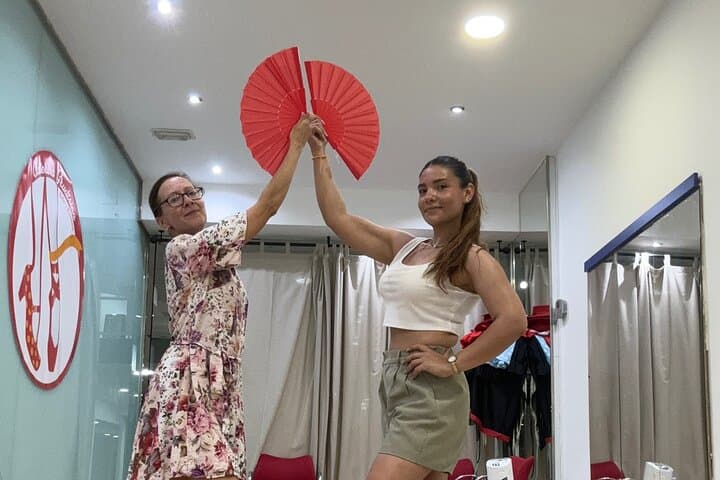
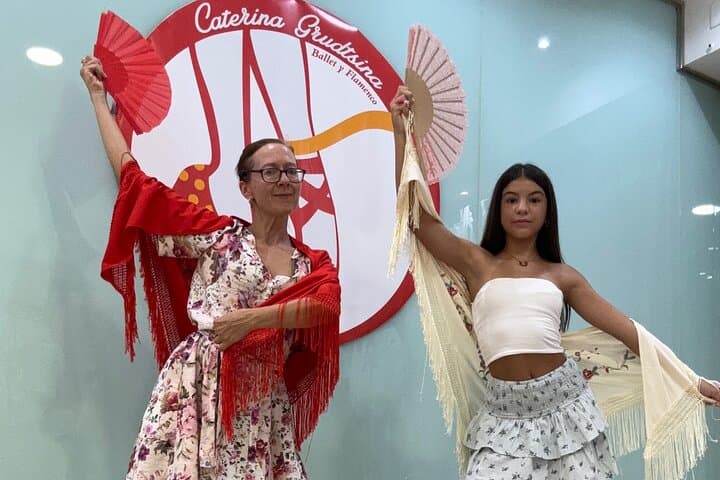
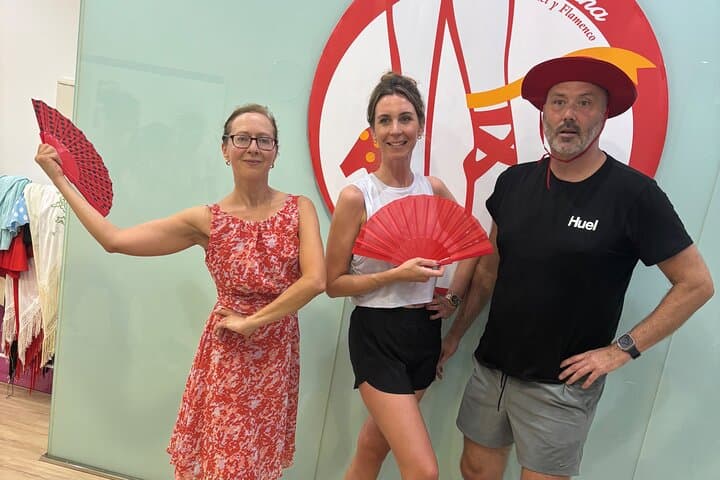
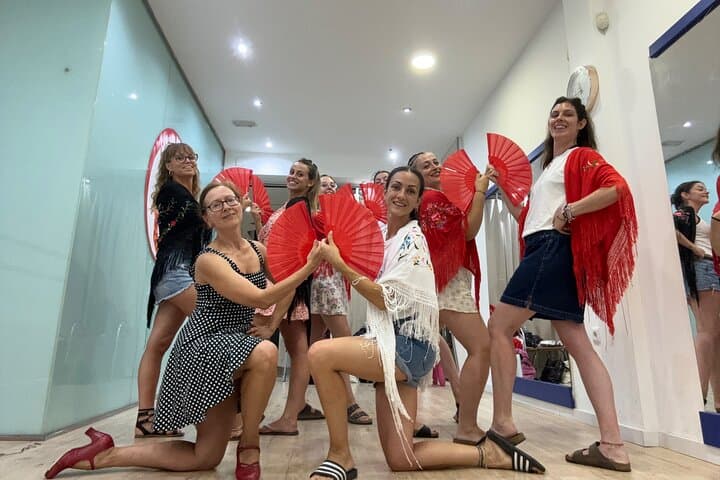
The studio door opens onto a sliver of Málaga sunlight and the steady clap of hands. In 45 minutes the pulse of Sevillanas — quick footwork, sharp arm accents and call-and-response rhythm — will move from instruction to muscle memory. You stand on warmed wooden floors, the Mediterranean light casting long lines across the room, and the instructor counts out beats as if tuning the city itself.
The studio door opens onto a sliver of Málaga sunlight and the steady clap of hands. In 45 minutes the pulse of Sevillanas — quick footwork, sharp arm accents and call-and-response rhythm — will move from instruction to muscle memory. You stand on warmed wooden floors, the Mediterranean light casting long lines across the room, and the instructor counts out beats as if tuning the city itself.
Sevillanas comes from Andalusia’s social fairs and village celebrations; it shares roots with flamenco but follows a fixed four-part choreography that has evolved through Romani, Moorish and Castilian influences. Málaga’s urban fabric — Roman foundations, Nasrid-era influences and 19th-century promenades — provides a cultural backdrop: this is dance forged in public plazas and summer ferias.
Expect hands-on teaching: warm-up exercises for feet and brazos, rhythm drills, then a short choreography you can repeat at local ferias. Classes suit solo travelers, couples or small groups; they’re socially oriented and accessible to all fitness levels. Practical notes: wear breathable, supportive shoes with a firm sole for footwork, bring water, and arrive 10 minutes early to loosen up and learn basic palmas (hand clapping).
If you’re in Málaga in August, timing your class during Feria de Málaga lets you test steps in the streets afterward. Respect local spaces — many studios are in residential blocks — and support licensed instructors who keep the tradition alive. After the class, head for a nearby tapas bar to hear the same rhythms played in the streets and keep practicing.