THE ADVENTURE COLLECTIVE® · Independent discovery and booking for outdoor travel

Move to the heartbeat of Bahia: a one-hour Samba de Roda class at the site tied to Mestre Bimba and Salvador’s capoeira history. Learn basic steps, cultural context, and why this rhythm is central to the city.
Move to the heartbeat of Bahia: a one-hour Samba de Roda class at the site tied to Mestre Bimba and Salvador’s capoeira history. Learn basic steps, cultural context, and why this rhythm is central to the city.
You step into a cool, high-ceiling room where palms of hands and the drumbeat map out time. Wooden floorboards respond to soft steps; an instructor counts in Portuguese and English, and the rhythm pulls you into a circle. This is a class as much about memory as movement — samba arriving from Bahia’s Afro-Brazilian communities and turning public streets into places of resistance.
Verified experiences and guided adventures in the surrounding area.
Operated by Associação de Capoeira Mestre Bimba · Salvador, Bahia
You step into a cool, high-ceiling room where palms of hands and the drumbeat map out time. Wooden floorboards respond to soft steps; an instructor counts in Portuguese and English, and the rhythm pulls you into a circle. This is a class as much about memory as movement — samba arriving from Bahia’s Afro-Brazilian communities and turning public streets into places of resistance.
Samba de Roda evolved in the 19th century in rural and urban Bahia, surviving periods when Afro-Brazilian cultural practices were stigmatized and even criminalized. The workshop takes place at the first capoeira school associated with Mestre Bimba, who formalized Capoeira Regional in the 1930s and anchored Salvador as a center of cultural creativity. The city’s steep, colorful Pelourinho district and the wide sweep of Todos os Santos Bay frame the larger story: performance, religion, and daily life braided together.
Expect group instruction geared to beginners — no partner required — with clear demonstrations, call-and-response clapping, and practice of basic steps and turns. Classes last about an hour and include water; public transit and Praça do Pelourinho are nearby. Wear flexible, flat-soled shoes, keep hydration close, and arrive ready to move. Photographs are usually welcomed, but ask before joining close-up shots of elders and mestres.
This experience is as much cultural literacy as cardio: you’ll leave with a few solid steps, a sense of rhythm that keeps pulling at your feet, and a clearer view of why samba and capoeira remain living, breathing parts of Salvador’s public life.
easy.
1 hour.
Suitable for most fitness levels; basic coordination and ability to stand for an hour are sufficient.
No — the class is designed for beginners and the instructor teaches step-by-step with demonstrations.
Yes — an English-speaking instructor is available, though participants also hear Portuguese musical cues for authenticity.
You can get a full refund if you cancel at least 24 hours before the scheduled time; same-day cancellations are not refundable.
The site notes stroller accessibility and small-group accommodations; contact the operator ahead of time to confirm wheelchair access and specific needs.
Samba de Roda and capoeira grew from Afro-Brazilian communities in Bahia; Mestre Bimba’s school in Salvador helped professionalize capoeira in the 1930s.
Support local cultural institutions by paying workshop fees and buying from local artisans; minimize noise and litter around historic sites to protect fragile urban heritage.
Associação de Capoeira Mestre Bimba operates guided outdoor trips and adventures with an emphasis on safety, stewardship, and memorable experiences.
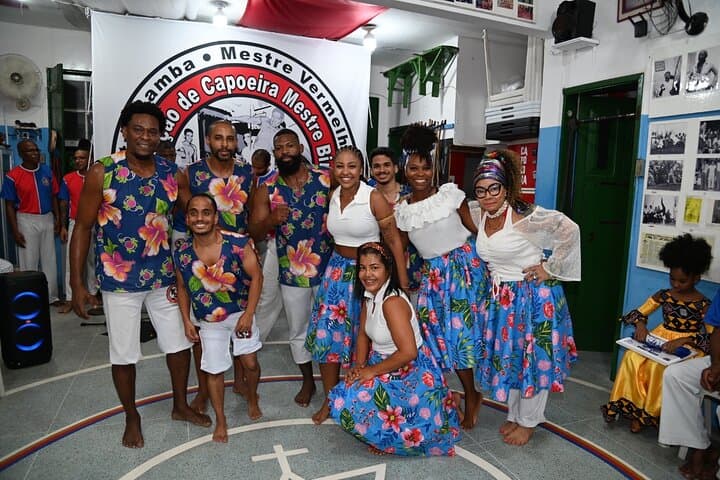
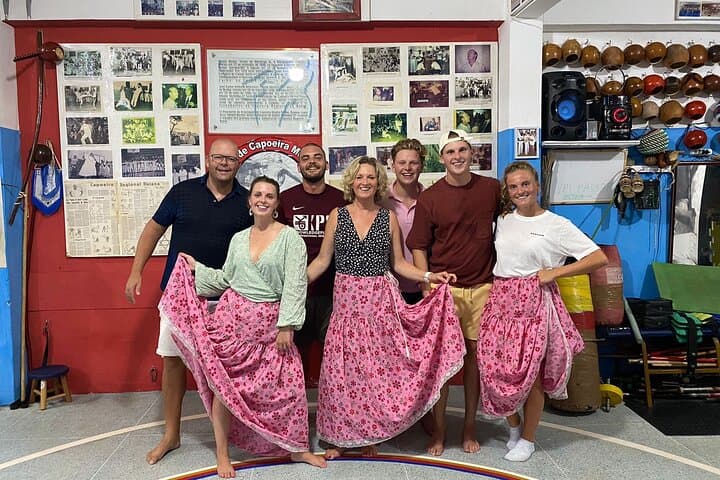
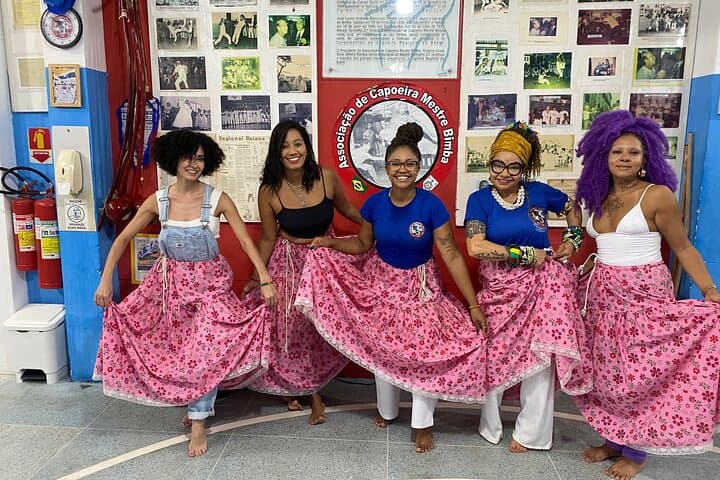
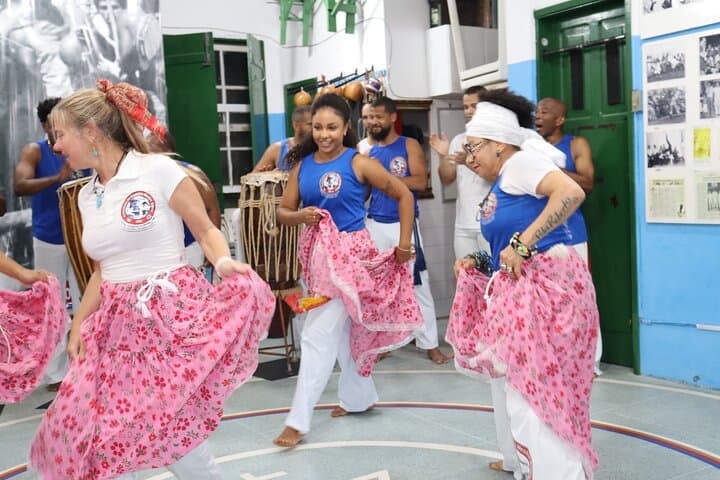
You step into a cool, high-ceiling room where palms of hands and the drumbeat map out time. Wooden floorboards respond to soft steps; an instructor counts in Portuguese and English, and the rhythm pulls you into a circle. This is a class as much about memory as movement — samba arriving from Bahia’s Afro-Brazilian communities and turning public streets into places of resistance.
You step into a cool, high-ceiling room where palms of hands and the drumbeat map out time. Wooden floorboards respond to soft steps; an instructor counts in Portuguese and English, and the rhythm pulls you into a circle. This is a class as much about memory as movement — samba arriving from Bahia’s Afro-Brazilian communities and turning public streets into places of resistance.
Samba de Roda evolved in the 19th century in rural and urban Bahia, surviving periods when Afro-Brazilian cultural practices were stigmatized and even criminalized. The workshop takes place at the first capoeira school associated with Mestre Bimba, who formalized Capoeira Regional in the 1930s and anchored Salvador as a center of cultural creativity. The city’s steep, colorful Pelourinho district and the wide sweep of Todos os Santos Bay frame the larger story: performance, religion, and daily life braided together.
Expect group instruction geared to beginners — no partner required — with clear demonstrations, call-and-response clapping, and practice of basic steps and turns. Classes last about an hour and include water; public transit and Praça do Pelourinho are nearby. Wear flexible, flat-soled shoes, keep hydration close, and arrive ready to move. Photographs are usually welcomed, but ask before joining close-up shots of elders and mestres.
This experience is as much cultural literacy as cardio: you’ll leave with a few solid steps, a sense of rhythm that keeps pulling at your feet, and a clearer view of why samba and capoeira remain living, breathing parts of Salvador’s public life.