THE ADVENTURE COLLECTIVE® · Independent discovery and booking for outdoor travel

Taste Cusco’s markets, learn pisco craft, and cook classic Peruvian dishes in a four-hour, hands-on class with a bilingual chef. Includes market tour, recipes, a certificate and a glass of wine.
Taste Cusco’s markets, learn pisco craft, and cook classic Peruvian dishes in a four-hour, hands-on class with a bilingual chef. Includes market tour, recipes, a certificate and a glass of wine.
Morning light in Cusco has a thin, sharp quality; it strips the chill from narrow streets and lights the stalls of San Pedro Market where tubers and peppers crowd wooden bins. Participants gather under that light for an hour-long market tour, touching native potatoes, asking vendors about ají varieties, and sampling cancha before moving to a bright kitchen where a bilingual chef and a barman lead a hands-on lesson.
Verified experiences and guided adventures in the surrounding area.
Operated by Peru Andes Top · Cusco, Cusco Region
Morning light in Cusco has a thin, sharp quality; it strips the chill from narrow streets and lights the stalls of San Pedro Market where tubers and peppers crowd wooden bins. Participants gather under that light for an hour-long market tour, touching native potatoes, asking vendors about ají varieties, and sampling cancha before moving to a bright kitchen where a bilingual chef and a barman lead a hands-on lesson.
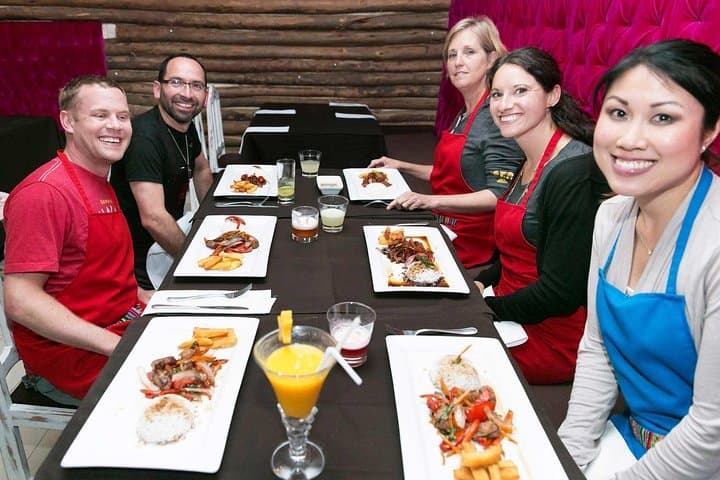
The class threads culture and culinary history—Cusco sits in the Andes where potato domestication began millennia ago and colonial trade brought citrus and vinegar that transformed native techniques. Students learn about pisco’s place in Peruvian identity as the barman demonstrates both Pisco Sour and Chilcano. The menu covers causa or papa a la huancaína as a starter and choices such as lomo saltado, ají de gallina, or ceviche as mains; recipes and a cooking certificate are provided.
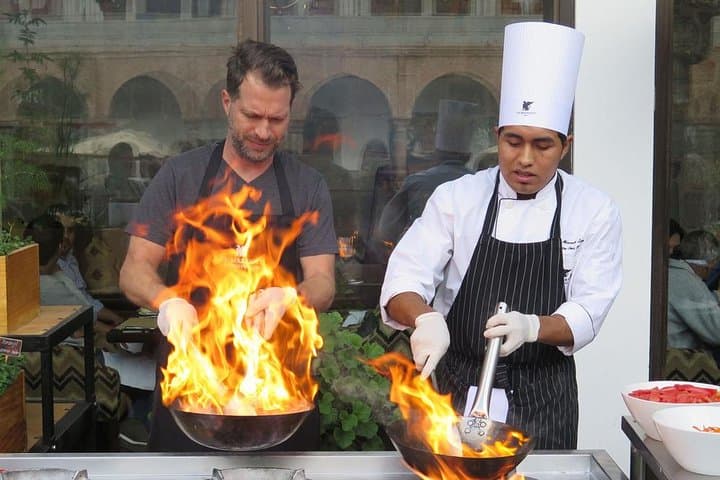
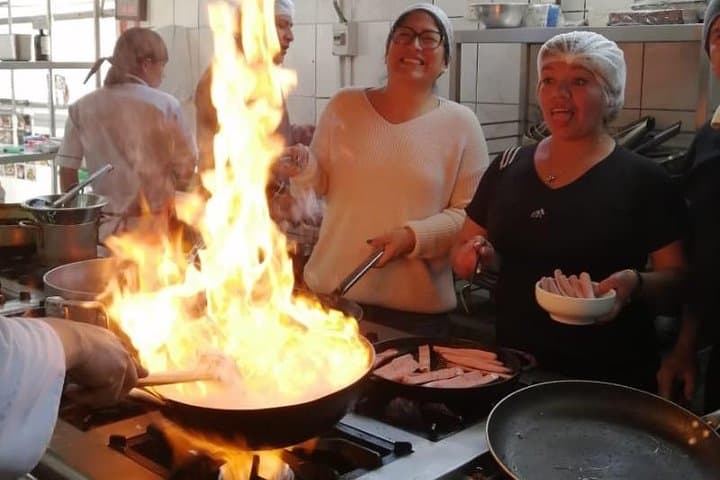
Practically, the day is sensory and paced: market aromas, the sizzle of wok-like stir-fries, and the brisk clink of cocktail shakers. The class runs about four hours in the morning, includes kitchenware, a glass of wine, transportation, and a recipe file. Expect a bilingual instructor but tell staff about allergies beforehand—local ingredients can be intense.
Plan to hydrate and give yourself 24 hours for altitude adjustment in Cusco. Comfortable shoes for the market, a small notebook for tips, and an appetite are the most useful kit. It’s a cultural crash course in Peruvian flavors—technical skill isn’t required, curiosity is.
easy.
4 hours.
Light — basic mobility for a market walk and standing during food prep is sufficient
No—classes are designed for beginners and experienced cooks; instructors guide each step.
Yes—notify the operator at booking and on arrival; they can adapt many recipes for vegetarian or other needs.
The class is bilingual (Spanish and English), but confirm if you need translation when booking.
Full refund is available if you cancel at least 24 hours before the scheduled start time.
Cusco was the heart of the Inca world and surrounding valleys are the cradle of Andean crops like potatoes and quinoa, shaping local cuisine.
Support vendors who source locally and minimize waste by sampling responsibly; many small producers rely on tourist purchases for livelihoods.
Peru Andes Top operates guided outdoor trips and adventures with an emphasis on safety, stewardship, and memorable experiences.
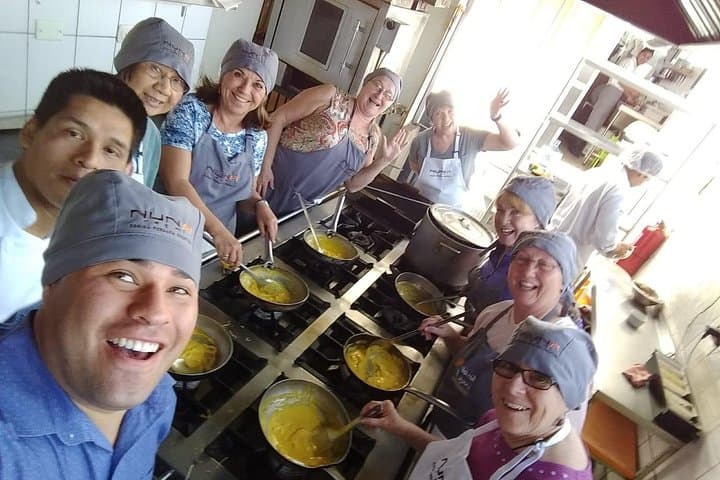
Morning light in Cusco has a thin, sharp quality; it strips the chill from narrow streets and lights the stalls of San Pedro Market where tubers and peppers crowd wooden bins. Participants gather under that light for an hour-long market tour, touching native potatoes, asking vendors about ají varieties, and sampling cancha before moving to a bright kitchen where a bilingual chef and a barman lead a hands-on lesson.
Morning light in Cusco has a thin, sharp quality; it strips the chill from narrow streets and lights the stalls of San Pedro Market where tubers and peppers crowd wooden bins. Participants gather under that light for an hour-long market tour, touching native potatoes, asking vendors about ají varieties, and sampling cancha before moving to a bright kitchen where a bilingual chef and a barman lead a hands-on lesson.
The class threads culture and culinary history—Cusco sits in the Andes where potato domestication began millennia ago and colonial trade brought citrus and vinegar that transformed native techniques. Students learn about pisco’s place in Peruvian identity as the barman demonstrates both Pisco Sour and Chilcano. The menu covers causa or papa a la huancaína as a starter and choices such as lomo saltado, ají de gallina, or ceviche as mains; recipes and a cooking certificate are provided.
Practically, the day is sensory and paced: market aromas, the sizzle of wok-like stir-fries, and the brisk clink of cocktail shakers. The class runs about four hours in the morning, includes kitchenware, a glass of wine, transportation, and a recipe file. Expect a bilingual instructor but tell staff about allergies beforehand—local ingredients can be intense.
Plan to hydrate and give yourself 24 hours for altitude adjustment in Cusco. Comfortable shoes for the market, a small notebook for tips, and an appetite are the most useful kit. It’s a cultural crash course in Peruvian flavors—technical skill isn’t required, curiosity is.