THE ADVENTURE COLLECTIVE® · Independent discovery and booking for outdoor travel

Learn kiteboarding on Tulum’s windward beaches with IKO-certified instructors. This three-hour group lesson covers kite theory, rigging, safety, bodydrags and assisted waterstarts—ideal for beginners aged 10+.
Learn kiteboarding on Tulum’s windward beaches with IKO-certified instructors. This three-hour group lesson covers kite theory, rigging, safety, bodydrags and assisted waterstarts—ideal for beginners aged 10+.
The wind arrives like an invitation: steady east-to-northeast trade winds pushing across shallow turquoise water, kites dotting the horizon and instructors checking lines with calm precision. On a white-sand stretch near Tulum, small groups of two students and one IKO-certified instructor cycle through theory on the beach before stepping into waist- to chest-deep water for bodydrags and assisted waterstarts.
Verified experiences and guided adventures in the surrounding area.
Operated by Mexican Caribbean Kitesurf · Tulum, Quintana Roo
The wind arrives like an invitation: steady east-to-northeast trade winds pushing across shallow turquoise water, kites dotting the horizon and instructors checking lines with calm precision. On a white-sand stretch near Tulum, small groups of two students and one IKO-certified instructor cycle through theory on the beach before stepping into waist- to chest-deep water for bodydrags and assisted waterstarts.
The coastline here sits on the Yucatán’s limestone shelf, where the Caribbean’s clarity meets a reef-lined drop-off; Mayan history is a short drive inland, and the town of Tulum grew from a fishing village into a surf-and-wind hub. The shoreline’s geology creates consistent wind windows—seasonal trade winds that make the area reliable for kitesurfing; culturally, tourism and marine conservation shape local practice, with schools often supporting reef-friendly sun care and beach cleanups.
Expect a structured lesson: kite and wind theory, rigging and safety systems, bodydrag drills, assisted and solo waterstarts, and downwind and upwind riding basics. Minimum age is typically 10, and moderate fitness plus basic swimming confidence helps. Instructors provide modern gear and radio helmets for clear audio guidance.
Practical notes: lessons are wind-dependent—best November to April for consistent offshore trades—bring reef-safe sunscreen, quick-dry clothing, a water bottle, and a sense of patience as you learn control. Respect marked marine areas, follow instructor commands, and plan afternoons or early mornings to avoid the strongest sun. With certified instruction and up-to-date equipment, a three-hour group lesson is an efficient way to start riding the wind on Tulum’s Caribbean coast.
moderate.
3 hours.
Moderate fitness and basic swimming ability recommended; you should be comfortable in waist-to-chest deep water and able to tread water.
Minimum age is typically 10 years; minors must be adequately supervised and able to follow safety instructions.
No prior kiteboarding experience is required; basic swimming skills and moderate fitness are expected.
Lessons are wind-dependent—if conditions are unsafe the school will cancel and offer a refund if canceled at least 24 hours in advance, per their policy.
Yes—kites, boards, harnesses and IKO-certified instruction, plus access to showers and Wi‑Fi, are included in the lesson.
Tulum sits near ancient Mayan trade routes and coastal settlements; the modern town developed around tourism and wind sports in recent decades.
Local schools encourage reef-safe sunscreen and respect for marked marine zones; avoid anchoring on reef and dispose of waste properly.
Mexican Caribbean Kitesurf operates guided outdoor trips and adventures with an emphasis on safety, stewardship, and memorable experiences.
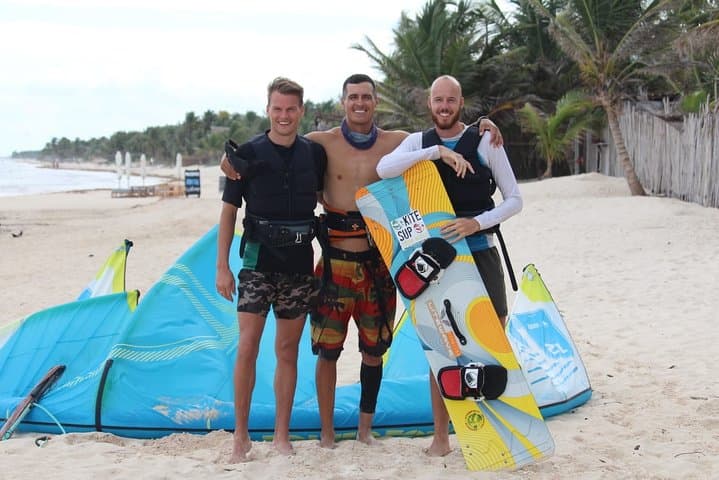
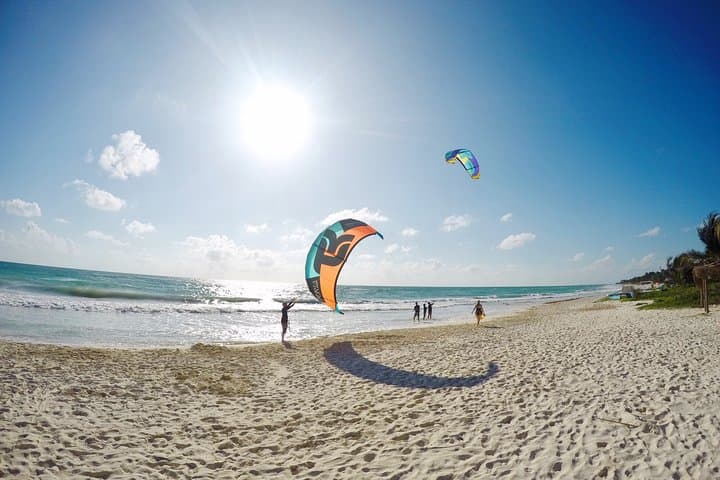
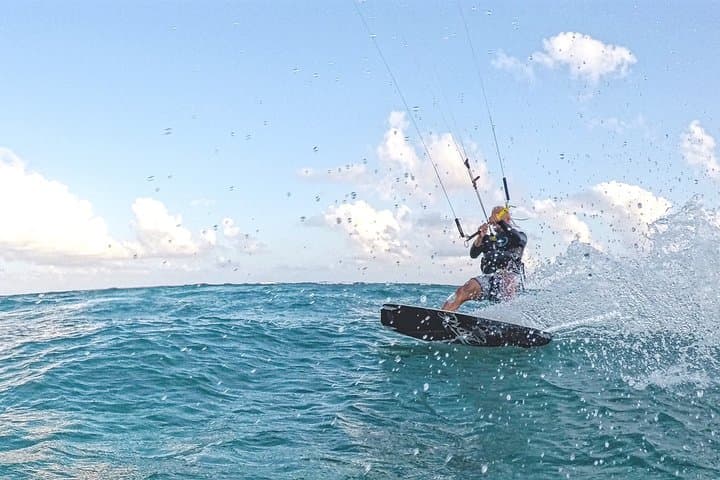
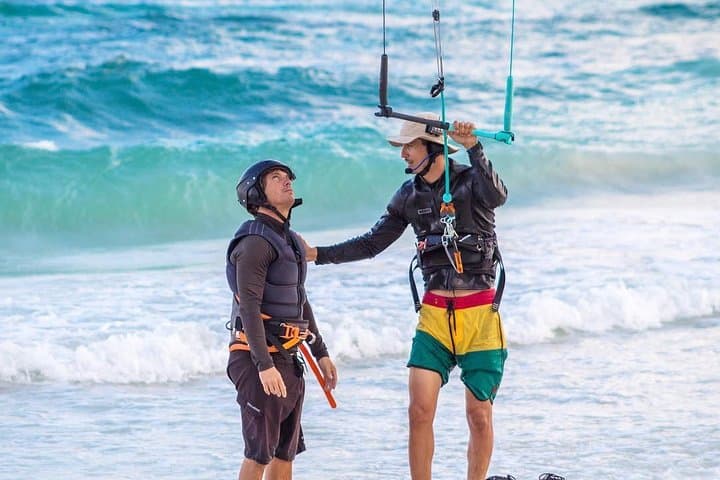
The wind arrives like an invitation: steady east-to-northeast trade winds pushing across shallow turquoise water, kites dotting the horizon and instructors checking lines with calm precision. On a white-sand stretch near Tulum, small groups of two students and one IKO-certified instructor cycle through theory on the beach before stepping into waist- to chest-deep water for bodydrags and assisted waterstarts.
The wind arrives like an invitation: steady east-to-northeast trade winds pushing across shallow turquoise water, kites dotting the horizon and instructors checking lines with calm precision. On a white-sand stretch near Tulum, small groups of two students and one IKO-certified instructor cycle through theory on the beach before stepping into waist- to chest-deep water for bodydrags and assisted waterstarts.
The coastline here sits on the Yucatán’s limestone shelf, where the Caribbean’s clarity meets a reef-lined drop-off; Mayan history is a short drive inland, and the town of Tulum grew from a fishing village into a surf-and-wind hub. The shoreline’s geology creates consistent wind windows—seasonal trade winds that make the area reliable for kitesurfing; culturally, tourism and marine conservation shape local practice, with schools often supporting reef-friendly sun care and beach cleanups.
Expect a structured lesson: kite and wind theory, rigging and safety systems, bodydrag drills, assisted and solo waterstarts, and downwind and upwind riding basics. Minimum age is typically 10, and moderate fitness plus basic swimming confidence helps. Instructors provide modern gear and radio helmets for clear audio guidance.
Practical notes: lessons are wind-dependent—best November to April for consistent offshore trades—bring reef-safe sunscreen, quick-dry clothing, a water bottle, and a sense of patience as you learn control. Respect marked marine areas, follow instructor commands, and plan afternoons or early mornings to avoid the strongest sun. With certified instruction and up-to-date equipment, a three-hour group lesson is an efficient way to start riding the wind on Tulum’s Caribbean coast.