THE ADVENTURE COLLECTIVE® · Independent discovery and booking for outdoor travel

Jump from the Victoria Falls Bridge and swing above the Zambezi Gorge—an engineered thrill set against dramatic geology and imperial-era ironwork. Learn what to expect, safety realities, and when to go for the best views.
Jump from the Victoria Falls Bridge and swing above the Zambezi Gorge—an engineered thrill set against dramatic geology and imperial-era ironwork. Learn what to expect, safety realities, and when to go for the best views.
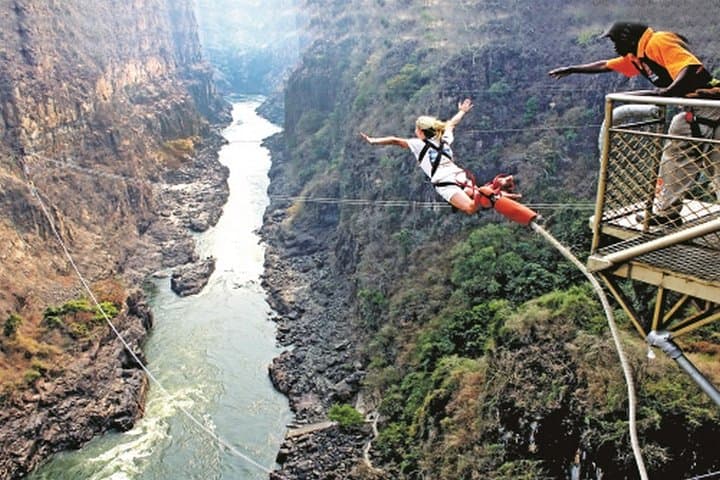
Standing on the rail of the Victoria Falls Bridge, the gorge opens like a living map: rock faces cut by the Zambezi, spray rising far below, and the bridge’s ironwork humming underfoot.
Verified experiences and guided adventures in the surrounding area.
Operated by Amulonga Travel and Tours · Victoria Falls, Matabeleland North
Standing on the rail of the Victoria Falls Bridge, the gorge opens like a living map: rock faces cut by the Zambezi, spray rising far below, and the bridge’s ironwork humming underfoot.
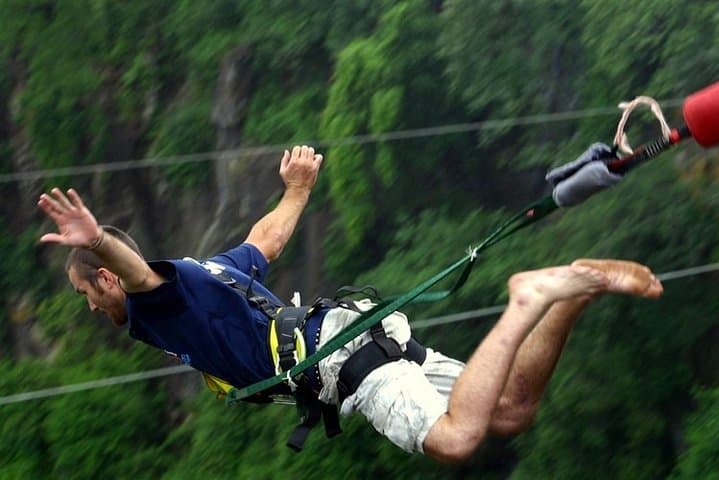
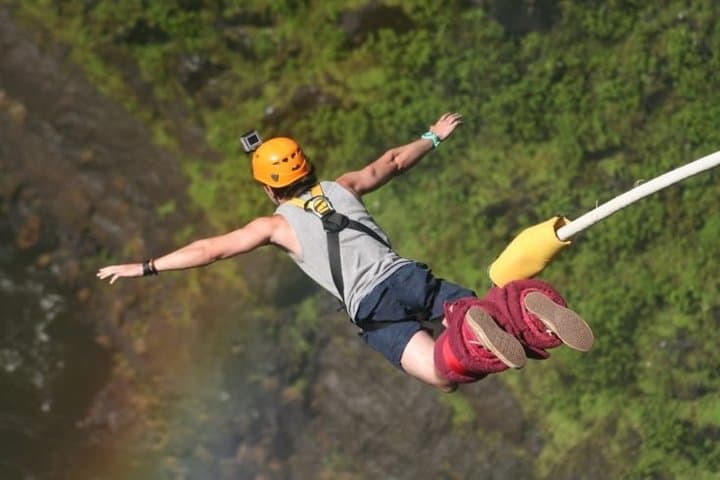
Jumping here is a meeting of place and physics — sixty to ninety seconds of free fall that ends with a pendulum swing above the river that dares you to look down. The bridge itself, completed in 1905 as part of the Cape-to-Cairo rail vision, still carries freight and foot traffic, a reminder of the colonial-era engineering that frames modern adventure.
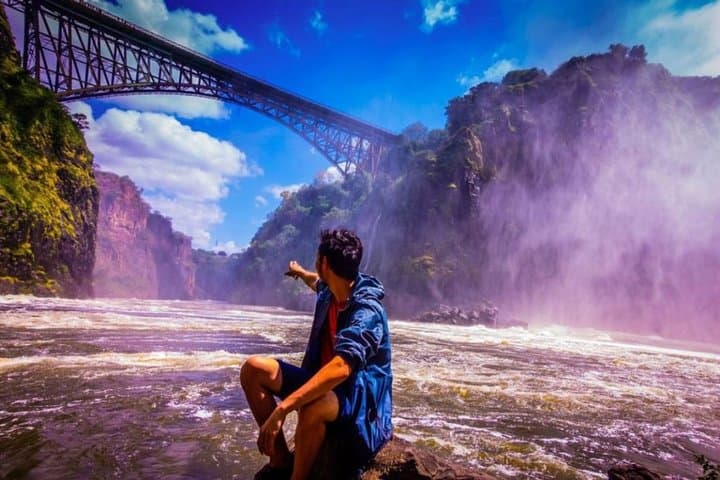
Geologically, the gorge is a deep fault carved through basalt and sandstone; seasonal floods push the waterfall’s edge and expose columns and ledges that shape the view. Locally, the falls are Mosi-oa-Tunya — “the smoke that thunders” — a name that acknowledges both reverence and raw power.
Practicalities matter more than bravado: operators fit double-redundant rigs and professional instructors run pre-jump checks; guests provide ID and weight for harnessing. Expect a short safety briefing, a walk onto the bridge, and a controlled attachment to the bungee system. Physical demands are brief but intense — no spinal issues, pregnancy, or serious heart conditions are allowed.
Timing is important: lower water levels late in the dry season change the visual drama but not the safety procedures; higher water months add spray and atmosphere. Bring sensible footwear, a light jacket for mist, and a camera for the bridge views (but not on the jump). For many, the jump is less about conquering fear and more about meeting the landscape at velocity: a precise, engineered handshake with one of Africa’s most powerful rivers.
challenging.
2 hours.
You should be in good cardiovascular and musculoskeletal health; very short exertion but requires core stability and the ability to follow safety instructions
No prior bungee experience is necessary; instructors provide a full safety briefing and secure harnessing before the jump.
Not suitable for pregnant travelers, people with spinal injuries, or serious heart conditions; operators will screen for medical concerns.
No — loose items are prohibited for safety. Many operators offer staff-taken photos or video options you can purchase afterward.
Expect about two hours from arrival through briefing, gearing, and the jump itself, though individual timings vary with group size.
The Victoria Falls Bridge opened in 1905 as part of the Cape-to-Cairo rail ambitions and remains an iconic example of early 20th-century engineering that links Zambia and Zimbabwe.
Victoria Falls sits within transboundary protected areas and UNESCO-listed environs; visitors should respect riverbanks, avoid disturbing wildlife, and follow operator guidance to minimize impact.
Amulonga Travel and Tours operates guided outdoor trips and adventures with an emphasis on safety, stewardship, and memorable experiences.
Standing on the rail of the Victoria Falls Bridge, the gorge opens like a living map: rock faces cut by the Zambezi, spray rising far below, and the bridge’s ironwork humming underfoot.
Standing on the rail of the Victoria Falls Bridge, the gorge opens like a living map: rock faces cut by the Zambezi, spray rising far below, and the bridge’s ironwork humming underfoot.
Jumping here is a meeting of place and physics — sixty to ninety seconds of free fall that ends with a pendulum swing above the river that dares you to look down. The bridge itself, completed in 1905 as part of the Cape-to-Cairo rail vision, still carries freight and foot traffic, a reminder of the colonial-era engineering that frames modern adventure.
Geologically, the gorge is a deep fault carved through basalt and sandstone; seasonal floods push the waterfall’s edge and expose columns and ledges that shape the view. Locally, the falls are Mosi-oa-Tunya — “the smoke that thunders” — a name that acknowledges both reverence and raw power.
Practicalities matter more than bravado: operators fit double-redundant rigs and professional instructors run pre-jump checks; guests provide ID and weight for harnessing. Expect a short safety briefing, a walk onto the bridge, and a controlled attachment to the bungee system. Physical demands are brief but intense — no spinal issues, pregnancy, or serious heart conditions are allowed.
Timing is important: lower water levels late in the dry season change the visual drama but not the safety procedures; higher water months add spray and atmosphere. Bring sensible footwear, a light jacket for mist, and a camera for the bridge views (but not on the jump). For many, the jump is less about conquering fear and more about meeting the landscape at velocity: a precise, engineered handshake with one of Africa’s most powerful rivers.