THE ADVENTURE COLLECTIVE® · Independent discovery and booking for outdoor travel

A five-hour small-group drive from Avignon places you on the high Plateau de Sault where endless lavender fields and copper distilleries define Provence. This half-day tour combines scenic photo stops, local insight on distillation, and free time in the village.
A five-hour small-group drive from Avignon places you on the high Plateau de Sault where endless lavender fields and copper distilleries define Provence. This half-day tour combines scenic photo stops, local insight on distillation, and free time in the village.
You arrive from Avignon with sunlight flattening the hills and the road angling toward the high Plateau de Sault. Lavender rows fan out like living lines on gently rolling slopes; the air pulls you forward with the faint, clean scent of oil and resin. The minivan eases into photo stops and you step out onto dry limestone soil that has been coaxing lavender for generations.
Verified experiences and guided adventures in the surrounding area.
Operated by A la Francaise Tourisme · Sault, Vaucluse
You arrive from Avignon with sunlight flattening the hills and the road angling toward the high Plateau de Sault. Lavender rows fan out like living lines on gently rolling slopes; the air pulls you forward with the faint, clean scent of oil and resin. The minivan eases into photo stops and you step out onto dry limestone soil that has been coaxing lavender for generations.
This patch of Provence has worked the same soils since the 19th century, when lavender became a pillar of the regional perfume and distillation trade. Geologically, the plateau’s porous limestone and thin topsoil favor lavandin and true lavender—plants that thrive on dry summers and cold winters. Culturally the village of Sault is small but proud: stone houses, a market square, and local distillers who still use copper alembics to pull essential oils from flower heads.
Expect 3 hours among the fields with guided photo stops and free time in Sault’s compact center. Guides explain bloom timing (usually late June–July at lower elevations, shifting with the season), the difference between lavandin and lavande vraie, and how honey and distillation support local livelihoods.
Practical notes: bring sunscreen, a sun hat, and a camera with extra battery; the plateau is exposed and shade is limited. Footwear should handle crushed rock and farm tracks. Tours run by air-conditioned minivan from Avignon; know that schedules can change with bloom timing and weather. If you want quieter light, ask for early-morning departure dates and plan an extra hour in Sault to visit a distillery or stroll the ridge above town.
easy.
5 hours.
Suitable for most fitness levels; involves short walks on uneven farm tracks and standing during photo stops.
Bloom typically occurs from late June through July on the plateau; timing varies year to year with temperature and precipitation.
Most travelers stay in Avignon city center; tour operators usually list a central pickup or a designated departure point—confirm at booking.
Picking is not allowed during tours; many local distilleries and producers sell essential oils, sachets, and honey in Sault’s shops.
The tour is suitable for children but infants under 4 are typically not allowed; terrain in fields and village streets is uneven and not stroller-friendly.
Lavender cultivation expanded in the 19th century to supply perfume houses and local distilleries; Sault grew as a center for drying and oil production.
Stay on farm tracks and follow guide instructions to avoid trampling crops; buying local products supports small producers and sustainable land management.
A la Francaise Tourisme operates guided outdoor trips and adventures with an emphasis on safety, stewardship, and memorable experiences.
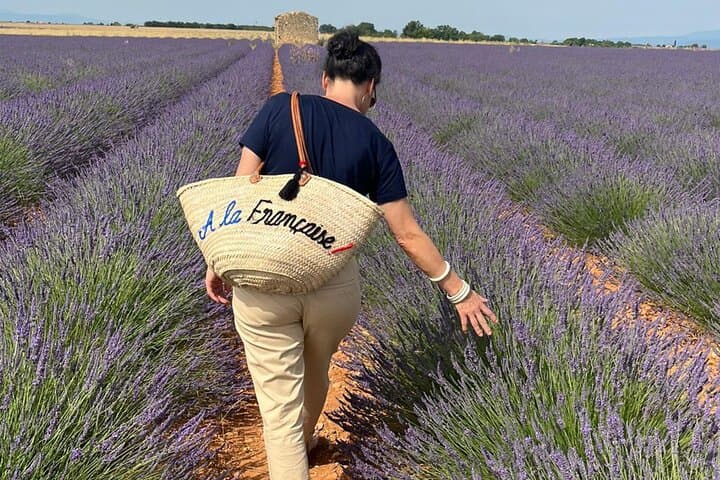
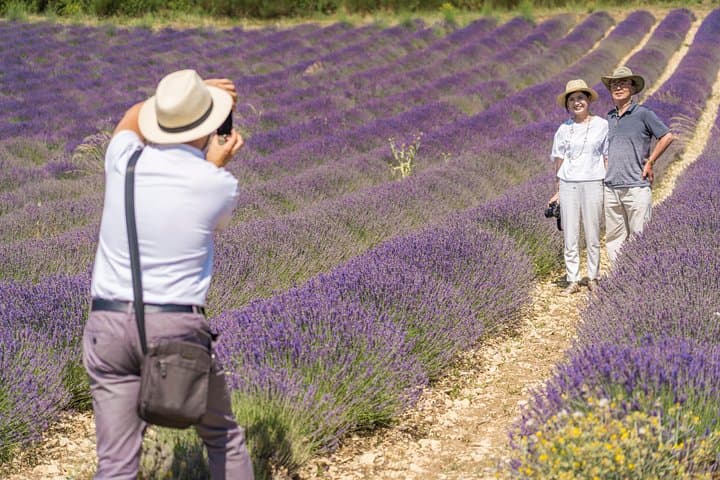
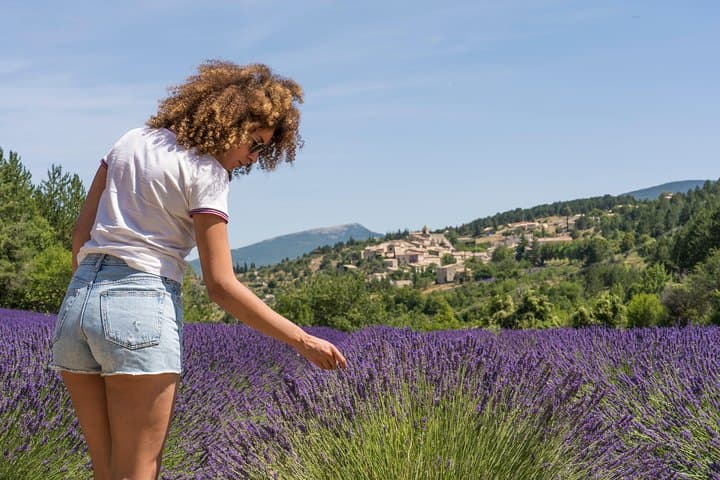
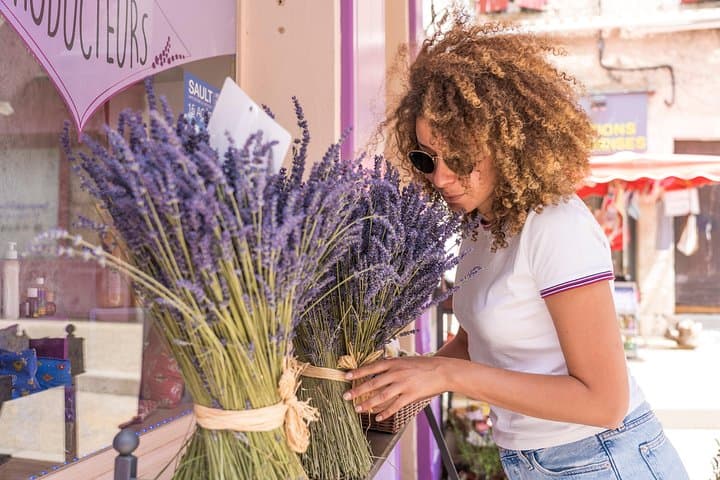
You arrive from Avignon with sunlight flattening the hills and the road angling toward the high Plateau de Sault. Lavender rows fan out like living lines on gently rolling slopes; the air pulls you forward with the faint, clean scent of oil and resin. The minivan eases into photo stops and you step out onto dry limestone soil that has been coaxing lavender for generations.
You arrive from Avignon with sunlight flattening the hills and the road angling toward the high Plateau de Sault. Lavender rows fan out like living lines on gently rolling slopes; the air pulls you forward with the faint, clean scent of oil and resin. The minivan eases into photo stops and you step out onto dry limestone soil that has been coaxing lavender for generations.
This patch of Provence has worked the same soils since the 19th century, when lavender became a pillar of the regional perfume and distillation trade. Geologically, the plateau’s porous limestone and thin topsoil favor lavandin and true lavender—plants that thrive on dry summers and cold winters. Culturally the village of Sault is small but proud: stone houses, a market square, and local distillers who still use copper alembics to pull essential oils from flower heads.
Expect 3 hours among the fields with guided photo stops and free time in Sault’s compact center. Guides explain bloom timing (usually late June–July at lower elevations, shifting with the season), the difference between lavandin and lavande vraie, and how honey and distillation support local livelihoods.
Practical notes: bring sunscreen, a sun hat, and a camera with extra battery; the plateau is exposed and shade is limited. Footwear should handle crushed rock and farm tracks. Tours run by air-conditioned minivan from Avignon; know that schedules can change with bloom timing and weather. If you want quieter light, ask for early-morning departure dates and plan an extra hour in Sault to visit a distillery or stroll the ridge above town.