THE ADVENTURE COLLECTIVE® · Independent discovery and booking for outdoor travel

Explore Ephesus at a measured pace with a private guide: Celsus Library, Hadrian’s Temple and the House of the Virgin Mary are covered with entrance fees included. Perfect for history-minded travelers who prefer a late-morning shore excursion.
Explore Ephesus at a measured pace with a private guide: Celsus Library, Hadrian’s Temple and the House of the Virgin Mary are covered with entrance fees included. Perfect for history-minded travelers who prefer a late-morning shore excursion.
You step out of a low-slung shuttle into a bright Aegean morning; sun slides across marble streets and the wind from the sea nudges you forward along Curetes Street. The stones underfoot remember merchants, philosophers and the clatter of chariots, and the guide’s voice draws a line from those first footsteps to the present.
Verified experiences and guided adventures in the surrounding area.
Operated by Neopolis Travel · Selçuk, İzmir
You step out of a low-slung shuttle into a bright Aegean morning; sun slides across marble streets and the wind from the sea nudges you forward along Curetes Street. The stones underfoot remember merchants, philosophers and the clatter of chariots, and the guide’s voice draws a line from those first footsteps to the present.
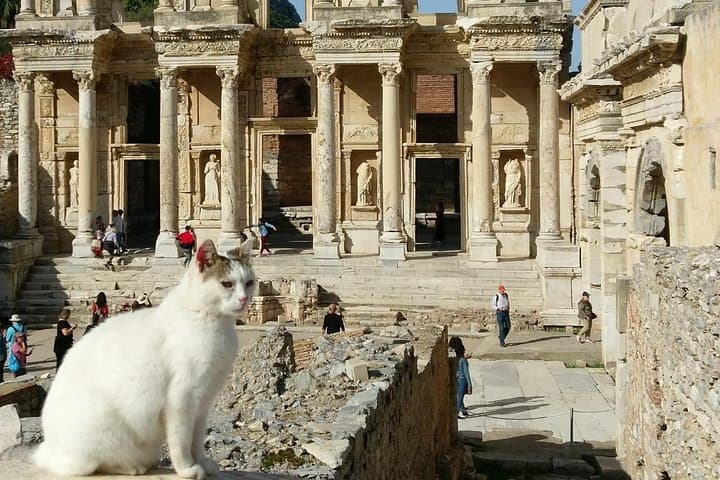
Ephesus was a commercial hub of the Roman East — Celsus Library, the Great Theatre and Hadrian’s Temple are layers of civic life and imperial ambition carved in stone. Geologically the region rests on fertile alluvial plains fed by the Küçük Menderes; earthquakes and river shifts explain why once-grand columns now lie scattered. Nearby Selçuk offers Ottoman-era houses and local markets where Aegean citrus and gözleme keep the cultural rhythm honest.
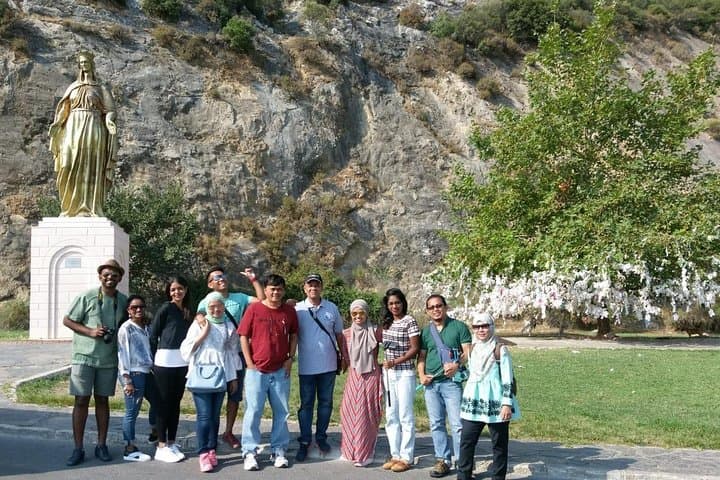
The House of the Virgin Mary perches on a wooded slope above the plain; here pilgrims and curious travelers make a quick, contemplative visit in a hush of pines that seems to lean in and listen. The Temple of Artemis survives as a few battered foundations, a quiet reminder of what was once one of the Seven Wonders.
Practical guidance: this private walking excursion runs about five hours, with 2–3 miles of uneven pavement and steps. Wear sturdy shoes, bring sun protection and a small water bottle (one is provided), and expect sections of uneven marble and loose gravel. Travel light, pace yourself through the theater’s terraces, and save time for Selçuk’s small museums if you want context after the ruins.
moderate.
4–5 hours.
Moderate fitness; able to walk several miles on uneven ground and climb terraces and steps without assistance
Yes — all stated entrance fees for Ephesus and the House of the Virgin Mary are included in the tour price.
Expect 2–3 miles (3–5 km) of walking on uneven stone and steps over roughly five hours with frequent stops.
Children can join but must be supervised; the route includes stairs and uneven surfaces so it’s not ideal for those with significant mobility limitations.
This private tour typically includes a professional guide; request language preferences and any accessibility needs at booking so arrangements can be made.
Ephesus was one of the Roman Empire’s premier eastern ports and a cultural crossroads; its library and theater reflect its civic importance in the 1st–2nd centuries A.D.
Heavy visitation stresses fragile marble and archaeological deposits; stay on marked paths and avoid touching carved surfaces to help preserve the site.
Neopolis Travel operates guided outdoor trips and adventures with an emphasis on safety, stewardship, and memorable experiences.

You step out of a low-slung shuttle into a bright Aegean morning; sun slides across marble streets and the wind from the sea nudges you forward along Curetes Street. The stones underfoot remember merchants, philosophers and the clatter of chariots, and the guide’s voice draws a line from those first footsteps to the present.
You step out of a low-slung shuttle into a bright Aegean morning; sun slides across marble streets and the wind from the sea nudges you forward along Curetes Street. The stones underfoot remember merchants, philosophers and the clatter of chariots, and the guide’s voice draws a line from those first footsteps to the present.
Ephesus was a commercial hub of the Roman East — Celsus Library, the Great Theatre and Hadrian’s Temple are layers of civic life and imperial ambition carved in stone. Geologically the region rests on fertile alluvial plains fed by the Küçük Menderes; earthquakes and river shifts explain why once-grand columns now lie scattered. Nearby Selçuk offers Ottoman-era houses and local markets where Aegean citrus and gözleme keep the cultural rhythm honest.
The House of the Virgin Mary perches on a wooded slope above the plain; here pilgrims and curious travelers make a quick, contemplative visit in a hush of pines that seems to lean in and listen. The Temple of Artemis survives as a few battered foundations, a quiet reminder of what was once one of the Seven Wonders.
Practical guidance: this private walking excursion runs about five hours, with 2–3 miles of uneven pavement and steps. Wear sturdy shoes, bring sun protection and a small water bottle (one is provided), and expect sections of uneven marble and loose gravel. Travel light, pace yourself through the theater’s terraces, and save time for Selçuk’s small museums if you want context after the ruins.