THE ADVENTURE COLLECTIVE® · Independent discovery and booking for outdoor travel

Climb to the summit of Lascar, the Atacama’s most active volcano: a high-altitude trek that gains 600 m in under 5 km, begins at Laguna Lejía and delivers raw volcanic panoramas. Expect thin air, stark views and a full-day, 9–11 hour outing.
Climb to the summit of Lascar, the Atacama’s most active volcano: a high-altitude trek that gains 600 m in under 5 km, begins at Laguna Lejía and delivers raw volcanic panoramas. Expect thin air, stark views and a full-day, 9–11 hour outing.
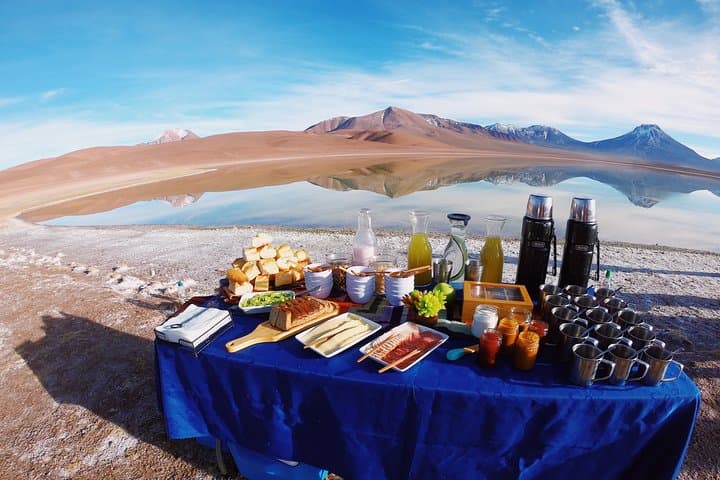
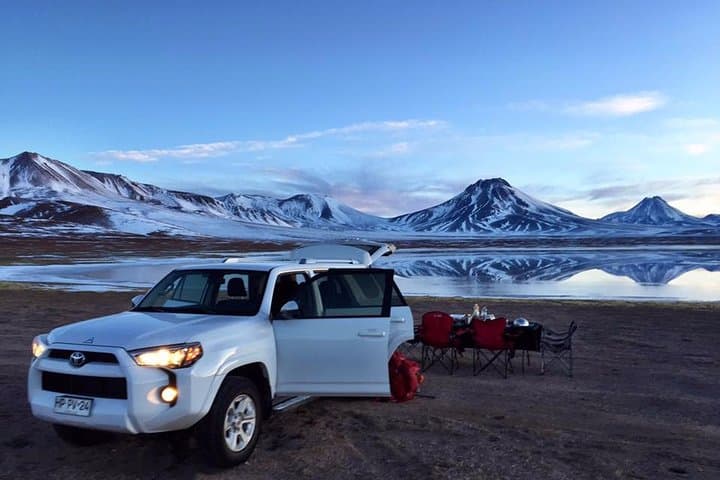
Dawn breaks over the salt-scrub highlands and the bus drops the group at Laguna Lejía (4,325 m). The lake's flat surface holds a cold light while Lascar, Pili and Sinbad volcanoes stand like stern judges on the horizon. Guides hand out poles and helmets, everyone tightens layers, and the climb begins southeast toward the steaming cone.
Verified experiences and guided adventures in the surrounding area.
Operated by Sorbac · San Pedro de Atacama, Antofagasta Region
Dawn breaks over the salt-scrub highlands and the bus drops the group at Laguna Lejía (4,325 m). The lake's flat surface holds a cold light while Lascar, Pili and Sinbad volcanoes stand like stern judges on the horizon. Guides hand out poles and helmets, everyone tightens layers, and the climb begins southeast toward the steaming cone.
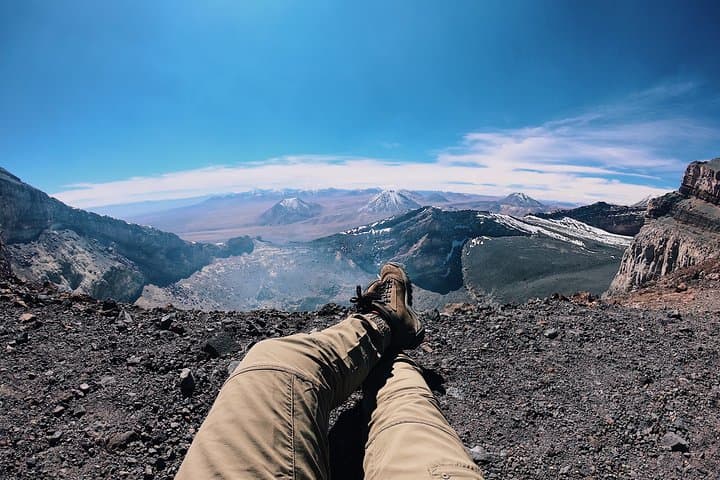
Lascar is the most active volcano in northern Chile; its recent fumarolic activity and occasional eruptions have shaped the surrounding pumice and ash fields. Geologically young and restless, the volcano sits on the Altiplano’s volcanic belt — a landscape the Atacameño people have traversed and respected for centuries. Views from the ridge sweep across volcanic folds and the Atacama basin, where wind and altitude carve a sparse, honest beauty.
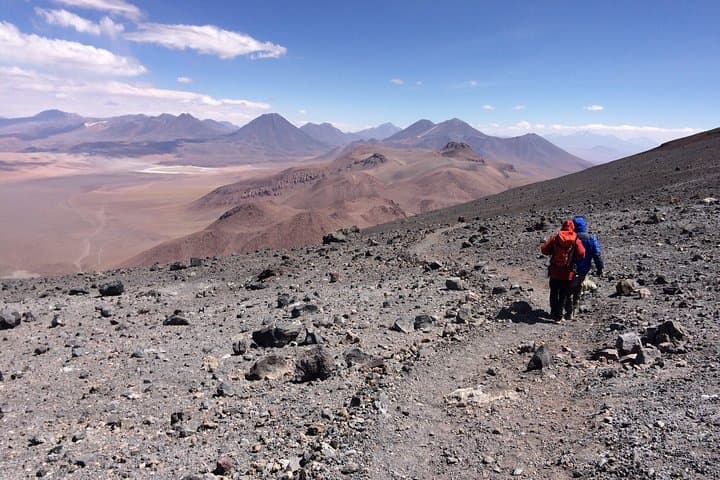
Practical reality follows the panorama: the ascent gains roughly 600 m in under 5 km and typically takes 3–4 hours to the summit near 5,600 m, with a 2-hour descent. Rapid altitude change makes breathing slow work; expect thin air, cold gusts and intense sun. Guides supply helmets, poles and oxygen; bring sturdy boots, 3+ liters of water, layered insulation and high-SPF sun protection. Acclimatize in San Pedro de Atacama for 24–48 hours, and be realistic about fitness — this is high-altitude trekking, not technical climbing.
Start early to avoid afternoon winds, move deliberately uphill, and reward yourself at the summit with clear, rare silence. Return along one of Atacama’s most scenic roads, the landscape already keeping its weathered stories for the next group.
challenging.
9–11 hours.
Strong cardiovascular fitness and experience with sustained uphill hiking at altitude; able to handle steep, rocky terrain for several hours.
Expect 3–4 hours ascending (about 600 m gain in under 5 km) and roughly 2 hours to descend; the full excursion runs about 9–11 hours including transfers.
No technical climbing skills are required, but prior high-altitude trekking experience and very good fitness are recommended.
Yes — staying in San Pedro de Atacama for 24–48 hours beforehand reduces the risk of altitude sickness; guides monitor the group and carry oxygen and a first-aid kit.
Yes — the operator supplies trekking poles, helmets and basic safety equipment; bring your own boots and clothing for best fit and comfort.
Lascar’s fumarolic activity and eruptions have influenced local routes and settlement patterns; the Atacameño people historically used highland paths for trade and ritual travel.
The high-altitude desert is ecologically fragile — stick to trails, pack out waste and minimize disturbance to sensitive soils and wildlife.
Sorbac operates guided outdoor trips and adventures with an emphasis on safety, stewardship, and memorable experiences.
Dawn breaks over the salt-scrub highlands and the bus drops the group at Laguna Lejía (4,325 m). The lake's flat surface holds a cold light while Lascar, Pili and Sinbad volcanoes stand like stern judges on the horizon. Guides hand out poles and helmets, everyone tightens layers, and the climb begins southeast toward the steaming cone.
Dawn breaks over the salt-scrub highlands and the bus drops the group at Laguna Lejía (4,325 m). The lake's flat surface holds a cold light while Lascar, Pili and Sinbad volcanoes stand like stern judges on the horizon. Guides hand out poles and helmets, everyone tightens layers, and the climb begins southeast toward the steaming cone.
Lascar is the most active volcano in northern Chile; its recent fumarolic activity and occasional eruptions have shaped the surrounding pumice and ash fields. Geologically young and restless, the volcano sits on the Altiplano’s volcanic belt — a landscape the Atacameño people have traversed and respected for centuries. Views from the ridge sweep across volcanic folds and the Atacama basin, where wind and altitude carve a sparse, honest beauty.
Practical reality follows the panorama: the ascent gains roughly 600 m in under 5 km and typically takes 3–4 hours to the summit near 5,600 m, with a 2-hour descent. Rapid altitude change makes breathing slow work; expect thin air, cold gusts and intense sun. Guides supply helmets, poles and oxygen; bring sturdy boots, 3+ liters of water, layered insulation and high-SPF sun protection. Acclimatize in San Pedro de Atacama for 24–48 hours, and be realistic about fitness — this is high-altitude trekking, not technical climbing.
Start early to avoid afternoon winds, move deliberately uphill, and reward yourself at the summit with clear, rare silence. Return along one of Atacama’s most scenic roads, the landscape already keeping its weathered stories for the next group.