THE ADVENTURE COLLECTIVE® · Independent discovery and booking for outdoor travel

Spend four days crossing high Andean passes, soaking in Lares hot springs, camping in remote villages and finishing with an early-morning visit to Machu Picchu. This group Lares Trek blends culture, high-altitude landscapes and rustic camping with guided logistics and mule support.
Spend four days crossing high Andean passes, soaking in Lares hot springs, camping in remote villages and finishing with an early-morning visit to Machu Picchu. This group Lares Trek blends culture, high-altitude landscapes and rustic camping with guided logistics and mule support.
Dawn breaks over rippled ridgelines as your minivan climbs out of the Sacred Valley toward Patakancha and the Lares highlands. Cold air bites at 4,200 meters; llamas watch from adobe doorways and a summer sky scrubs the mountains blue. You move on foot across grazing puna, over two high passes, and beside opaque glacial lakes that refuse to be still.
Verified experiences and guided adventures in the surrounding area.
Operated by Valencia Travel Agency S.a.c. · Cusco, Cusco
Dawn breaks over rippled ridgelines as your minivan climbs out of the Sacred Valley toward Patakancha and the Lares highlands. Cold air bites at 4,200 meters; llamas watch from adobe doorways and a summer sky scrubs the mountains blue. You move on foot across grazing puna, over two high passes, and beside opaque glacial lakes that refuse to be still.
The route threads Andean history and geology: granite ridges carved by ice, volcanic outcrops, and terraces that bear Inca agricultural memory. Villages keep a living culture—women in layered skirts and bright hats weave on doorsteps while local Quechua speech hangs in the air. The Lares hot springs—a classic mid-trek reward—was used by Andean communities long before it became a travel pitstop.
Expect varied terrain: steep switchbacks, rocky trails, and muddy sections where the puna meets irrigated valley. Day two reaches Aruraycocha at roughly 4,500 m (14,764 ft), offering a commanding view and the best chance to spot condors riding thermal lifts. Nights are in 2-person tents on thin sleeping mattresses; cooks and mule teams handle bulk gear while participants carry a small daypack and personal items (porters carry up to 5 kg).
Practical guidance: acclimatize in Cusco for 48 hours if possible, carry layers for sharp temperature swings, and prioritize hydration and a slow ascent to reduce altitude effects. Train days end in Ollantaytambo, then Aguas Calientes before a sunrise visit to Machu Picchu on day four. Be prepared for early starts and long days—this is an immersive mountain trek where preparation directly shapes enjoyment.
moderate.
4 days.
Moderate fitness needed: regular walkers and those who can manage sustained uphill hikes at altitude will do well.
No technical skills are required, but you should be comfortable hiking 5–7 hours a day with uphill sections and sleeping in tents.
Mules and horsemen carry group equipment; porters carry personal items up to 5 kg—pack accordingly.
The itinerary ends with a visit to Machu Picchu; check your booking for entrance and train inclusions as some permits or train classes may require upgrades.
Acclimatize in Cusco, hydrate frequently, avoid alcohol before trekking and consider speaking with a doctor about prophylactic medication if you are prone to altitude illness.
The Lares corridor has been a living route for Quechua communities for centuries; terraces and weaving traditions reflect continuous local cultural practices.
Pack-out policies and working with local guides help reduce impact; stick to established campsites and avoid disturbing grazing areas used by local herders.
Valencia Travel Agency S.a.c. operates guided outdoor trips and adventures with an emphasis on safety, stewardship, and memorable experiences.
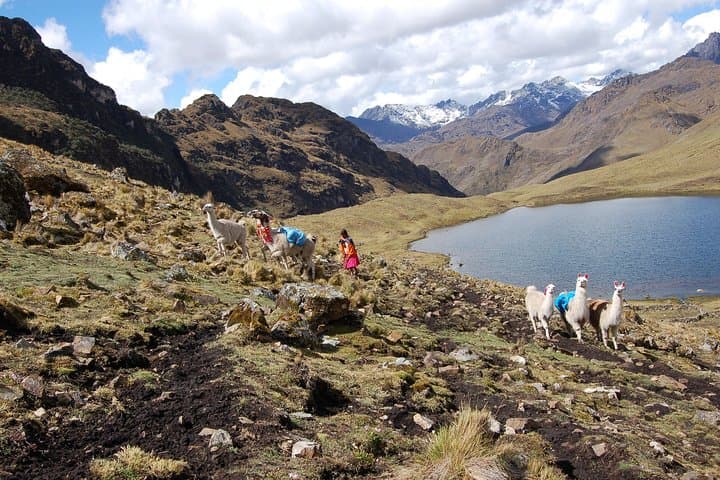
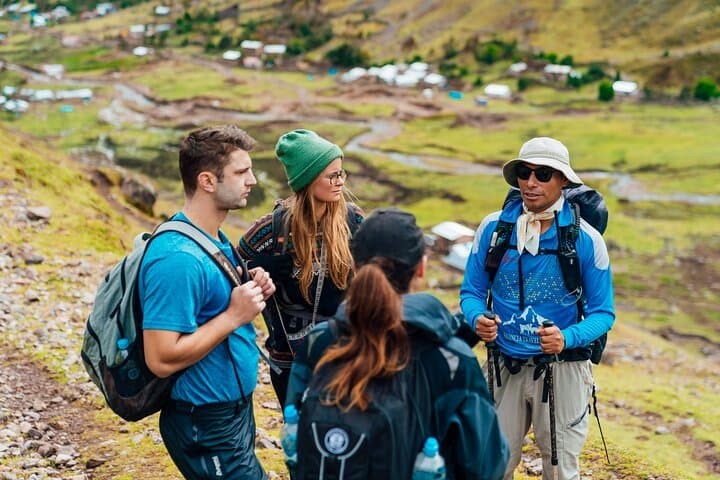
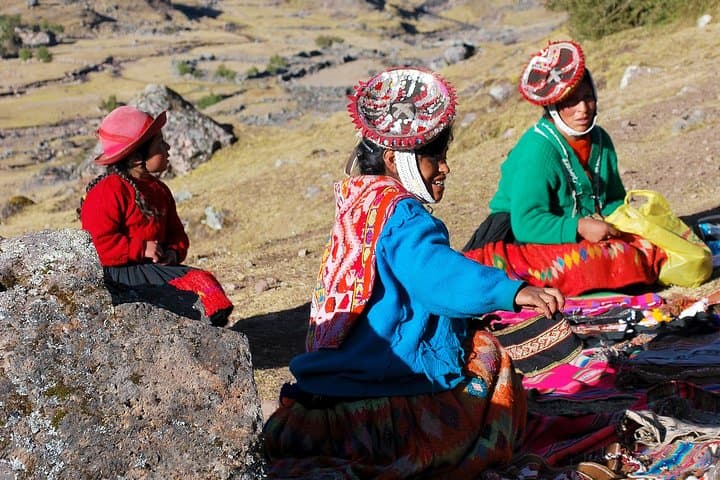
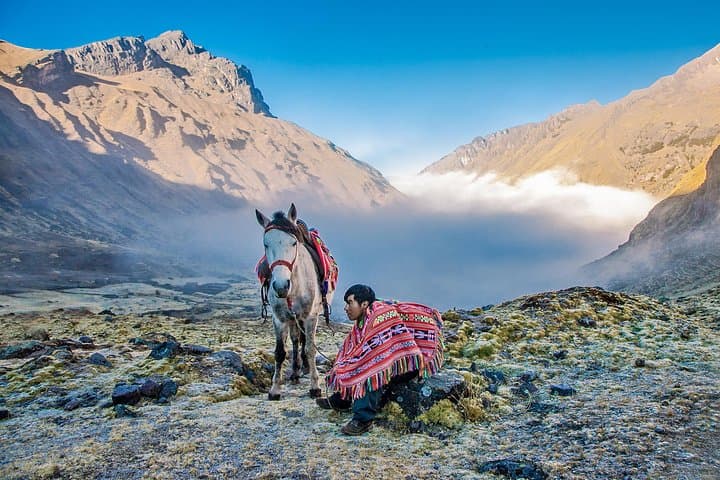
Dawn breaks over rippled ridgelines as your minivan climbs out of the Sacred Valley toward Patakancha and the Lares highlands. Cold air bites at 4,200 meters; llamas watch from adobe doorways and a summer sky scrubs the mountains blue. You move on foot across grazing puna, over two high passes, and beside opaque glacial lakes that refuse to be still.
Dawn breaks over rippled ridgelines as your minivan climbs out of the Sacred Valley toward Patakancha and the Lares highlands. Cold air bites at 4,200 meters; llamas watch from adobe doorways and a summer sky scrubs the mountains blue. You move on foot across grazing puna, over two high passes, and beside opaque glacial lakes that refuse to be still.
The route threads Andean history and geology: granite ridges carved by ice, volcanic outcrops, and terraces that bear Inca agricultural memory. Villages keep a living culture—women in layered skirts and bright hats weave on doorsteps while local Quechua speech hangs in the air. The Lares hot springs—a classic mid-trek reward—was used by Andean communities long before it became a travel pitstop.
Expect varied terrain: steep switchbacks, rocky trails, and muddy sections where the puna meets irrigated valley. Day two reaches Aruraycocha at roughly 4,500 m (14,764 ft), offering a commanding view and the best chance to spot condors riding thermal lifts. Nights are in 2-person tents on thin sleeping mattresses; cooks and mule teams handle bulk gear while participants carry a small daypack and personal items (porters carry up to 5 kg).
Practical guidance: acclimatize in Cusco for 48 hours if possible, carry layers for sharp temperature swings, and prioritize hydration and a slow ascent to reduce altitude effects. Train days end in Ollantaytambo, then Aguas Calientes before a sunrise visit to Machu Picchu on day four. Be prepared for early starts and long days—this is an immersive mountain trek where preparation directly shapes enjoyment.