THE ADVENTURE COLLECTIVE® · Independent discovery and booking for outdoor travel

Hike Larch Valley to Sentinel Pass from Moraine Lake on a full-day guided trip from Banff. Expect golden alpine larches, 11.6 km round-trip, 817 m gain, and sweeping views of the Valley of the Ten Peaks.
Hike Larch Valley to Sentinel Pass from Moraine Lake on a full-day guided trip from Banff. Expect golden alpine larches, 11.6 km round-trip, 817 m gain, and sweeping views of the Valley of the Ten Peaks.
A cold, bright morning at Moraine Lake frames the first steps of the day: larches are turning gold on the slopes while the Ten Peaks loom, sharp and glaciated. Guides collect guests in Banff or Lake Louise, the van humming along the Trans-Canada past the Bow River and Vermilion Lakes until the road drops into the Moraine Valley.
Verified experiences and guided adventures in the surrounding area.
Operated by Alpine Air Adventures · Lake Louise, Alberta
A cold, bright morning at Moraine Lake frames the first steps of the day: larches are turning gold on the slopes while the Ten Peaks loom, sharp and glaciated. Guides collect guests in Banff or Lake Louise, the van humming along the Trans-Canada past the Bow River and Vermilion Lakes until the road drops into the Moraine Valley.
Geology here is immediate—ancient sedimentary strata thrust and carved by Pleistocene ice, leaving glacial hollows filled with the famed turquoise of Moraine Lake. The Valley of the Ten Peaks received its names during early mountaineering era mapping, and the route up Larch Valley follows moraine ridges and alpine meadows that have supported Indigenous travel and seasonal use for millennia.
Culturally the area is part of Banff National Park, Canada’s first national park, and it’s managed for high visitor use and wildlife protection; be prepared to follow park rules and bear-safety practices.
On trail: the guided route climbs through larch stands then steepens toward Sentinel Pass, topping out near 2,600 m. Expect 11.6 km round-trip with roughly 817 m of elevation gain, rocky switchbacks, and short sections of scree before the pass. Typical trip time is 7–8 hours including transport.
Practical guidance: bring waterproof layers and warm mid-layers, sturdy boots, and extra food—weather changes fast and the guide may refuse underdressed participants. Hydrate, pace the ascent, and use trekking poles on the steeper, loose sections. The shuttle and guide remove the stress of parking and permit timing, leaving hikers to focus on the larches, views, and alpine air.
challenging.
7–8 hours.
Moderate to fit hikers comfortable with sustained uphill hiking and short sections of scree at high elevation
The guided route is about 11.6 km round-trip with approximately 817 m (2,680 ft) of elevation gain, typically completed in 7–8 hours including transport.
Moraine Lake has seasonal access rules and limited parking; this tour includes guaranteed entry and shuttle transport, removing the need to secure a separate parking spot.
Common sightings include marmots, pikas, ground squirrels and occasionally mountain goats; bears are possible—your guide will manage safety protocols.
The larches usually turn gold in mid-September through early October, though timing varies with elevation and seasonal weather.
The Moraine Valley sits within Banff National Park, established in 1885; early mountaineers mapped the Ten Peaks and popularized alpine routes here.
Banff National Park manages visitor numbers and access to protect fragile alpine meadows and wildlife—stay on trail, pack out waste, and follow bear-safety rules.
Alpine Air Adventures operates guided outdoor trips and adventures with an emphasis on safety, stewardship, and memorable experiences.
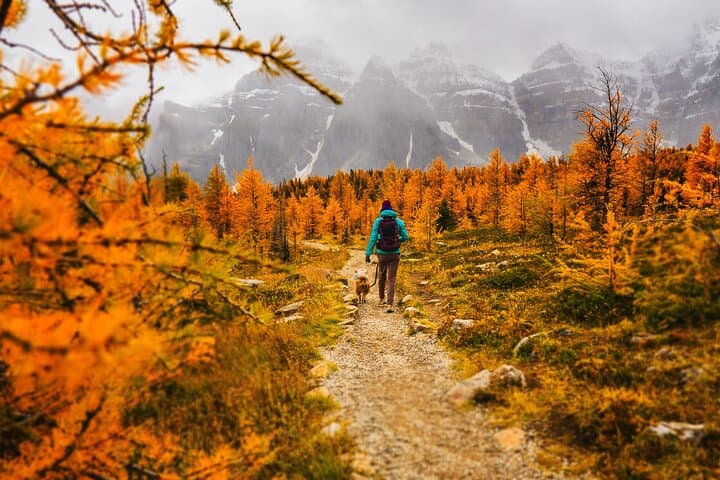
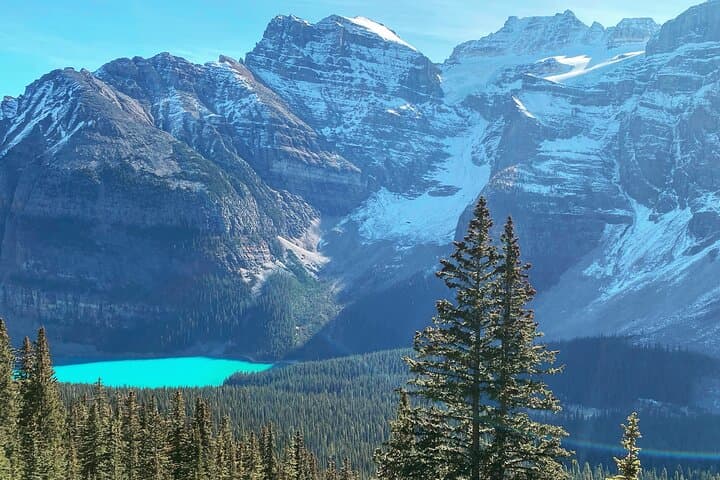
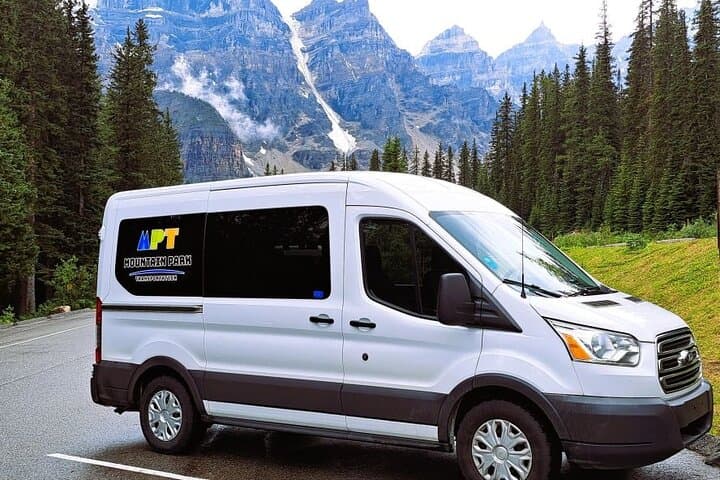
A cold, bright morning at Moraine Lake frames the first steps of the day: larches are turning gold on the slopes while the Ten Peaks loom, sharp and glaciated. Guides collect guests in Banff or Lake Louise, the van humming along the Trans-Canada past the Bow River and Vermilion Lakes until the road drops into the Moraine Valley.
A cold, bright morning at Moraine Lake frames the first steps of the day: larches are turning gold on the slopes while the Ten Peaks loom, sharp and glaciated. Guides collect guests in Banff or Lake Louise, the van humming along the Trans-Canada past the Bow River and Vermilion Lakes until the road drops into the Moraine Valley.
Geology here is immediate—ancient sedimentary strata thrust and carved by Pleistocene ice, leaving glacial hollows filled with the famed turquoise of Moraine Lake. The Valley of the Ten Peaks received its names during early mountaineering era mapping, and the route up Larch Valley follows moraine ridges and alpine meadows that have supported Indigenous travel and seasonal use for millennia.
Culturally the area is part of Banff National Park, Canada’s first national park, and it’s managed for high visitor use and wildlife protection; be prepared to follow park rules and bear-safety practices.
On trail: the guided route climbs through larch stands then steepens toward Sentinel Pass, topping out near 2,600 m. Expect 11.6 km round-trip with roughly 817 m of elevation gain, rocky switchbacks, and short sections of scree before the pass. Typical trip time is 7–8 hours including transport.
Practical guidance: bring waterproof layers and warm mid-layers, sturdy boots, and extra food—weather changes fast and the guide may refuse underdressed participants. Hydrate, pace the ascent, and use trekking poles on the steeper, loose sections. The shuttle and guide remove the stress of parking and permit timing, leaving hikers to focus on the larches, views, and alpine air.