THE ADVENTURE COLLECTIVE® · Independent discovery and booking for outdoor travel

An 8-day trek from Kathmandu into Langtang Valley that balances high Himalayan panoramas with Tamang culture. Expect teahouse nights, a steep summit day to Tserko Ri, and permit-required access through Langtang National Park.
An 8-day trek from Kathmandu into Langtang Valley that balances high Himalayan panoramas with Tamang culture. Expect teahouse nights, a steep summit day to Tserko Ri, and permit-required access through Langtang National Park.
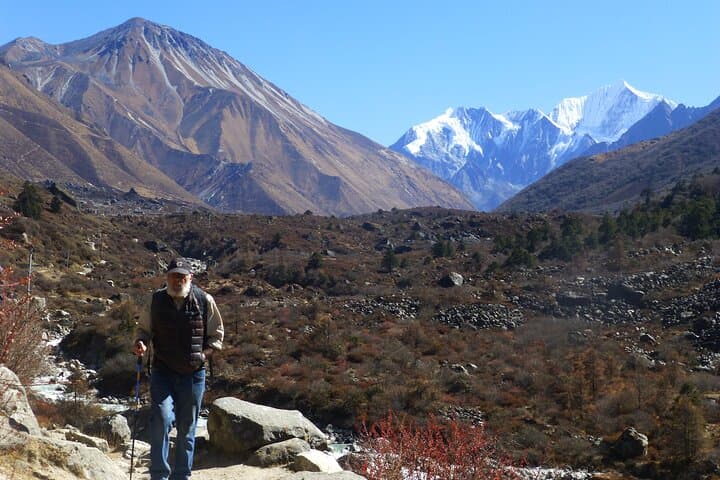
You leave Kathmandu before dawn, the city shrinking behind concrete and prayer flags as the road climbs into green hills. The Langtang River soon appears, daring you to follow its carved corridor into a high glacial valley where pine and rhododendron frame steep moraine slopes. By late afternoon a string of guesthouses appears: the sound of boiling kettles, yak-bell clinks, and a gompa’s prayer wheel turning in the wind.
Verified experiences and guided adventures in the surrounding area.
Operated by Namaste Nepal Trekking & Research Hub Pvt. Ltd. · Syabrubesi, Bagmati Province
You leave Kathmandu before dawn, the city shrinking behind concrete and prayer flags as the road climbs into green hills. The Langtang River soon appears, daring you to follow its carved corridor into a high glacial valley where pine and rhododendron frame steep moraine slopes. By late afternoon a string of guesthouses appears: the sound of boiling kettles, yak-bell clinks, and a gompa’s prayer wheel turning in the wind.
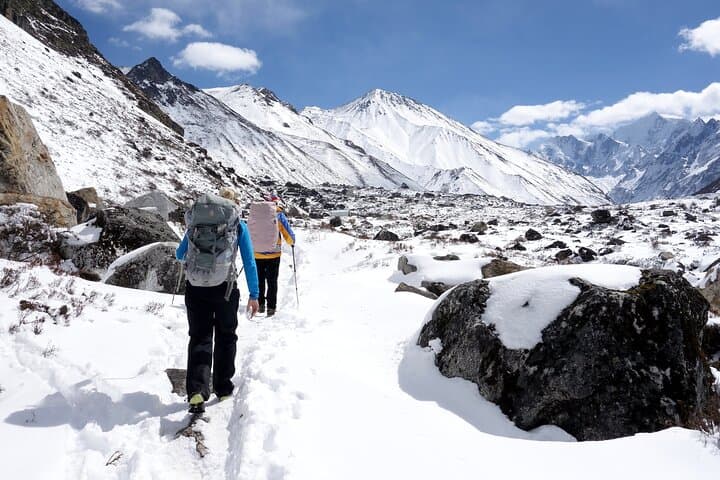
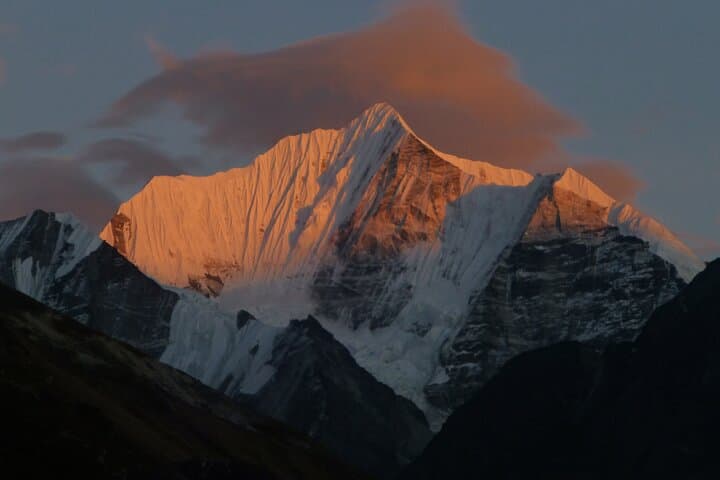
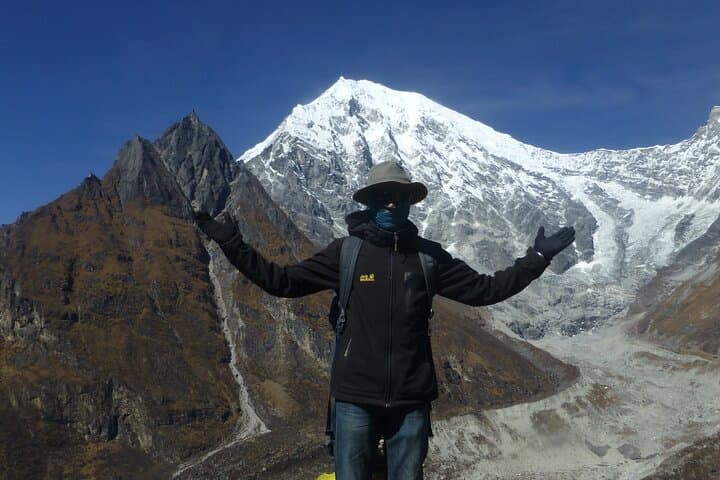
Geology here is blunt and immediate — carved by ice and the uplift of the Himalaya, the valley reveals exposed strata and hanging glaciers on Langtang Lirung. Culturally the trail threads Tamang settlements and Buddhist shrines; Kyanjin Gompa is both a spiritual center and a staging point for day hikes. The valley carries a recent history too: the 2015 earthquake reshaped villages, and local rebuilding has become part of the trek’s story.
Practical guidance: the standard itinerary is eight days with incremental altitude gain, a day hike to Tserko/Cherko Ri that climbs roughly 1,000m to 5,033m, and multiple 4–6 hour walking days. You’ll need TIMS and Langtang National Park permits, steady footwear, and layered clothing for large temperature swings. Start hikes early to avoid wind and clouds, sip water frequently to aid acclimatization, and consult your guide if you feel persistent headache or nausea.
Expect teahouse lodging, simple Nepalese meals, and dramatic mountain panoramas — Ganesh Himal to the west and occasionally Shishapangma to the north. The route rewards patience: slow gains, clear viewpoints, and a living culture that greets trekkers with warmth and yak cheese.
challenging.
8 days.
Good cardiovascular fitness and prior multi-day trekking experience are recommended; be prepared for long days with elevation gain.
Yes — a TIMS card and Langtang National Park permit are required; operators typically arrange these during booking.
Expect daily 4–6 hour walks with one steep day to ~5,000m; moderate-to-good fitness and prior trekking experience help.
Spring (March–May) and fall (Sept–Nov) offer the clearest skies and stable conditions; monsoon brings heavy rain and winter brings snow at higher elevations.
Symptoms can occur above 3,000m; climb slowly, hydrate, avoid alcohol, and descend if symptoms worsen — guides carry first-aid and oxygen when needed.
The Langtang Valley is predominantly Tamang and Buddhist; the 2015 earthquake heavily damaged villages and prompted community-led rebuilding and tourism adaptations.
Visitors must carry out waste when possible, follow park rules, and support local guesthouses — sustainable tourism directly helps recovery and conservation.
Namaste Nepal Trekking & Research Hub Pvt. Ltd. operates guided outdoor trips and adventures with an emphasis on safety, stewardship, and memorable experiences.
You leave Kathmandu before dawn, the city shrinking behind concrete and prayer flags as the road climbs into green hills. The Langtang River soon appears, daring you to follow its carved corridor into a high glacial valley where pine and rhododendron frame steep moraine slopes. By late afternoon a string of guesthouses appears: the sound of boiling kettles, yak-bell clinks, and a gompa’s prayer wheel turning in the wind.
You leave Kathmandu before dawn, the city shrinking behind concrete and prayer flags as the road climbs into green hills. The Langtang River soon appears, daring you to follow its carved corridor into a high glacial valley where pine and rhododendron frame steep moraine slopes. By late afternoon a string of guesthouses appears: the sound of boiling kettles, yak-bell clinks, and a gompa’s prayer wheel turning in the wind.
Geology here is blunt and immediate — carved by ice and the uplift of the Himalaya, the valley reveals exposed strata and hanging glaciers on Langtang Lirung. Culturally the trail threads Tamang settlements and Buddhist shrines; Kyanjin Gompa is both a spiritual center and a staging point for day hikes. The valley carries a recent history too: the 2015 earthquake reshaped villages, and local rebuilding has become part of the trek’s story.
Practical guidance: the standard itinerary is eight days with incremental altitude gain, a day hike to Tserko/Cherko Ri that climbs roughly 1,000m to 5,033m, and multiple 4–6 hour walking days. You’ll need TIMS and Langtang National Park permits, steady footwear, and layered clothing for large temperature swings. Start hikes early to avoid wind and clouds, sip water frequently to aid acclimatization, and consult your guide if you feel persistent headache or nausea.
Expect teahouse lodging, simple Nepalese meals, and dramatic mountain panoramas — Ganesh Himal to the west and occasionally Shishapangma to the north. The route rewards patience: slow gains, clear viewpoints, and a living culture that greets trekkers with warmth and yak cheese.