
Langtang Valley Trek: 8-Day Trek to Kyanjin Gompa and Tsergo Ri
An 8‑day circuit from Kathmandu to Kyanjin Gompa, the Langtang Valley Trek threads rhododendron forests, Tamang villages and high pastures with panoramic Himalayan views. Ideal for trekkers seeking cultural encounters and accessible high‑altitude scenery.
An Adventure In Kathmandu.
An 8‑day circuit from Kathmandu to Kyanjin Gompa, the Langtang Valley Trek threads rhododendron forests, Tamang villages and high pastures with panoramic Himalayan views. Ideal for trekkers seeking cultural encounters and accessible high‑altitude scenery.
Read the full experience
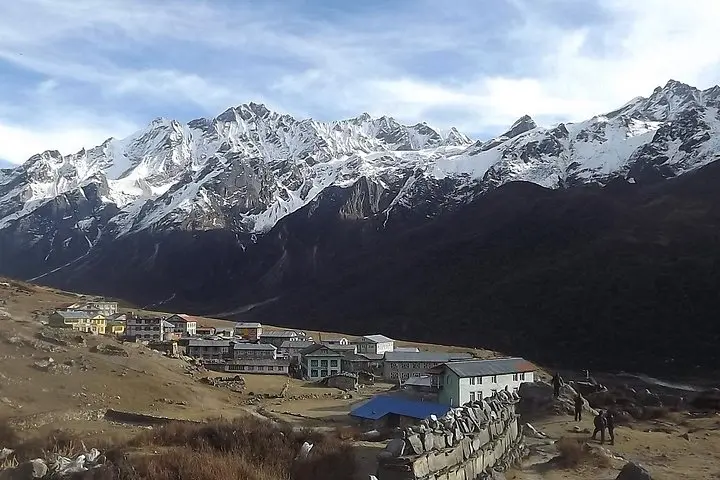
Travelers leave Kathmandu before sunrise, climbing out of the valley by jeep and following the Langtang River toward fir forests and terraced Tamang villages. The first day on foot moves through rhododendron and pine, the trail threaded with prayer flags and stone mani walls; higher, the air thins and Kyanjin Gompa appears as a low cluster of whitewashed houses and a centuries‑old monastery against glacial slopes.
Travelers leave Kathmandu before sunrise, climbing out of the valley by jeep and following the Langtang River toward fir forests and terraced Tamang villages. The first day on foot moves through rhododendron and pine, the trail threaded with prayer flags and stone mani walls; higher, the air thins and Kyanjin Gompa appears as a low cluster of whitewashed houses and a centuries‑old monastery against glacial slopes.
Langtang sits in Rasuwa District in Langtang National Park, formed to protect Himalayan ecosystems and local livelihoods. Geologically, the valley traces uplifted metamorphic rock and moraine left by retreating glaciers; from Tsergo Ri or Chorkari Ri (non‑technical scrambles) hikers can see Dorje Lakpa and, on clear days, the distant bulk of Shisapangma across the Tibetan border. The region is strongly influenced by Tamang and Tibetan Buddhist culture—monasteries, yak pastures and a small cheese factory are part of daily life.
Practically, expect 5–7 hours of walking on most days with steep sections, unpaved paths and altitude gains to roughly 4,800–5,050 m on side peaks. Guides and porters are common; permit and TIMS card are required inside the park. Plan for cold nights, sudden weather swings, and reduced appetite at altitude. Hydrate, pace your ascent, use layered clothing and a good pair of boots, and allow at least one acclimatization-aware day.
This trek rewards with close mountain views, cultural encounters in Langtang and Kyanjin, and compact high‑alpine landscapes without technical climbing—an achievable high‑Himalaya experience for prepared trekkers.
Frequently asked questions
Yes — a Langtang National Park permit and TIMS card are required to trek inside the park; guides commonly assist with permits.
Night temperatures can drop below freezing above 3,500 m; expect single digits Celsius in lower villages and well below 0°C near Kyanjin in shoulder and winter seasons.
No — the standard routes are non‑technical trekking; some side peaks involve steep scrambles but no ropework for typical itineraries.
Most itineraries include a 6–7 hour jeep drive from Kathmandu to Syabrubesi; road conditions vary and travel can be bumpy.
About This Experience
Global Holidays Adventure P. Ltd operates guided outdoor trips and adventures with an emphasis on safety, stewardship, and memorable experiences.
Adventure tips
Recommended gear
- Sturdy hiking boots: Support and traction for rocky, muddy and occasionally icy trails.
- Warm down jacket: Cold nights at higher camps and early mornings require high‑quality insulation.
- Trekking poles: Reduce knee strain on descents and help with balance on uneven ground.
- Water purification: Tablets or a filter ensure safe drinking water from taps and streams.
Photos of the experience
Related adventures & guides
Read the full experience
Travelers leave Kathmandu before sunrise, climbing out of the valley by jeep and following the Langtang River toward fir forests and terraced Tamang villages. The first day on foot moves through rhododendron and pine, the trail threaded with prayer flags and stone mani walls; higher, the air thins and Kyanjin Gompa appears as a low cluster of whitewashed houses and a centuries‑old monastery against glacial slopes.
Travelers leave Kathmandu before sunrise, climbing out of the valley by jeep and following the Langtang River toward fir forests and terraced Tamang villages. The first day on foot moves through rhododendron and pine, the trail threaded with prayer flags and stone mani walls; higher, the air thins and Kyanjin Gompa appears as a low cluster of whitewashed houses and a centuries‑old monastery against glacial slopes.
Langtang sits in Rasuwa District in Langtang National Park, formed to protect Himalayan ecosystems and local livelihoods. Geologically, the valley traces uplifted metamorphic rock and moraine left by retreating glaciers; from Tsergo Ri or Chorkari Ri (non‑technical scrambles) hikers can see Dorje Lakpa and, on clear days, the distant bulk of Shisapangma across the Tibetan border. The region is strongly influenced by Tamang and Tibetan Buddhist culture—monasteries, yak pastures and a small cheese factory are part of daily life.
Practically, expect 5–7 hours of walking on most days with steep sections, unpaved paths and altitude gains to roughly 4,800–5,050 m on side peaks. Guides and porters are common; permit and TIMS card are required inside the park. Plan for cold nights, sudden weather swings, and reduced appetite at altitude. Hydrate, pace your ascent, use layered clothing and a good pair of boots, and allow at least one acclimatization-aware day.
This trek rewards with close mountain views, cultural encounters in Langtang and Kyanjin, and compact high‑alpine landscapes without technical climbing—an achievable high‑Himalaya experience for prepared trekkers.
Make a day of it nearby.
Verified experiences and guided adventures in the surrounding area.