THE ADVENTURE COLLECTIVE® · Independent discovery and booking for outdoor travel

This eight-day Langtang Valley trek takes you from the twisting road north of Kathmandu into Tamang villages, glacial valleys, and the monastery at Kyanjin Gompa. Expect multi-day teahouse trekking, steep switchbacks, and a high day-hike option to Tserko Ri for panoramic Himalayan views.
This eight-day Langtang Valley trek takes you from the twisting road north of Kathmandu into Tamang villages, glacial valleys, and the monastery at Kyanjin Gompa. Expect multi-day teahouse trekking, steep switchbacks, and a high day-hike option to Tserko Ri for panoramic Himalayan views.
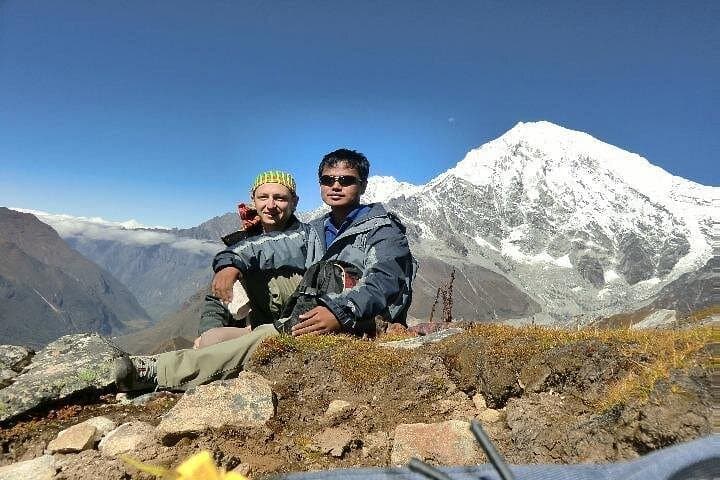
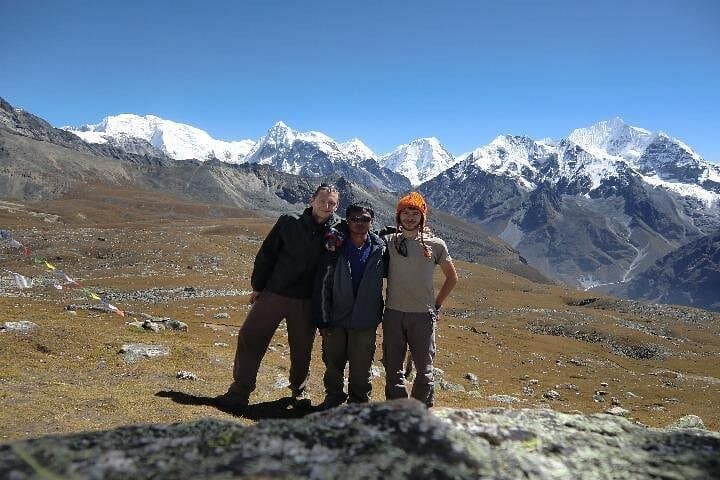
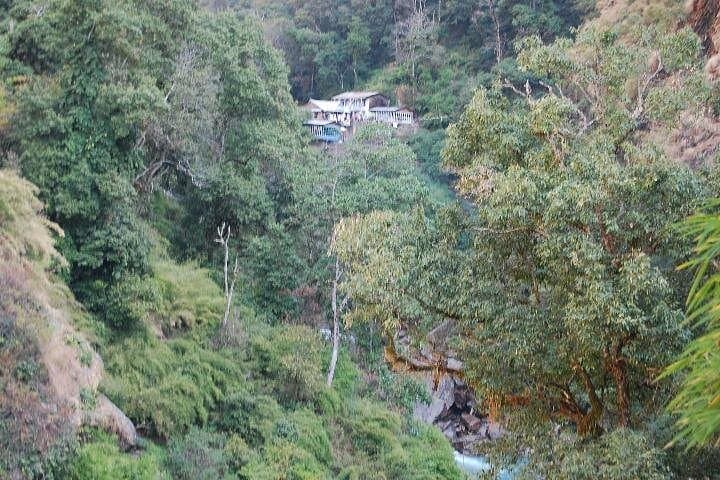
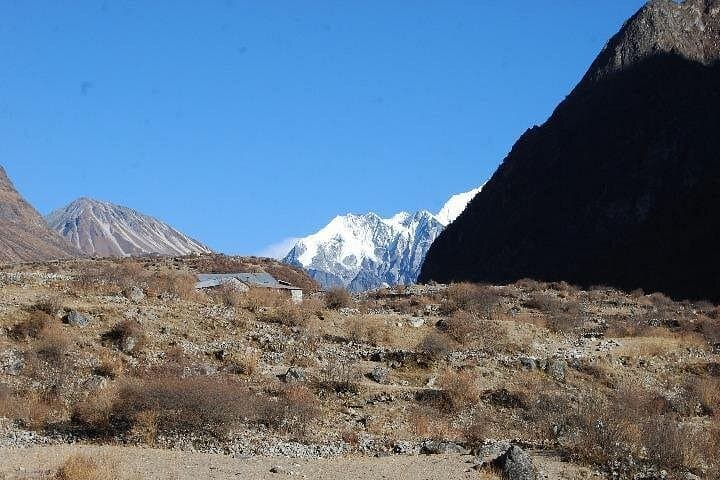
A low morning haze lifts over terraced fields as the bus drops you on the rough edge of the Kathmandu Valley. The road north is a sequence of hairpins and river views, and by late afternoon you’re in Syabrubesi, where Langtang River begins to dare you upriver. Over eight days the trail tightens and opens: rhododendron and bamboo give way to stone villages, prayer flags snap like wind-driven conversations, and peaks — Langtang Lirung, Dorje Lakpa — loom with a steady, unreadable patience.
Verified experiences and guided adventures in the surrounding area.
Operated by Base Camp Adventure Pvt. Ltd. · Kathmandu, Bagmati Province
A low morning haze lifts over terraced fields as the bus drops you on the rough edge of the Kathmandu Valley. The road north is a sequence of hairpins and river views, and by late afternoon you’re in Syabrubesi, where Langtang River begins to dare you upriver. Over eight days the trail tightens and opens: rhododendron and bamboo give way to stone villages, prayer flags snap like wind-driven conversations, and peaks — Langtang Lirung, Dorje Lakpa — loom with a steady, unreadable patience.
Langtang was Nepal’s first Himalayan national park (1971) and has long been a Tamang cultural corridor with close Tibetan affinities. Geologically, the valley is carved by glacial action and active uplift; moraines and glacial streams thread the lower slopes while steep, metamorphic ridges frame the skyline. Villages here keep yak cheese presses and small gompas; Kyanjin Gompa doubles as both a religious center and basecamp for local climbs such as Tserko Ri and Kyanjin Ri.
Practical guidance: the itinerary covers 5–6 hour walking days on uneven, sometimes steep trails with river crossings and suspension bridges; highest nights are in Kyanjin (~3,870m). Allow at least one acclimatization/rest day for a summit day hike to Tserko Ri (4,984m). Expect tea-house accommodation (twin-share), simple meals, and limited cash/phone service beyond Syabrubesi.
Packing focus is layers, footwear with traction, water treatment, and a small daypack for summit days. Respect local customs—ask before photographing people and support local tea-houses; low-impact trekking keeps the valley healthy for future travelers.
moderate.
8 days.
Good aerobic fitness with experience doing multiple 4–6 hour days of uphill and downhill hiking; comfortable with trekking at altitude.
Yes — a TIMS card and National Park entry permit are required and are typically handled by the operator before the trek.
Tea-house (guesthouse) accommodation in twin-share rooms with basic mattresses and blankets; hot showers may be available for a fee at select stops.
Most popular trails have been restored, but conditions can change; travel with a licensed guide and check recent trail reports before departure.
Independent trekkers can do parts of Langtang, but hiring a licensed guide is recommended for navigation, local insight, and safety — operators typically include one.
The Tamang communities here have cultural and linguistic ties to Tibet; the valley’s name comes from a lama following a runaway yak (lang = yak, dhang = to follow).
Langtang is a protected national park — stick to trails, pack out non-biodegradables where possible, and support local tea-houses to reinforce sustainable livelihoods.
Base Camp Adventure Pvt. Ltd. operates guided outdoor trips and adventures with an emphasis on safety, stewardship, and memorable experiences.
A low morning haze lifts over terraced fields as the bus drops you on the rough edge of the Kathmandu Valley. The road north is a sequence of hairpins and river views, and by late afternoon you’re in Syabrubesi, where Langtang River begins to dare you upriver. Over eight days the trail tightens and opens: rhododendron and bamboo give way to stone villages, prayer flags snap like wind-driven conversations, and peaks — Langtang Lirung, Dorje Lakpa — loom with a steady, unreadable patience.
A low morning haze lifts over terraced fields as the bus drops you on the rough edge of the Kathmandu Valley. The road north is a sequence of hairpins and river views, and by late afternoon you’re in Syabrubesi, where Langtang River begins to dare you upriver. Over eight days the trail tightens and opens: rhododendron and bamboo give way to stone villages, prayer flags snap like wind-driven conversations, and peaks — Langtang Lirung, Dorje Lakpa — loom with a steady, unreadable patience.
Langtang was Nepal’s first Himalayan national park (1971) and has long been a Tamang cultural corridor with close Tibetan affinities. Geologically, the valley is carved by glacial action and active uplift; moraines and glacial streams thread the lower slopes while steep, metamorphic ridges frame the skyline. Villages here keep yak cheese presses and small gompas; Kyanjin Gompa doubles as both a religious center and basecamp for local climbs such as Tserko Ri and Kyanjin Ri.
Practical guidance: the itinerary covers 5–6 hour walking days on uneven, sometimes steep trails with river crossings and suspension bridges; highest nights are in Kyanjin (~3,870m). Allow at least one acclimatization/rest day for a summit day hike to Tserko Ri (4,984m). Expect tea-house accommodation (twin-share), simple meals, and limited cash/phone service beyond Syabrubesi.
Packing focus is layers, footwear with traction, water treatment, and a small daypack for summit days. Respect local customs—ask before photographing people and support local tea-houses; low-impact trekking keeps the valley healthy for future travelers.