THE ADVENTURE COLLECTIVE® · Independent discovery and booking for outdoor travel

Traverse rhododendron forests, high alpine passes and sacred Gosainkunda lakes on the Langtang Panorama Trek. This moderate-to-challenging 9–11 day route combines cultural villages, teahouse nights and sustained high-altitude views.
Traverse rhododendron forests, high alpine passes and sacred Gosainkunda lakes on the Langtang Panorama Trek. This moderate-to-challenging 9–11 day route combines cultural villages, teahouse nights and sustained high-altitude views.
You step out of the bus into thin, cold air and the valley opens — a ribbon of trail that climbs through rhododendron and oak, creaks of bamboo and the distant bell of a grazing yak. The Langtang Panorama Trek threads the northern rim of the Kathmandu Valley into Langtang National Park, delivering alpine viewpoints, high passes and the sacred lakes of Gosainkunda.
Verified experiences and guided adventures in the surrounding area.
Operated by Unique Path Trekking Expedition Pvt. Ltd · Kathmandu, Bagmati Province
You step out of the bus into thin, cold air and the valley opens — a ribbon of trail that climbs through rhododendron and oak, creaks of bamboo and the distant bell of a grazing yak. The Langtang Panorama Trek threads the northern rim of the Kathmandu Valley into Langtang National Park, delivering alpine viewpoints, high passes and the sacred lakes of Gosainkunda.
Geology here is raw: glacially carved valleys, moraine ridges and steep cols between the Langtang, Ganesh and Jugal ranges. Human history is visible in stone chortens and prayer flags; the Tamang people have shaped villages like Thulo Syabru and Kyangjin Gompa, where yak cheese and monastery life mark cultural continuity. The 2015 earthquake changed parts of the valley, and rebuilding is part of the recent story.
Expect forested switchbacks, exposed scree above 4,000 m, and clear alpine basins around Gosainkunda. Streams dare you across wooden bridges; the Lauribina and Chorkari ridges push the route into true high-altitude territory, where acclimatization days matter.
Practical guidance: plan 9–11 days, bring layered insulation and crampon-capable boots if traveling outside fall/spring, and budget for teahouse stays and permit fees. Hydrate early, watch for mild altitude symptoms, and favor steady pace over speed. Guides and TIMS permits are standard; local guesthouses provide hot meals and a frontline window into mountain life. This trek balances panoramic exposure with accessible logistics — a high-country circuit that rewards preparation with uncompromised Himalayan scenery.
challenging.
9–11 days.
Good aerobic fitness and ability to hike 5–8 hours on consecutive days; ability to handle altitude and steep terrain.
Yes — TIMS card and Langtang National Park entry permits are required and typically handled by your operator.
Spring (March–May) and autumn (September–November) offer the best weather and visibility; winter is cold and summers can be monsoon-wet.
Yes — basic teahouse accommodation with twin rooms and shared bathrooms is standard; expect simple hot meals and communal dining areas.
Some sections exceed 4,000 m; mild symptoms are common. Ascend slowly, hydrate, and descend if symptoms worsen — guides carry first-aid and oximeters.
The Langtang Valley is predominantly Tamang and Tibetan-influenced, with monasteries like Kyangjin Gompa central to local spiritual life; the 2015 earthquake reshaped parts of the valley and spurred rebuilding.
Langtang sits inside Langtang National Park — stick to trails, pack out waste when possible, and respect local water and fuel limits to help fragile alpine ecosystems.
Unique Path Trekking Expedition Pvt. Ltd operates guided outdoor trips and adventures with an emphasis on safety, stewardship, and memorable experiences.


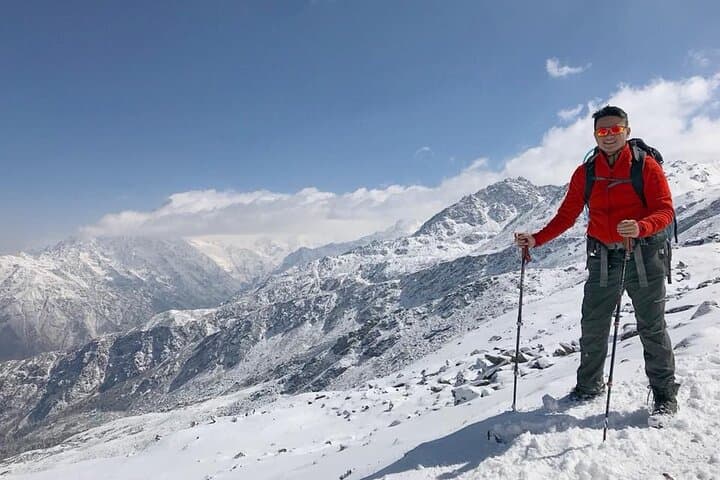

You step out of the bus into thin, cold air and the valley opens — a ribbon of trail that climbs through rhododendron and oak, creaks of bamboo and the distant bell of a grazing yak. The Langtang Panorama Trek threads the northern rim of the Kathmandu Valley into Langtang National Park, delivering alpine viewpoints, high passes and the sacred lakes of Gosainkunda.
You step out of the bus into thin, cold air and the valley opens — a ribbon of trail that climbs through rhododendron and oak, creaks of bamboo and the distant bell of a grazing yak. The Langtang Panorama Trek threads the northern rim of the Kathmandu Valley into Langtang National Park, delivering alpine viewpoints, high passes and the sacred lakes of Gosainkunda.
Geology here is raw: glacially carved valleys, moraine ridges and steep cols between the Langtang, Ganesh and Jugal ranges. Human history is visible in stone chortens and prayer flags; the Tamang people have shaped villages like Thulo Syabru and Kyangjin Gompa, where yak cheese and monastery life mark cultural continuity. The 2015 earthquake changed parts of the valley, and rebuilding is part of the recent story.
Expect forested switchbacks, exposed scree above 4,000 m, and clear alpine basins around Gosainkunda. Streams dare you across wooden bridges; the Lauribina and Chorkari ridges push the route into true high-altitude territory, where acclimatization days matter.
Practical guidance: plan 9–11 days, bring layered insulation and crampon-capable boots if traveling outside fall/spring, and budget for teahouse stays and permit fees. Hydrate early, watch for mild altitude symptoms, and favor steady pace over speed. Guides and TIMS permits are standard; local guesthouses provide hot meals and a frontline window into mountain life. This trek balances panoramic exposure with accessible logistics — a high-country circuit that rewards preparation with uncompromised Himalayan scenery.