THE ADVENTURE COLLECTIVE® · Independent discovery and booking for outdoor travel

Walk Alba’s lively market with a professional chef, select seasonal Langhe ingredients, then return to a hands-on class to prepare a three-course Piedmont lunch. Expect a 4.5-hour mix of tasting, technique, and local stories.
Walk Alba’s lively market with a professional chef, select seasonal Langhe ingredients, then return to a hands-on class to prepare a three-course Piedmont lunch. Expect a 4.5-hour mix of tasting, technique, and local stories.
The morning begins among stalls and shouted bargains in Alba’s historic open market, where the hills of the Langhe bank the light and vendors arrange pyramids of produce like careful maps. You move through the rows with a chef who explains how season and soil shape each choice—why pale green Seirass curds and locally toasted hazelnuts are as essential as flour for the region’s pasta.
Verified experiences and guided adventures in the surrounding area.
Operated by Fabio Montanera personal chef · Alba, Piedmont
The morning begins among stalls and shouted bargains in Alba’s historic open market, where the hills of the Langhe bank the light and vendors arrange pyramids of produce like careful maps. You move through the rows with a chef who explains how season and soil shape each choice—why pale green Seirass curds and locally toasted hazelnuts are as essential as flour for the region’s pasta.
The Langhe carry deep layers of human and natural history: rolling marine-origin hills folded by ancient seabeds, vineyards sculpted over centuries, and a food culture built on hazelnuts, Nebbiolo, and the white truffle that made Alba famous. That geology and climate produce a short, intense seasonality—spring’s young greens, summer’s tomatoes and herbs, autumn’s truffles and grapes—so ingredients you buy here are specific to the calendar.
Back in a compact Alba workshop the market run becomes a lesson in technique: shaping giant plins, balancing a cabbage broth to coax color and scent, and finishing stuffed peaches for dessert. The class mixes demonstration and hands-on work, finishing with a three-course lunch paired by local sensibilities.
Practical notes: the full experience runs about 4.5 hours, includes market walk, ingredients, tools, and lunch, and is best booked midweek to avoid weekend crowds. Wear closed-toe shoes for the market, bring a water bottle, and flag allergies in advance—this is as much about learning selection as it is about cooking.
easy.
4–5 hours.
Light physical activity: standing and walking in market stalls, basic kitchen work; no special fitness required
The full program runs about 4.5 hours, combining a market tour and a hands-on cooking class that ends with a shared three-course lunch.
Yes—notify dietary needs when booking via the special requirements field; the chef will adapt recipes when possible but should be informed in advance.
The meeting point is in Alba’s market area; private transportation is listed as an inclusion for some bookings—confirm your pickup when reserving.
Children can attend, but the pace and knife techniques may suit older kids; infants in strollers are allowed but check age-specific policies when booking.
The Langhe are a UNESCO-designated cultural landscape shaped by centuries of viticulture and small-scale agriculture, with Alba known historically for truffle trade and market culture.
Local producers increasingly practice sustainable viticulture and soil stewardship; visitors can support this by choosing small growers and avoiding single-use plastics in markets.
Fabio Montanera personal chef operates guided outdoor trips and adventures with an emphasis on safety, stewardship, and memorable experiences.

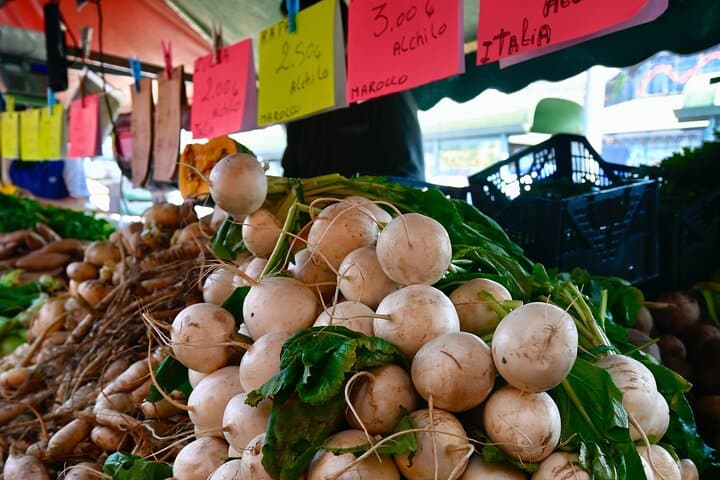
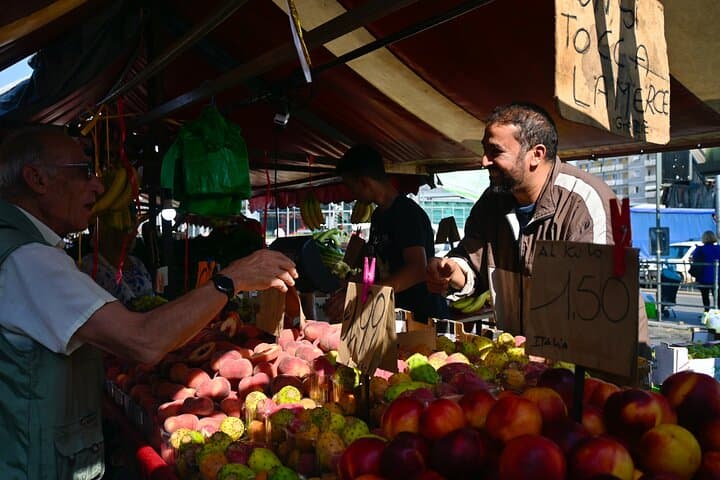

The morning begins among stalls and shouted bargains in Alba’s historic open market, where the hills of the Langhe bank the light and vendors arrange pyramids of produce like careful maps. You move through the rows with a chef who explains how season and soil shape each choice—why pale green Seirass curds and locally toasted hazelnuts are as essential as flour for the region’s pasta.
The morning begins among stalls and shouted bargains in Alba’s historic open market, where the hills of the Langhe bank the light and vendors arrange pyramids of produce like careful maps. You move through the rows with a chef who explains how season and soil shape each choice—why pale green Seirass curds and locally toasted hazelnuts are as essential as flour for the region’s pasta.
The Langhe carry deep layers of human and natural history: rolling marine-origin hills folded by ancient seabeds, vineyards sculpted over centuries, and a food culture built on hazelnuts, Nebbiolo, and the white truffle that made Alba famous. That geology and climate produce a short, intense seasonality—spring’s young greens, summer’s tomatoes and herbs, autumn’s truffles and grapes—so ingredients you buy here are specific to the calendar.
Back in a compact Alba workshop the market run becomes a lesson in technique: shaping giant plins, balancing a cabbage broth to coax color and scent, and finishing stuffed peaches for dessert. The class mixes demonstration and hands-on work, finishing with a three-course lunch paired by local sensibilities.
Practical notes: the full experience runs about 4.5 hours, includes market walk, ingredients, tools, and lunch, and is best booked midweek to avoid weekend crowds. Wear closed-toe shoes for the market, bring a water bottle, and flag allergies in advance—this is as much about learning selection as it is about cooking.