THE ADVENTURE COLLECTIVE® · Independent discovery and booking for outdoor travel

Walk Langa with a postcolonial historian and local entrepreneurs: home visits, a family-run lunch, and an African Zumba session reveal Cape Town’s layered history. Expect storytelling, local food, and active community engagement.
Walk Langa with a postcolonial historian and local entrepreneurs: home visits, a family-run lunch, and an African Zumba session reveal Cape Town’s layered history. Expect storytelling, local food, and active community engagement.
You step off the minivan at Guga S'thebe and the town breathes around you — painted walls, traders calling softly, and a guide who reads the street like a living archive.
Verified experiences and guided adventures in the surrounding area.
Operated by Side by Side Experiences & Tours · Cape Town, Western Cape
You step off the minivan at Guga S'thebe and the town breathes around you — painted walls, traders calling softly, and a guide who reads the street like a living archive.
This Side-by-Side experience threads a walking memoir through Langa, Cape Town’s oldest township, rather than a sanitized city-center tableau. The historian co-host unpacks the postcolonial layers: how apartheid-era planning turned labour needs into segregated settlements, how houses, schools and eateries became stages for resilience. Geology and landscape are subtle players here — the low-lying plain that shaped settlement patterns, and the distant silhouette of Table Mountain that watches the city’s social topography.
Culture arrives in human scale: family kitchens that grew into catering businesses, a coding academy in a converted home, kids shaping rhythm on djembes. The tour’s rhythm moves from reflective neighborhood stops to a communal African-fusion lunch with a restaurant founder, then to an exuberant Zumba class where movement becomes testimony.
Practical notes: expect two hours of guided walking interspersed with seated discussions and a meal; the route uses mostly paved streets and community paths and is wheelchair accessible with advance notice. Bring layered clothing for coastal wind and sun protection for midday. Support the local economy by buying souvenirs and leaving no litter; a portion of your booking supports local changemakers directly.
This is a history walk that asks you to listen, move, and steer your curiosity from surface impressions to lived stories — the kind of urban adventure that changes how you see a city.
moderate.
2 hours (typical).
Moderate fitness: able to walk on paved and uneven community paths and participate in light aerobic dance.
The standard meeting point is Guga S’thhebe arts centre in Langa; pickup can be arranged as an add-on.
The walk has options for all ages but the African Zumba with kids runs later in the day and may not be suitable for very young children or guests with mobility issues; parts are wheelchair accessible with advance notice.
A lunch with a restaurant founder is included in many versions; there is also an option to prepay or convert to dinner based on start time.
A portion (10%) of bookings goes directly to partnered changemakers as year-end gifts including bursaries, equipment, and grants.
Langa is Cape Town’s oldest township, developed in the 1920s as a segregated area for black laborers; its built environment still reflects apartheid-era planning and contemporary community responses.
The tour emphasizes local economic support and low-impact visitation—buy locally, avoid single-use plastics, and follow guides’ directions to protect community spaces.
Side by Side Experiences & Tours operates guided outdoor trips and adventures with an emphasis on safety, stewardship, and memorable experiences.

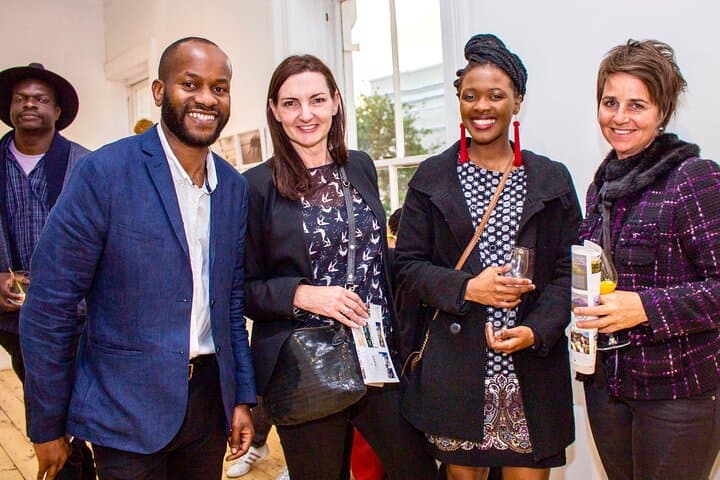

You step off the minivan at Guga S'thebe and the town breathes around you — painted walls, traders calling softly, and a guide who reads the street like a living archive.
You step off the minivan at Guga S'thebe and the town breathes around you — painted walls, traders calling softly, and a guide who reads the street like a living archive.
This Side-by-Side experience threads a walking memoir through Langa, Cape Town’s oldest township, rather than a sanitized city-center tableau. The historian co-host unpacks the postcolonial layers: how apartheid-era planning turned labour needs into segregated settlements, how houses, schools and eateries became stages for resilience. Geology and landscape are subtle players here — the low-lying plain that shaped settlement patterns, and the distant silhouette of Table Mountain that watches the city’s social topography.
Culture arrives in human scale: family kitchens that grew into catering businesses, a coding academy in a converted home, kids shaping rhythm on djembes. The tour’s rhythm moves from reflective neighborhood stops to a communal African-fusion lunch with a restaurant founder, then to an exuberant Zumba class where movement becomes testimony.
Practical notes: expect two hours of guided walking interspersed with seated discussions and a meal; the route uses mostly paved streets and community paths and is wheelchair accessible with advance notice. Bring layered clothing for coastal wind and sun protection for midday. Support the local economy by buying souvenirs and leaving no litter; a portion of your booking supports local changemakers directly.
This is a history walk that asks you to listen, move, and steer your curiosity from surface impressions to lived stories — the kind of urban adventure that changes how you see a city.