THE ADVENTURE COLLECTIVE® · Independent discovery and booking for outdoor travel

Spend a full day exploring Landmannalaugar’s colorful rhyolite landscapes, the thundering drop of Háifoss, serene Hjálparfoss, and the blue crater of Hnausapollur — then unwind in a geothermal bath. A demanding but deeply rewarding highlands circuit best done with a guide.
Spend a full day exploring Landmannalaugar’s colorful rhyolite landscapes, the thundering drop of Háifoss, serene Hjálparfoss, and the blue crater of Hnausapollur — then unwind in a geothermal bath. A demanding but deeply rewarding highlands circuit best done with a guide.
You step off the coach into highland light: pale rhyolite slopes flare pink and ochre, steam threads up from hot ground, and a wind that smells faintly of sulphur dares you to keep moving.
Verified experiences and guided adventures in the surrounding area.
Operated by Troll Expeditions · Reykjavík, Suðurland
You step off the coach into highland light: pale rhyolite slopes flare pink and ochre, steam threads up from hot ground, and a wind that smells faintly of sulphur dares you to keep moving.
This one-day loop combines two of Iceland’s most dramatic moods — the multicolored hills of Landmannalaugar and the raw, vertical force of Háifoss, which drops roughly 122 meters into a canyon cut by glacial rivers. The area’s geology reads like an open book: rhyolite volcanism built the mountains you walk through, later sculpted by ice and basaltic lava flows. Nearby Hjálparfoss offers a quieter counterpoint — twin falls framed by columnar basalt — and the blue bowl of Hnausapollur (Ljótipollur) crater is an excellent photo stop and reminder of explosive eruptions that shaped the landscape.
Local culture here is sparse but old: highland routes once linked seasonal sheep farms and later became pathways for explorers and artists drawn to the strange, luminous soils. Today guides balance access with conservation; the ground and geothermal zones can be fragile.
Practical edge: expect uneven, sometimes wet trails and variable weather — plan waterproof layers, sturdy boots, and early-day light for the best photos. The tour typically finishes with a soak in a natural hot spring to warm tired legs; follow local etiquette and keep the bath clean. Bring water, snacks, and a camera with a wide lens — the scenery changes with every ridge.
moderate.
12–13 hours.
Moderate fitness required: able to hike uneven terrain for several hours and tolerate long days on and off the bus.
The tour is roughly 13 hours and usually includes pick-up and drop-off from Reykjavík’s capital area; exact pickup points are confirmed at booking.
The natural bath experience is included as part of the day; facilities are shared and follow simple local etiquette (no soap, rinse before entering).
Not recommended for pregnant travelers; children with sufficient stamina can join but expect long travel times and uneven walking.
Moderate fitness — you’ll do several short hikes on uneven ground and should be able to walk for multiple hours with breaks.
Landmannalaugar’s colorful slopes are rhyolite produced during volcanic activity after the last ice age; Háifoss and nearby canyons were carved by glacial melt and river erosion.
Stick to marked trails and boardwalks where present — lichens and geothermal crust recover slowly; pack out all waste and avoid adding soaps to pools.
Troll Expeditions operates guided outdoor trips and adventures with an emphasis on safety, stewardship, and memorable experiences.
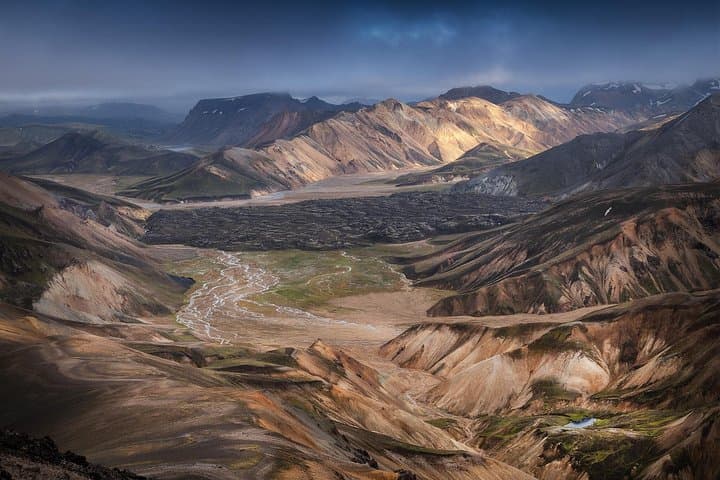
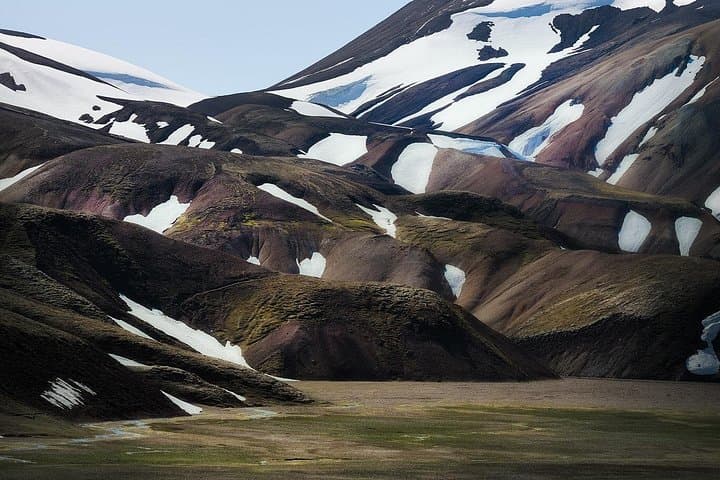
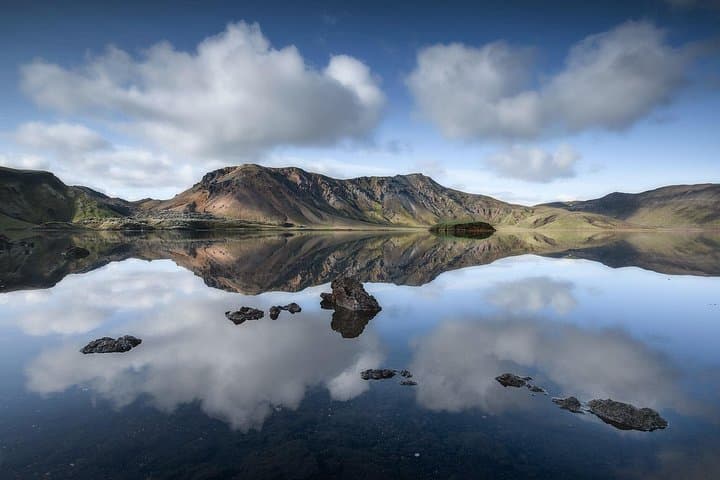
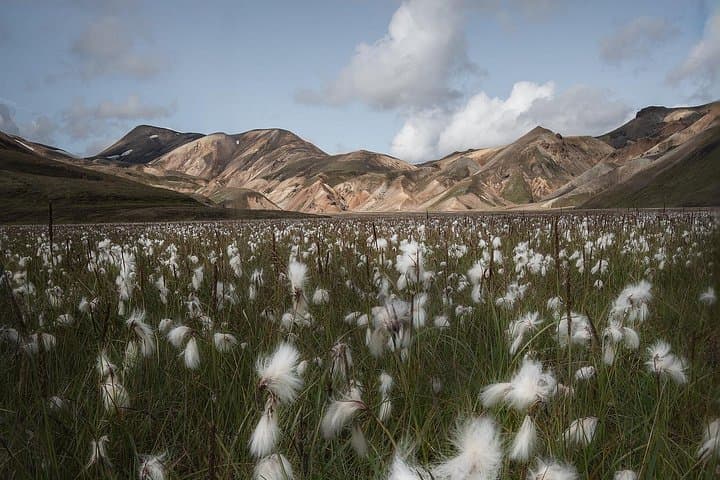
You step off the coach into highland light: pale rhyolite slopes flare pink and ochre, steam threads up from hot ground, and a wind that smells faintly of sulphur dares you to keep moving.
You step off the coach into highland light: pale rhyolite slopes flare pink and ochre, steam threads up from hot ground, and a wind that smells faintly of sulphur dares you to keep moving.
This one-day loop combines two of Iceland’s most dramatic moods — the multicolored hills of Landmannalaugar and the raw, vertical force of Háifoss, which drops roughly 122 meters into a canyon cut by glacial rivers. The area’s geology reads like an open book: rhyolite volcanism built the mountains you walk through, later sculpted by ice and basaltic lava flows. Nearby Hjálparfoss offers a quieter counterpoint — twin falls framed by columnar basalt — and the blue bowl of Hnausapollur (Ljótipollur) crater is an excellent photo stop and reminder of explosive eruptions that shaped the landscape.
Local culture here is sparse but old: highland routes once linked seasonal sheep farms and later became pathways for explorers and artists drawn to the strange, luminous soils. Today guides balance access with conservation; the ground and geothermal zones can be fragile.
Practical edge: expect uneven, sometimes wet trails and variable weather — plan waterproof layers, sturdy boots, and early-day light for the best photos. The tour typically finishes with a soak in a natural hot spring to warm tired legs; follow local etiquette and keep the bath clean. Bring water, snacks, and a camera with a wide lens — the scenery changes with every ridge.