THE ADVENTURE COLLECTIVE® · Independent discovery and booking for outdoor travel

Trace a short ascent across colorful rhyolite slopes, watch steam curl from geothermal vents and finish your day with a soak in natural hot springs. This guided day trip from Reykjavík or Hella combines accessible hiking with highland geology and practical logistics.
Trace a short ascent across colorful rhyolite slopes, watch steam curl from geothermal vents and finish your day with a soak in natural hot springs. This guided day trip from Reykjavík or Hella combines accessible hiking with highland geology and practical logistics.
A cold wind cuts across the obsidian ridges as the minibus eases onto the highland track—moss-clad lava giving way to bands of pastel rhyolite that glow beneath a low Icelandic sun. Travelers step out onto gravel and loose pumice, the air smelling faintly of sulfur, and begin the short climb toward Brennisteinsalda where steaming vents punctuate the slope.
Verified experiences and guided adventures in the surrounding area.
Operated by Nordur Travel · Hella, Southern Region
A cold wind cuts across the obsidian ridges as the minibus eases onto the highland track—moss-clad lava giving way to bands of pastel rhyolite that glow beneath a low Icelandic sun. Travelers step out onto gravel and loose pumice, the air smelling faintly of sulfur, and begin the short climb toward Brennisteinsalda where steaming vents punctuate the slope.
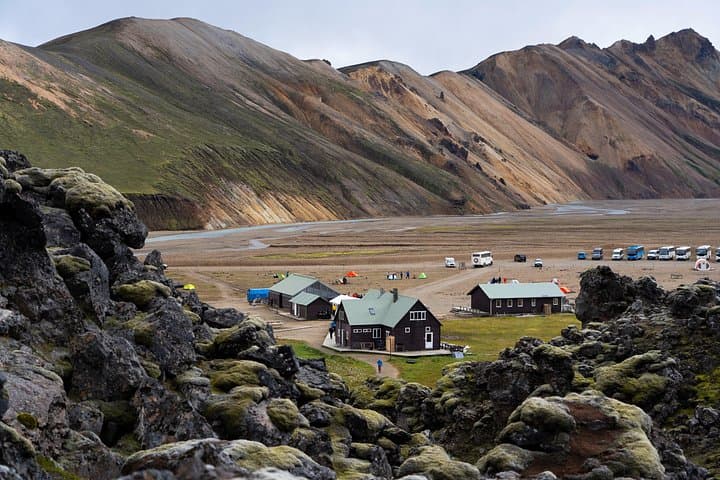
Landmannalaugar sits in the Fjallabak nature reserve, shaped by explosive eruptions and glacial erosion. Rhyolite mountains, cooled lava flows and geothermal seams create the vivid colors that define the landscape; the nearby Hekla volcano looms like a dark punctuation mark on the skyline. The area has been a passage for shepherds and highland travelers for centuries and today is managed with strict conservation rules to protect fragile soils and vegetation.
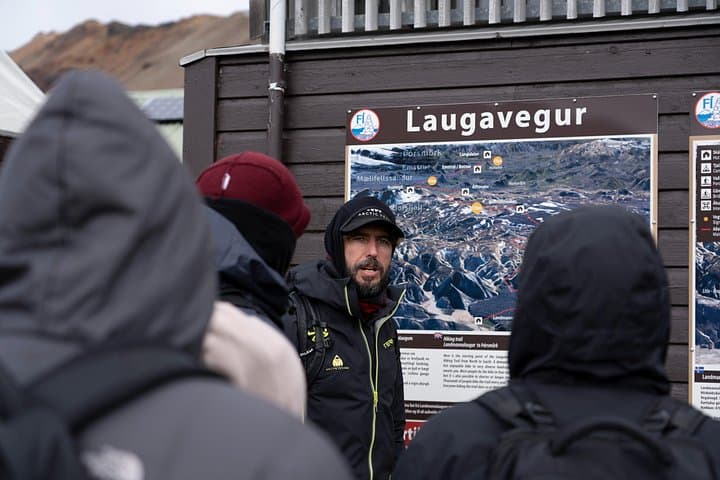
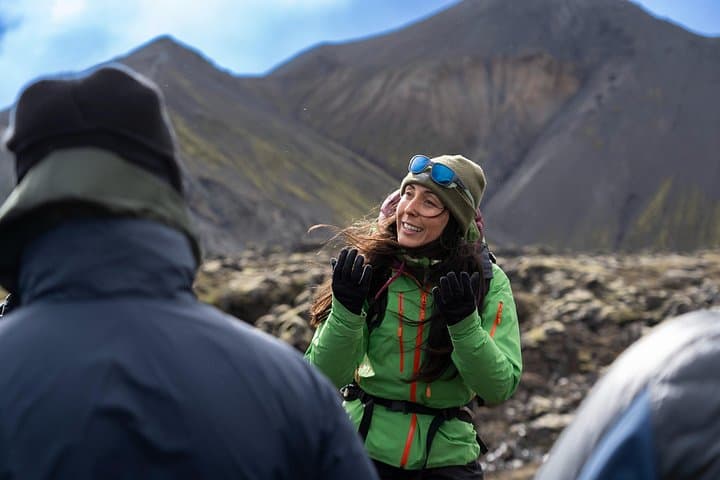
This guided small-group itinerary pairs a roughly 3–4 km round-trip ascent to key viewpoints (about 300–400 m elevation gain) with interpretation from a guide and a post-hike soak in natural hot springs. Terrain is mixed: compact gravel, loose tephra, and steeper volcanic scree on the ascent. Expect 2–3 hours of hiking on the mountain portion, and long driving windows to and from Reykjavík or Hella.
Practical notes: wear waterproof, grippy boots and layered clothing; bring at least 1–2 liters of water and a windproof shell. The area is exposed—start early for better light and calmer weather, and book hot-spring access in advance. Follow leave-no-trace rules: stay on marked paths and pack out all waste to help this fragile highland environment endure.
moderate.
12–13 hours.
Suitable for travelers in average fitness who can handle 2–4 hours of hiking over uneven volcanic terrain and a short ascent of 300–400 m.
The guided route includes a short ascent to viewpoints—typically 3–4 km round-trip with roughly 300–400 m of elevation gain; expect 2–3 hours of hiking in the highland section.
Yes—bring swimwear and a small towel; some operators require you to bring your own as facilities are minimal.
The hike is suitable for most ages with moderate fitness, but those with mobility or cardiovascular issues should consult the operator; pregnant travelers and people with spinal problems are generally advised not to join.
You will see geothermal features—steam vents and hot ground—but not active lava flows; Mount Hekla is visible from the road but active eruptions are rare and monitored.
The highlands have been shaped by repeated volcanic eruptions and glacial advances; routes across the area were historically used by shepherds and seasonal travelers.
Landmannalaugar’s vegetation is slow-growing and easily damaged—stick to trails, avoid new campsites and pack out waste to protect the fragile highland ecosystem.
Nordur Travel operates guided outdoor trips and adventures with an emphasis on safety, stewardship, and memorable experiences.
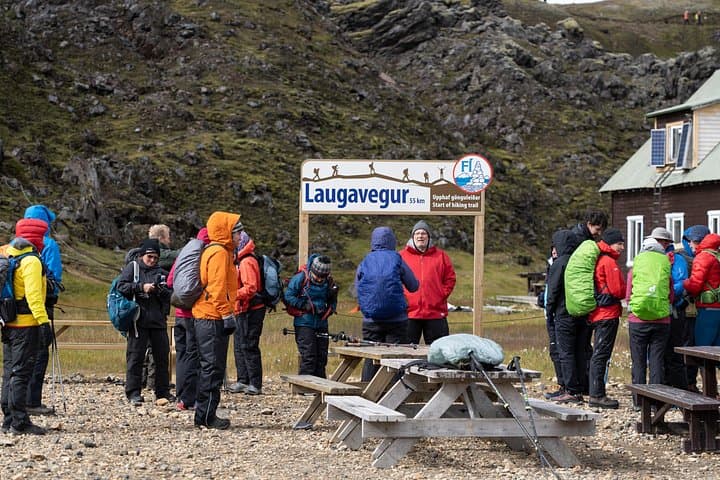
A cold wind cuts across the obsidian ridges as the minibus eases onto the highland track—moss-clad lava giving way to bands of pastel rhyolite that glow beneath a low Icelandic sun. Travelers step out onto gravel and loose pumice, the air smelling faintly of sulfur, and begin the short climb toward Brennisteinsalda where steaming vents punctuate the slope.
A cold wind cuts across the obsidian ridges as the minibus eases onto the highland track—moss-clad lava giving way to bands of pastel rhyolite that glow beneath a low Icelandic sun. Travelers step out onto gravel and loose pumice, the air smelling faintly of sulfur, and begin the short climb toward Brennisteinsalda where steaming vents punctuate the slope.
Landmannalaugar sits in the Fjallabak nature reserve, shaped by explosive eruptions and glacial erosion. Rhyolite mountains, cooled lava flows and geothermal seams create the vivid colors that define the landscape; the nearby Hekla volcano looms like a dark punctuation mark on the skyline. The area has been a passage for shepherds and highland travelers for centuries and today is managed with strict conservation rules to protect fragile soils and vegetation.
This guided small-group itinerary pairs a roughly 3–4 km round-trip ascent to key viewpoints (about 300–400 m elevation gain) with interpretation from a guide and a post-hike soak in natural hot springs. Terrain is mixed: compact gravel, loose tephra, and steeper volcanic scree on the ascent. Expect 2–3 hours of hiking on the mountain portion, and long driving windows to and from Reykjavík or Hella.
Practical notes: wear waterproof, grippy boots and layered clothing; bring at least 1–2 liters of water and a windproof shell. The area is exposed—start early for better light and calmer weather, and book hot-spring access in advance. Follow leave-no-trace rules: stay on marked paths and pack out all waste to help this fragile highland environment endure.