THE ADVENTURE COLLECTIVE® · Independent discovery and booking for outdoor travel

Explore the Land of Midian on a full-day guided tour from Tabuk to see the Split Rock of Moses, natural springs and Nabataean-era sites. This route combines geology, biblical tradition, and desert scenery with practical, on-the-ground access.
Explore the Land of Midian on a full-day guided tour from Tabuk to see the Split Rock of Moses, natural springs and Nabataean-era sites. This route combines geology, biblical tradition, and desert scenery with practical, on-the-ground access.
You step out of an air-conditioned van and the desert exhales around you — a dry wind that teases the edges of a sandstone ridge and carries the faint salt of the distant Gulf of Aqaba.
Verified experiences and guided adventures in the surrounding area.
Operated by Golden Destination · Tabuk, Tabuk Province
You step out of an air-conditioned van and the desert exhales around you — a dry wind that teases the edges of a sandstone ridge and carries the faint salt of the distant Gulf of Aqaba.
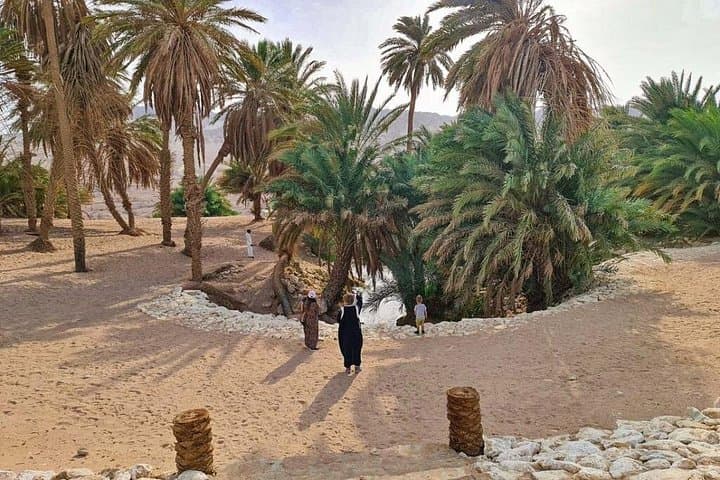
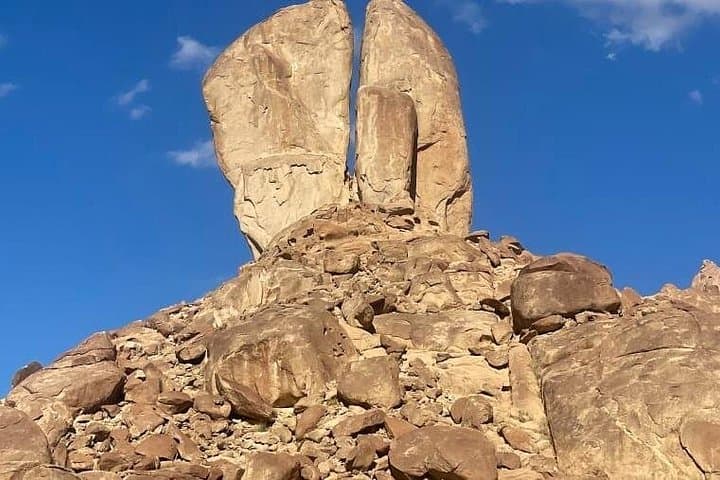
This day tour threads through landscapes that once marked the borderlands of ancient Midian: rocky red plateaus, scattered palms, and the surprising fertility of a desert spring. At the Split Rock of Horeb you can climb and scramble around a fissured boulder that local tradition links to Moses; the stone’s surfaces wear the slow erosions of millennia and invite a quiet reckoning with time. Nearby, the Springs of Moses form a small, life-supporting oasis ringed by palms and the remains of monastic use.
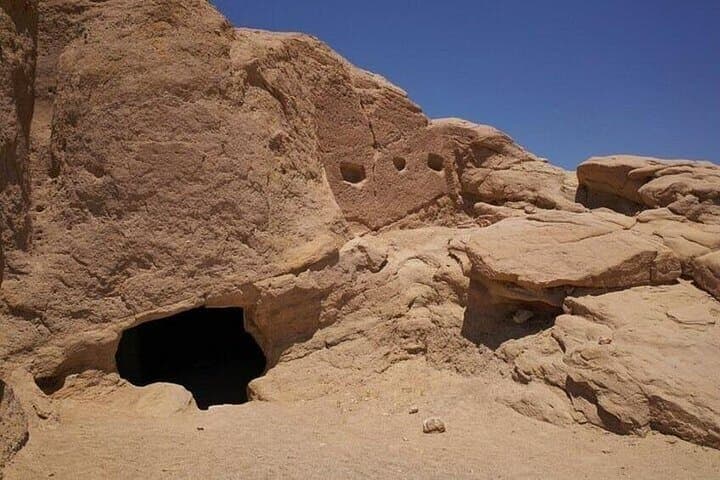
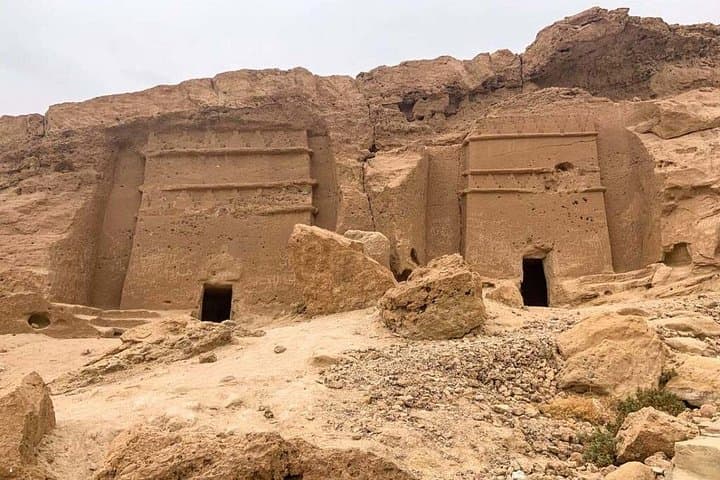
Geology here is blunt and readable — sandstone and volcanic intrusions, wind-cut gullies and alluvial fans that tell of rare but powerful rains. Culturally, the region sits at the crossroads of Nabataean trade routes and later Islamic pilgrimage paths; archaeologists still study carved tombs and inscriptions in the area.
Practical guidance: expect a 7-hour outing with moderate walking and short scrambles; bring closed-toe shoes, a sun hat, and at least 2 liters of water. Temperatures swing widely — mornings can be cool and midday intensely hot — so layer. Respect fragile archaeological sites: stick to established paths and avoid touching inscriptions. Mobile signal is intermittent; bring a charged power bank and follow your guide’s instructions on route safety.
easy.
7 hours.
Basic fitness and the ability to walk short distances on uneven ground; not technically demanding
The itinerary runs about 7 hours (420 minutes) including stops at the Split Rock, Springs of Moses, and Maghaer Shuaib.
Walking is short and generally easy with some uneven ground and light scrambling near rock formations; suitable for most fitness levels.
Visitors need the appropriate entry visa for Saudi Arabia; no additional local permits are typically required for this guided day tour.
Yes — the tour is family-friendly though children should be supervised on rocky sections; infants must sit on an adult’s lap during transport.
The Land of Midian appears in biblical and Islamic tradition as a crossroads of trade and the setting for episodes associated with Moses; archaeological evidence also points to Nabataean occupation in parts of the region.
This is a fragile desert ecosystem and archaeological landscape — stay on trails, avoid collecting artifacts, and pack out all waste to minimize impact.
Golden Destination operates guided outdoor trips and adventures with an emphasis on safety, stewardship, and memorable experiences.
You step out of an air-conditioned van and the desert exhales around you — a dry wind that teases the edges of a sandstone ridge and carries the faint salt of the distant Gulf of Aqaba.
You step out of an air-conditioned van and the desert exhales around you — a dry wind that teases the edges of a sandstone ridge and carries the faint salt of the distant Gulf of Aqaba.
This day tour threads through landscapes that once marked the borderlands of ancient Midian: rocky red plateaus, scattered palms, and the surprising fertility of a desert spring. At the Split Rock of Horeb you can climb and scramble around a fissured boulder that local tradition links to Moses; the stone’s surfaces wear the slow erosions of millennia and invite a quiet reckoning with time. Nearby, the Springs of Moses form a small, life-supporting oasis ringed by palms and the remains of monastic use.
Geology here is blunt and readable — sandstone and volcanic intrusions, wind-cut gullies and alluvial fans that tell of rare but powerful rains. Culturally, the region sits at the crossroads of Nabataean trade routes and later Islamic pilgrimage paths; archaeologists still study carved tombs and inscriptions in the area.
Practical guidance: expect a 7-hour outing with moderate walking and short scrambles; bring closed-toe shoes, a sun hat, and at least 2 liters of water. Temperatures swing widely — mornings can be cool and midday intensely hot — so layer. Respect fragile archaeological sites: stick to established paths and avoid touching inscriptions. Mobile signal is intermittent; bring a charged power bank and follow your guide’s instructions on route safety.