THE ADVENTURE COLLECTIVE® · Independent discovery and booking for outdoor travel

Cross from Maui to Lāna‘i for two guided dives among lava-formed caverns, arches and swim-throughs. Small groups, experienced crew, and repeat wildlife sightings make this a focused day trip for certified divers.
Cross from Maui to Lāna‘i for two guided dives among lava-formed caverns, arches and swim-throughs. Small groups, experienced crew, and repeat wildlife sightings make this a focused day trip for certified divers.
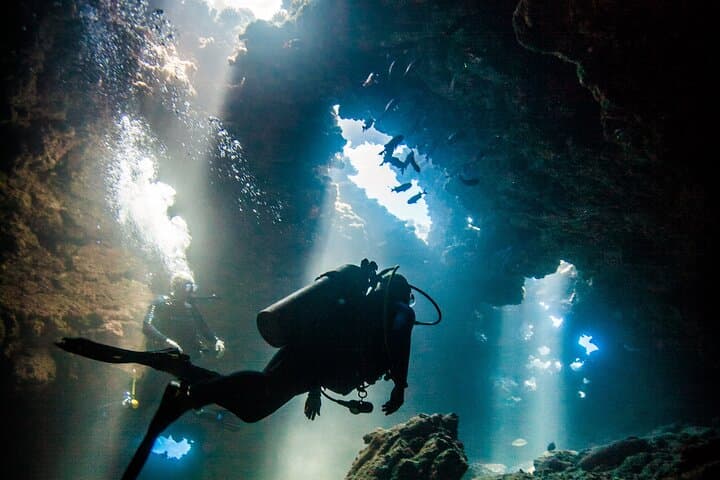
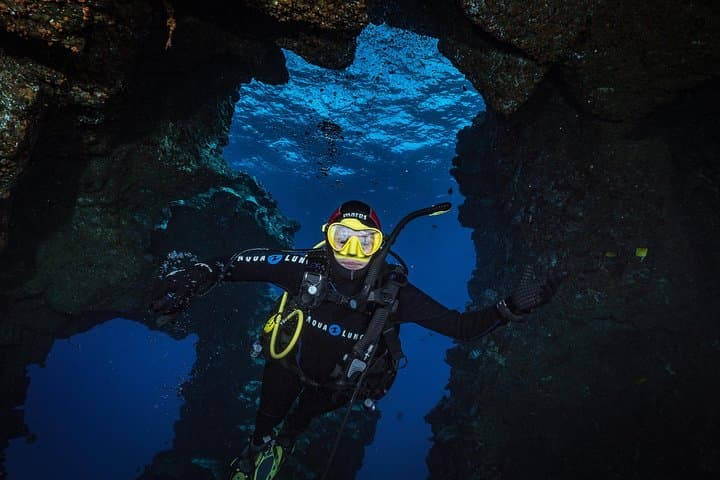
Morning light strips across Lahaina Harbor and the Hoku slips free, engines humming as the channel opens. The crossing feels like an approach — dolphins often cut the bow wake, whales sometimes lift their backs in the distance — until the island of Lāna‘i resolves into cliffs and underwater architecture. On a two-tank run to the Cathedrals, the ocean’s sculpted rock guides you: arches, lava shoots and cavern mouths invite trained divers into shadow and bloom.
Verified experiences and guided adventures in the surrounding area.
Operated by Dive Maui · Lahaina, Hawaii
Morning light strips across Lahaina Harbor and the Hoku slips free, engines humming as the channel opens. The crossing feels like an approach — dolphins often cut the bow wake, whales sometimes lift their backs in the distance — until the island of Lāna‘i resolves into cliffs and underwater architecture. On a two-tank run to the Cathedrals, the ocean’s sculpted rock guides you: arches, lava shoots and cavern mouths invite trained divers into shadow and bloom.
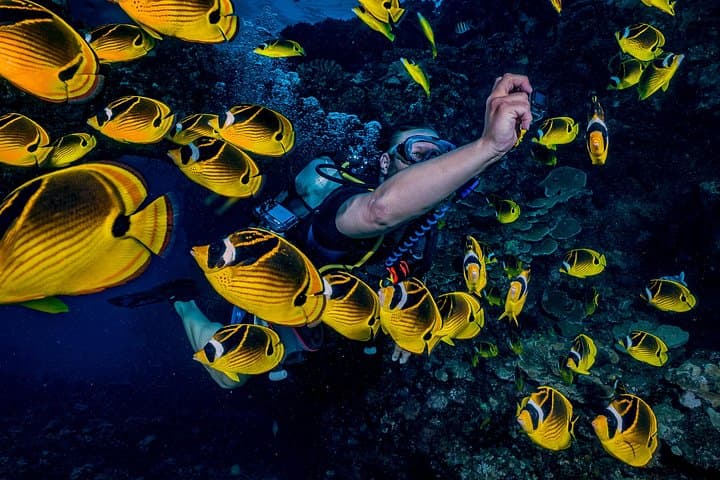
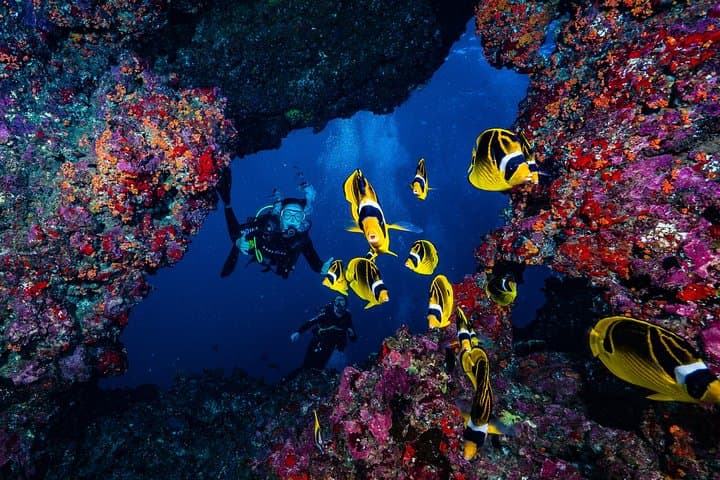
The seascape here is literal geology — ancient pāhoehoe flows and collapsed lava tubes that cooled against the sea have produced the vaulted caverns divers call Cathedrals. Lāna‘i’s reefs host colorful reef fish, delicate sea fans and pockets of dense coral; the island’s human story of voyaging Hawaiians and later plantation-era change sits quietly above the waterline on a far different scale.
You’ll typically do two dives to 50–75 feet with a surface interval aboard the boat. Small groups and local guides mean more in-water attention and a chance to explore swim-throughs with careful buoyancy control. Surface time often brings snacks, water from a reusable bottle, and conversation about what the reef showed that day.
Practical edge: be certified (Open Water+), have logged recent dives within 18 months, and expect a six-hour outing that begins early. Pack a light wind layer for the crossing, bring a dive computer and reef-safe sunscreen, and be prepared to follow no-touch rules — the underwater rooms you visit are fragile and finite.
challenging.
6 hours.
Moderate fitness with ability to carry and manage scuba gear, perform controlled entries and exits, and handle surface intervals on a moving boat.
Yes — Open Water certification or higher is required, and operators typically require a logged dive within the prior 18 months.
Expect depths generally between 50–75 feet with bottom times up to about 60 minutes per dive, air permitting and following dive computer limits.
The captain chooses sites based on sea state; trips may be modified or canceled for safety, and refunds follow the operator’s 24-hour cancellation policy for bad weather.
Yes — full scuba equipment is available to rent, but many divers prefer to bring personal masks, computers, and exposure protection for fit and comfort.
The island’s underwater architecture is the result of cooled lava flows and collapsed lava tubes; Lāna‘i also has a documented human history from traditional Hawaiian voyaging through plantation-era development.
Local operators emphasize no-touch policies and reef-safe products; minimize impact by avoiding contact with coral, using marked entry/exit points, and following crew briefings.
Dive Maui operates guided outdoor trips and adventures with an emphasis on safety, stewardship, and memorable experiences.
Morning light strips across Lahaina Harbor and the Hoku slips free, engines humming as the channel opens. The crossing feels like an approach — dolphins often cut the bow wake, whales sometimes lift their backs in the distance — until the island of Lāna‘i resolves into cliffs and underwater architecture. On a two-tank run to the Cathedrals, the ocean’s sculpted rock guides you: arches, lava shoots and cavern mouths invite trained divers into shadow and bloom.
Morning light strips across Lahaina Harbor and the Hoku slips free, engines humming as the channel opens. The crossing feels like an approach — dolphins often cut the bow wake, whales sometimes lift their backs in the distance — until the island of Lāna‘i resolves into cliffs and underwater architecture. On a two-tank run to the Cathedrals, the ocean’s sculpted rock guides you: arches, lava shoots and cavern mouths invite trained divers into shadow and bloom.
The seascape here is literal geology — ancient pāhoehoe flows and collapsed lava tubes that cooled against the sea have produced the vaulted caverns divers call Cathedrals. Lāna‘i’s reefs host colorful reef fish, delicate sea fans and pockets of dense coral; the island’s human story of voyaging Hawaiians and later plantation-era change sits quietly above the waterline on a far different scale.
You’ll typically do two dives to 50–75 feet with a surface interval aboard the boat. Small groups and local guides mean more in-water attention and a chance to explore swim-throughs with careful buoyancy control. Surface time often brings snacks, water from a reusable bottle, and conversation about what the reef showed that day.
Practical edge: be certified (Open Water+), have logged recent dives within 18 months, and expect a six-hour outing that begins early. Pack a light wind layer for the crossing, bring a dive computer and reef-safe sunscreen, and be prepared to follow no-touch rules — the underwater rooms you visit are fragile and finite.