THE ADVENTURE COLLECTIVE® · Independent discovery and booking for outdoor travel

Spend a day learning Andean agricultural rhythms in Lamay: join a faena, share a community lunch, and watch traditional backstrap weaving. This immersive day offers cultural exchange and practical participation in the Sacred Valley’s rural life.
Spend a day learning Andean agricultural rhythms in Lamay: join a faena, share a community lunch, and watch traditional backstrap weaving. This immersive day offers cultural exchange and practical participation in the Sacred Valley’s rural life.
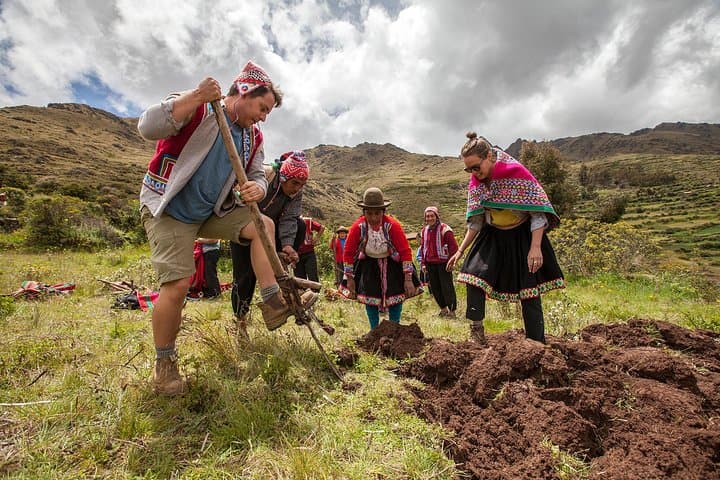
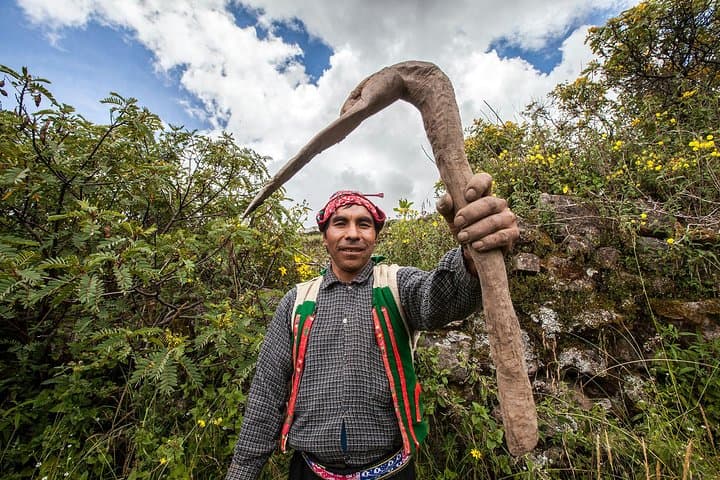
A cool mountain morning opens over Lamay as the bus lets the group out at La Base Lamay. Terraced fields step away from the village like a staircase carved into the valley; the air smells of damp earth and toasted maize. Locals greet visitors with practiced warmth, and within minutes you're shoulder to shoulder taking up a traditional tool or watching the rhythmic shuttle of a backstrap loom.
Verified experiences and guided adventures in the surrounding area.
Operated by La Base Lamay · Lamay, Cusco
A cool mountain morning opens over Lamay as the bus lets the group out at La Base Lamay. Terraced fields step away from the village like a staircase carved into the valley; the air smells of damp earth and toasted maize. Locals greet visitors with practiced warmth, and within minutes you're shoulder to shoulder taking up a traditional tool or watching the rhythmic shuttle of a backstrap loom.
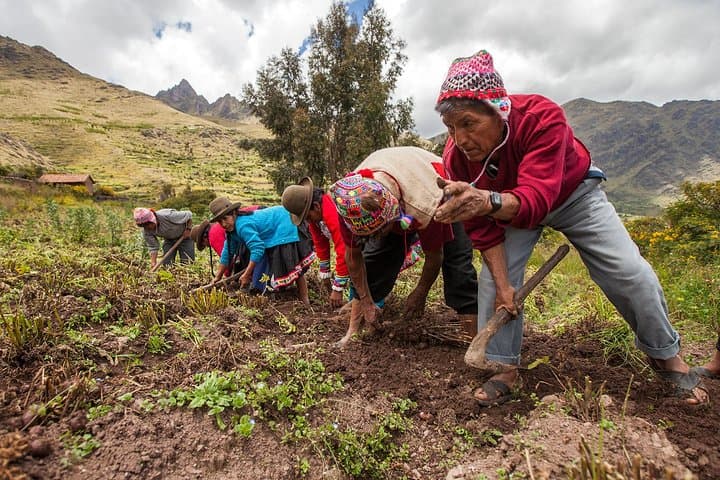
This is agricultural life practiced along the Andean spine for centuries. The soils here reflect uplifted volcanic and sedimentary layers from the nearby Andes; water still travels in ancestrally engineered channels that farmers manage seasonally. Families in Lamay maintain weaving patterns and crop rotations that trace to pre-Columbian practice, blending indigenous techniques with Catholic-era festivals and communal faena (work parties).
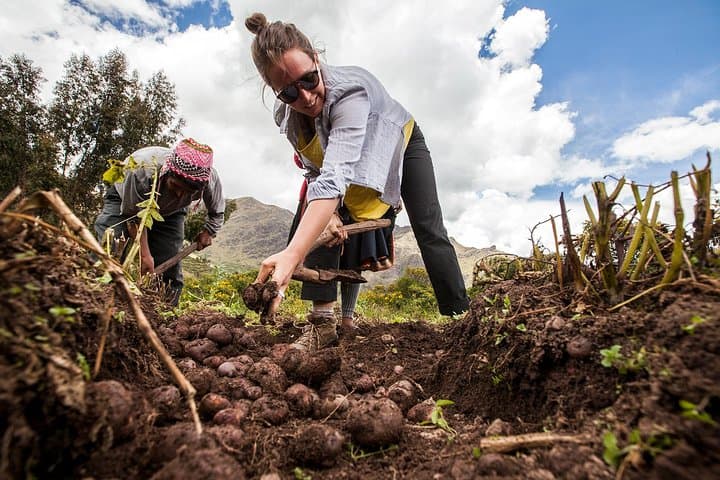
The day generally includes a guided, hands-on faena—planting, sowing, weeding or harvesting depending on the season—followed by a lunch using community-grown ingredients and a weaving demonstration led by village women. Conversation ranges from tool-making to local rites that mark planting and harvest.
Practical notes: wear sturdy shoes you don't mind getting dirty, bring sun protection and at least 1–2 liters of water, and be prepared for sudden temperature shifts—mornings can be frosty while afternoons warm quickly. Respect the community fee structure and ask before photographing people or private spaces.
This visit is less about sightseeing and more about respectful participation: show up curious, flexible, and ready to get your hands in the soil.
easy.
4–5 hours.
Suitable for most fitness levels; requires light physical work such as bending, lifting small loads, and walking on uneven ground.
Private transport from La Base Lamay, a community activity (faena), local lunch, and a weaving demonstration are included; the community visit fee is covered.
Yes; the day is described as physically easy and suitable for most, though participants with serious back or heart conditions should avoid heavy manual tasks.
Photography is allowed but always ask individuals for permission, especially during rituals or intimate family moments.
All sales are final—no refunds are available, so confirm plans before booking.
Lamay’s agricultural calendar and weaving patterns have roots in pre-Columbian Andean practice, adapted through centuries of community-managed terraces and irrigation.
Community fees help fund local sustainable development; visitors should avoid single-use plastics, stay on paths, and follow hosts’ guidance to minimize impact.
La Base Lamay operates guided outdoor trips and adventures with an emphasis on safety, stewardship, and memorable experiences.
A cool mountain morning opens over Lamay as the bus lets the group out at La Base Lamay. Terraced fields step away from the village like a staircase carved into the valley; the air smells of damp earth and toasted maize. Locals greet visitors with practiced warmth, and within minutes you're shoulder to shoulder taking up a traditional tool or watching the rhythmic shuttle of a backstrap loom.
A cool mountain morning opens over Lamay as the bus lets the group out at La Base Lamay. Terraced fields step away from the village like a staircase carved into the valley; the air smells of damp earth and toasted maize. Locals greet visitors with practiced warmth, and within minutes you're shoulder to shoulder taking up a traditional tool or watching the rhythmic shuttle of a backstrap loom.
This is agricultural life practiced along the Andean spine for centuries. The soils here reflect uplifted volcanic and sedimentary layers from the nearby Andes; water still travels in ancestrally engineered channels that farmers manage seasonally. Families in Lamay maintain weaving patterns and crop rotations that trace to pre-Columbian practice, blending indigenous techniques with Catholic-era festivals and communal faena (work parties).
The day generally includes a guided, hands-on faena—planting, sowing, weeding or harvesting depending on the season—followed by a lunch using community-grown ingredients and a weaving demonstration led by village women. Conversation ranges from tool-making to local rites that mark planting and harvest.
Practical notes: wear sturdy shoes you don't mind getting dirty, bring sun protection and at least 1–2 liters of water, and be prepared for sudden temperature shifts—mornings can be frosty while afternoons warm quickly. Respect the community fee structure and ask before photographing people or private spaces.
This visit is less about sightseeing and more about respectful participation: show up curious, flexible, and ready to get your hands in the soil.