THE ADVENTURE COLLECTIVE® · Independent discovery and booking for outdoor travel

A four-day loop from Lalibela into Abune Yousef’s highlands that combines village homestays, high-altitude trekking and encounters with endemic gelada baboons. Expect multi-hour hikes, cultural exchanges and sweeping plateau views with practical support from local guides.
A four-day loop from Lalibela into Abune Yousef’s highlands that combines village homestays, high-altitude trekking and encounters with endemic gelada baboons. Expect multi-hour hikes, cultural exchanges and sweeping plateau views with practical support from local guides.
You step out of Lalibela’s stone alleys into a highland wind that pushes across plateaus, the town shrinking behind you as terraces and thatch appear like chapters of a different life. The first climb unfurls quickly—switchbacks, small farms and children waving—until Ber Metebekiya opens like a bowl at 3,600 m with views that demand you slow down and breathe.
Verified experiences and guided adventures in the surrounding area.
Operated by Zagol Ethiopia Tours · Lalibela, Amhara Region
You step out of Lalibela’s stone alleys into a highland wind that pushes across plateaus, the town shrinking behind you as terraces and thatch appear like chapters of a different life. The first climb unfurls quickly—switchbacks, small farms and children waving—until Ber Metebekiya opens like a bowl at 3,600 m with views that demand you slow down and breathe.
This four-day route threads culture and geology: volcanic basalt plateaus carved by millennia of frost and rain, ancient upland farming systems, and villages where injera is baked on earthen stoves. Abune Yousef mountain, one of Ethiopia’s high peaks, crowns the circuit; at Rim Gedel (≈4,300 m) the landscape becomes a wind-swept moor where endemic gelada baboons feed and rock outcrops tell of tectonic uplift across the northern Ethiopian plateau.
Locals maintain age-old customs—foot-washing welcomes, Highland dances after dusk—and homestays give direct insight into cattle-rearing and dry-season cropping. Guides from community cooperatives lead the way and entrance to Abune Yousef Park is typically included.
Practically: expect 4 days of trekking with daily hikes of roughly 4–6 hours on dirt tracks and rocky trails, frequent altitude gain and exposed ridge sections. Pack layers for cold nights, bring sun protection for intense daytime UV, and carry water purification or rely on provided packed water. Donkeys reduce carried weight, but good boots and a steady aerobic base matter more than technical skills. Allow time to acclimatize in Lalibela if you arrive from low elevation and plan for limited mobile signal; the reward is close contact with wildlife, working highland communities, and a landscape that both challenges and welcomes you.
moderate.
4 days.
Moderate aerobic fitness recommended — regular hikers or those who can manage 4–6 hour days at elevation will be comfortable.
Expect 4–6 hour days on mixed terrain with steady climbs; the highest points reach ~4,300 m so the effort is more about altitude than technical difficulty.
Yes — most breakfasts, lunches and dinners are included and you stay in local homestays or community houses with prepared beds.
Geladas are commonly seen in Abune Yousef and around Merbarbu; sightings aren’t guaranteed but multiple stops improve chances.
Local guides lead the trek and entrance to Abune Yousef Park is normally included in the trip package.
The highlands around Lalibela have been inhabited for millennia and are dotted with medieval monastic sites; communities here maintain farming practices shaped by steep terraces and seasonal rains.
Community-based conservation around Abune Yousef balances grazing and wildlife protection; visitors help by minimizing waste, respecting grazing areas and supporting local homestays.
Zagol Ethiopia Tours operates guided outdoor trips and adventures with an emphasis on safety, stewardship, and memorable experiences.
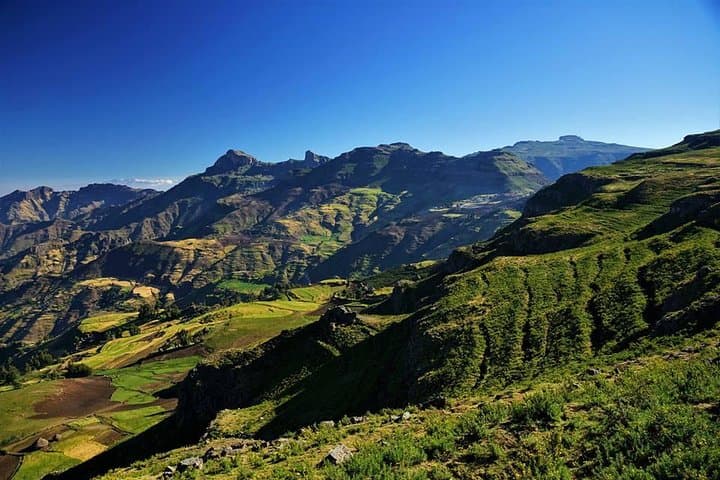
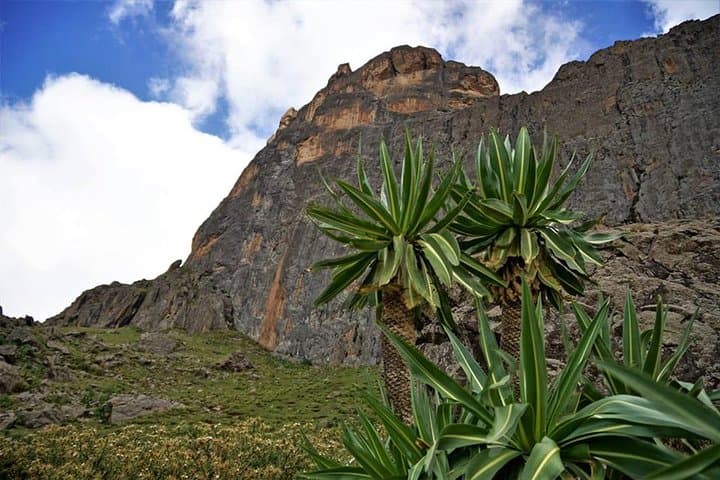
You step out of Lalibela’s stone alleys into a highland wind that pushes across plateaus, the town shrinking behind you as terraces and thatch appear like chapters of a different life. The first climb unfurls quickly—switchbacks, small farms and children waving—until Ber Metebekiya opens like a bowl at 3,600 m with views that demand you slow down and breathe.
You step out of Lalibela’s stone alleys into a highland wind that pushes across plateaus, the town shrinking behind you as terraces and thatch appear like chapters of a different life. The first climb unfurls quickly—switchbacks, small farms and children waving—until Ber Metebekiya opens like a bowl at 3,600 m with views that demand you slow down and breathe.
This four-day route threads culture and geology: volcanic basalt plateaus carved by millennia of frost and rain, ancient upland farming systems, and villages where injera is baked on earthen stoves. Abune Yousef mountain, one of Ethiopia’s high peaks, crowns the circuit; at Rim Gedel (≈4,300 m) the landscape becomes a wind-swept moor where endemic gelada baboons feed and rock outcrops tell of tectonic uplift across the northern Ethiopian plateau.
Locals maintain age-old customs—foot-washing welcomes, Highland dances after dusk—and homestays give direct insight into cattle-rearing and dry-season cropping. Guides from community cooperatives lead the way and entrance to Abune Yousef Park is typically included.
Practically: expect 4 days of trekking with daily hikes of roughly 4–6 hours on dirt tracks and rocky trails, frequent altitude gain and exposed ridge sections. Pack layers for cold nights, bring sun protection for intense daytime UV, and carry water purification or rely on provided packed water. Donkeys reduce carried weight, but good boots and a steady aerobic base matter more than technical skills. Allow time to acclimatize in Lalibela if you arrive from low elevation and plan for limited mobile signal; the reward is close contact with wildlife, working highland communities, and a landscape that both challenges and welcomes you.