THE ADVENTURE COLLECTIVE® · Independent discovery and booking for outdoor travel

Cross the world’s highest navigable lake, walk Inca stone stairs on Isla del Sol and fly a zip-line over the Tiquina Strait—all in a single day from La Paz. This private full-day trip blends cultural sites, community meals and a dash of adrenaline.
Cross the world’s highest navigable lake, walk Inca stone stairs on Isla del Sol and fly a zip-line over the Tiquina Strait—all in a single day from La Paz. This private full-day trip blends cultural sites, community meals and a dash of adrenaline.
The morning air in La Paz is thin and quick to bite; by the time the van winds down the high plateau toward Copacabana the sky has opened into a hard, clean blue. You step off at the lakeshore and the water takes the next breath for you—cold, wide and bright—its surface a mirror that dares you to cross it. A small private boat awaits, engines soft, and the guide’s voice folds into the rhythm of fishermen hauling nets and llamas grazing on terraces above.
Verified experiences and guided adventures in the surrounding area.
Operated by Joker Expedition, Bolivia. · Copacabana, La Paz Department
The morning air in La Paz is thin and quick to bite; by the time the van winds down the high plateau toward Copacabana the sky has opened into a hard, clean blue. You step off at the lakeshore and the water takes the next breath for you—cold, wide and bright—its surface a mirror that dares you to cross it. A small private boat awaits, engines soft, and the guide’s voice folds into the rhythm of fishermen hauling nets and llamas grazing on terraces above.
This is Lake Titicaca—the highest navigable lake in the world—and a place where geology and empire overlap. The lake sits in a deep intermontane basin carved by ancient glaciers and tectonic uplift; islands like Isla del Sol hold Inca staircases, stone terraces and shrines that predate Spanish maps. Copacabana grew as a pilgrimage center for the Virgin of the Lake, and today its waterfront markets trade handcrafted textiles and fresh trout.
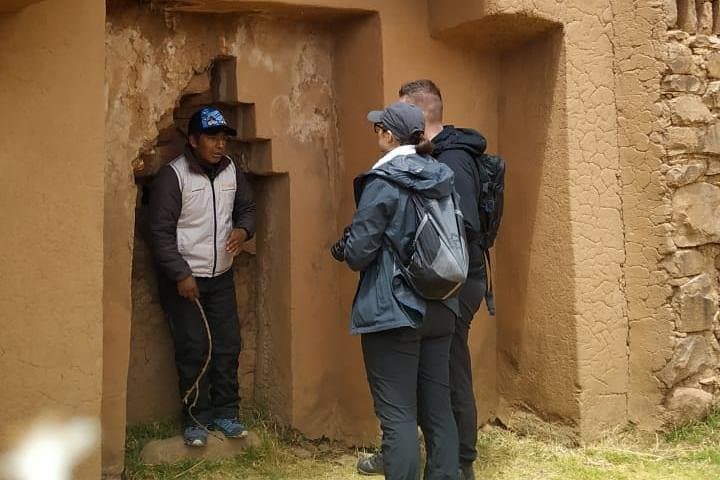
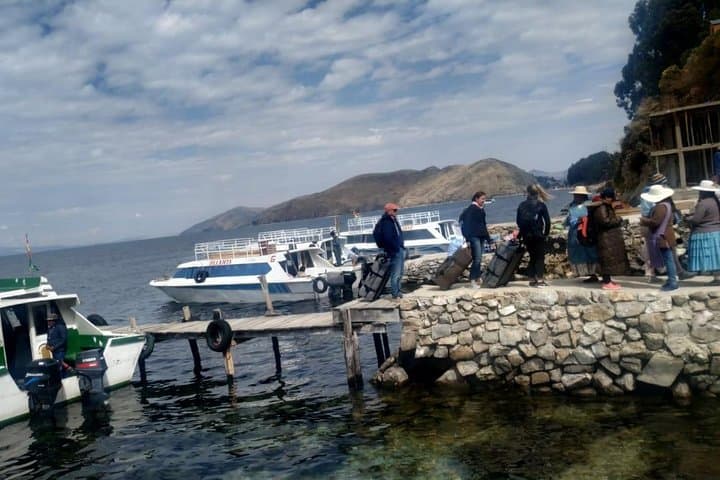
On Isla del Sol the tour lands at a community pier, where local families prepare a lunch of trout, quinoa and Andean potatoes. After a short guided walk—roughly 20 minutes—your group reaches a high spring and a stitched network of stone steps that speak of the island’s ceremonial past. The guide translates stories into practical context: which stones were used for offerings, how water rights shaped settlements, why terraces cling to chimney-like walls.
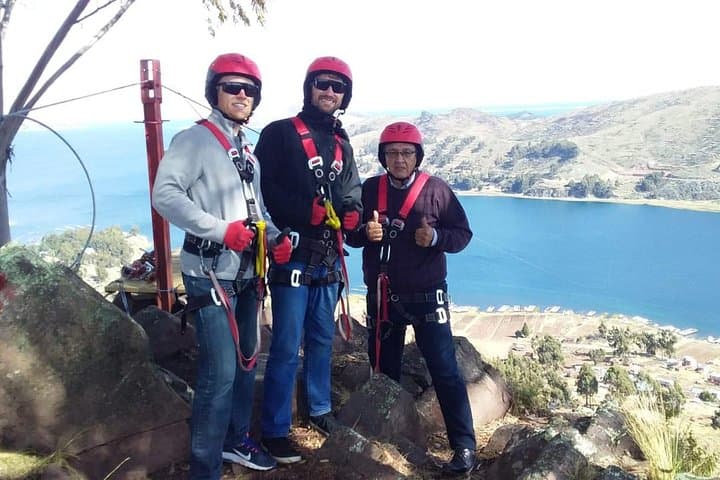
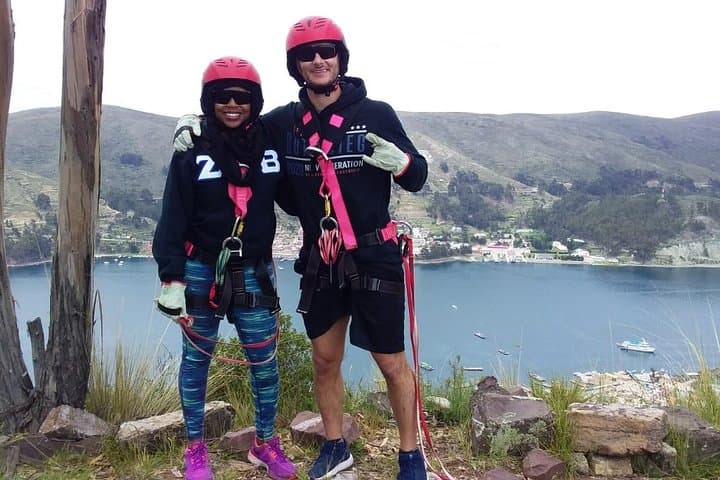
The day crescendos at the Estrecho de Tiquina, the narrow throat between two basins of the lake. Here, under trained staff and safety harnesses, you clip into a zip-line and cross water that has carried reed boats for centuries. The line is recent; the thrill is immediate: the lake drops away, the wind pushes forward and the shore seems to pull you into two histories at once—ancient travel and modern adrenaline.
Practicalities matter: this is a full 9–10 hour outing that moves fast at altitude. Bring layered clothing, sun protection and motion-sickness remedies if you’re prone—the boat can be choppy when the wind picks up. The operator provides bilingual guides, private transport with hotel pickup in La Paz, community-cooked lunches and safety equipment for zip-lining, but expect basic facilities on the island and uneven, stone-paved paths.
If you want the clearest light for photos aim for morning on the east shore or late afternoon as the sun dips behind the western ridgeline. Budget for cash purchases in Copacabana’s markets, and consider an extra day on Isla del Sol if you want to hike to remote ruins or support village homestays. Above all, respect the lake’s fragile ecosystems and the island communities that steward them—this trip is equal parts cultural encounter and high-altitude adventure, and it's best enjoyed with both curiosity and care.
moderate.
9–10 hours.
Able to handle a full-day itinerary at 3,800–4,000 m with short walks and boat transfers; mild to moderate exertion.
Expect a 9–10 hour day including hotel pickup, road transfer to Copacabana, boat crossings, island visit and the zip-line stop at Tiquina.
Operators use professional harnesses and trained staff; weather conditions can affect operation and guides brief you on safety procedures before each run.
Infants must sit on laps; infant seats are available. Child participation in the zip-line depends on operator age/weight limits—check when booking.
Yes—lunch prepared by community members on Isla del Sol is included in the tour price.
Bring small-denomination Bolivianos for market purchases or tips; remote spots may not accept cards.
Acclimatize in La Paz for 24–48 hours, hydrate, avoid alcohol before the tour, and carry acetazolamide only if prescribed by your doctor.
Isla del Sol was an important Inca pilgrimage site with ceremonial stairways and sun temples; Copacabana became a colonial pilgrimage town for the Virgin of the Lake.
Lake Titicaca’s high-altitude wetlands are fragile—support community-run services, avoid littering and minimize single-use plastics to reduce impact.
Joker Expedition, Bolivia. operates guided outdoor trips and adventures with an emphasis on safety, stewardship, and memorable experiences.
The morning air in La Paz is thin and quick to bite; by the time the van winds down the high plateau toward Copacabana the sky has opened into a hard, clean blue. You step off at the lakeshore and the water takes the next breath for you—cold, wide and bright—its surface a mirror that dares you to cross it. A small private boat awaits, engines soft, and the guide’s voice folds into the rhythm of fishermen hauling nets and llamas grazing on terraces above.
The morning air in La Paz is thin and quick to bite; by the time the van winds down the high plateau toward Copacabana the sky has opened into a hard, clean blue. You step off at the lakeshore and the water takes the next breath for you—cold, wide and bright—its surface a mirror that dares you to cross it. A small private boat awaits, engines soft, and the guide’s voice folds into the rhythm of fishermen hauling nets and llamas grazing on terraces above.
This is Lake Titicaca—the highest navigable lake in the world—and a place where geology and empire overlap. The lake sits in a deep intermontane basin carved by ancient glaciers and tectonic uplift; islands like Isla del Sol hold Inca staircases, stone terraces and shrines that predate Spanish maps. Copacabana grew as a pilgrimage center for the Virgin of the Lake, and today its waterfront markets trade handcrafted textiles and fresh trout.
On Isla del Sol the tour lands at a community pier, where local families prepare a lunch of trout, quinoa and Andean potatoes. After a short guided walk—roughly 20 minutes—your group reaches a high spring and a stitched network of stone steps that speak of the island’s ceremonial past. The guide translates stories into practical context: which stones were used for offerings, how water rights shaped settlements, why terraces cling to chimney-like walls.
The day crescendos at the Estrecho de Tiquina, the narrow throat between two basins of the lake. Here, under trained staff and safety harnesses, you clip into a zip-line and cross water that has carried reed boats for centuries. The line is recent; the thrill is immediate: the lake drops away, the wind pushes forward and the shore seems to pull you into two histories at once—ancient travel and modern adrenaline.
Practicalities matter: this is a full 9–10 hour outing that moves fast at altitude. Bring layered clothing, sun protection and motion-sickness remedies if you’re prone—the boat can be choppy when the wind picks up. The operator provides bilingual guides, private transport with hotel pickup in La Paz, community-cooked lunches and safety equipment for zip-lining, but expect basic facilities on the island and uneven, stone-paved paths.
If you want the clearest light for photos aim for morning on the east shore or late afternoon as the sun dips behind the western ridgeline. Budget for cash purchases in Copacabana’s markets, and consider an extra day on Isla del Sol if you want to hike to remote ruins or support village homestays. Above all, respect the lake’s fragile ecosystems and the island communities that steward them—this trip is equal parts cultural encounter and high-altitude adventure, and it's best enjoyed with both curiosity and care.